


Treatment of pediatric acute lymphoblastic leukemia
- PMID: 25435112
- PMCID: PMC4366417
- DOI: 10.1016/j.pcl.2014.09.006
Treatment of pediatric acute lymphoblastic leukemia
Abstract
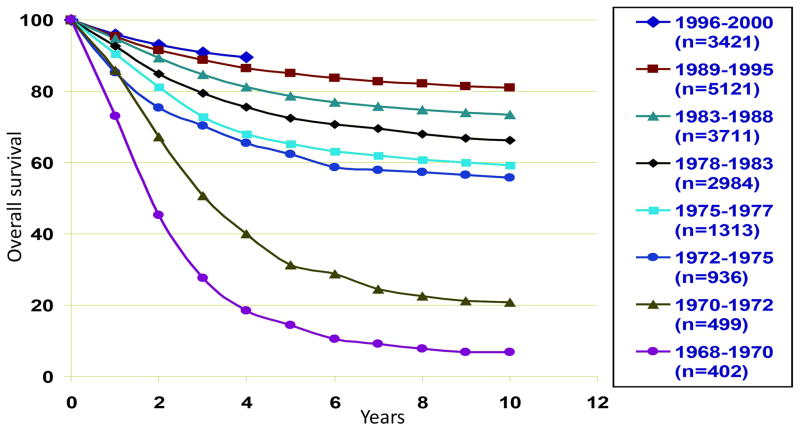
Acute lymphoblastic leukemia (ALL) is the most common pediatric oncologic diagnosis, and advances in its treatment have led to progressive improvements in survival. The 4 main components of therapy are remission induction, consolidation, maintenance, and central nervous system-directed therapy, and usually last 2 to 3 years. Treatment intensity based on risk-based stratification is the cornerstone of treatment. Patients with features of more favorable disease are spared the more toxic effects of chemotherapy, whereas more aggressive regimens are reserved for those with higher-risk disease. Prognosis of relapsed pediatric ALL depends primarily on duration of remission and site of relapse.
Keywords: Acute lymphoblastic leukemia; Leukemia treatment; Risk-based stratification.
Copyright © 2015 Elsevier Inc. All rights reserved.
Figures
References
-
- Möricke A, Zimmermann M, Reiter A, et al. Prognostic impact of age in children and adolescents with acute lymphoblastic leukemia: data from the trials ALL-BFM 86, 90, and 95. Klin Padiatr. 2005;217(6):310–20. - PubMed
-
- Reiter A, Schrappe M, Ludwig WD, et al. Chemotherapy in 998 unselected childhood acute lymphoblastic leukemia patients. Results and conclusions of the multicenter trial ALL-BFM 86. Blood. 1994;84:3122–33. - PubMed
-
- Gerr H, Zimmermann M, Schrappe M, et al. Acute leukaemias of ambiguous lineage in children: characterization, prognosis and therapy recommendations. Br J Haematol. 2010;149(1):84–92. - PubMed
Publication types
MeSH terms
Substances
Grants and funding
LinkOut - more resources
Full Text Sources
Other Literature Sources
Medical
