


Factors associated with return to work of breast cancer survivors: a systematic review
- PMID: 25437351
- PMCID: PMC4251139
- DOI: 10.1186/1471-2458-14-S3-S8
Factors associated with return to work of breast cancer survivors: a systematic review
Abstract
Background: The breast cancer survival rate is the highest among all types of cancers, and survivors returning to work after completing treatment is extremely important in regards to economy and rehabilitation. The aim of this systematic review study is to identify the prevalence of breast cancer survivors who return to work (RTW) and the factors associated to RTW.
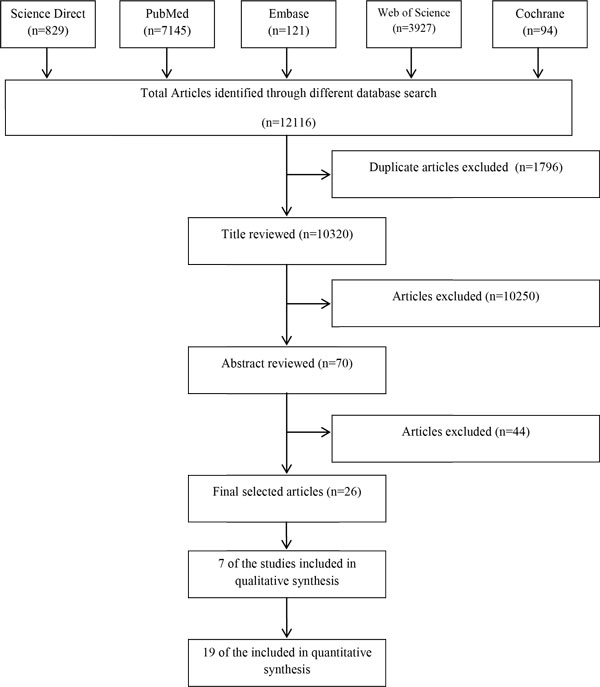
Methods: A computer based literature search was carried out. "PubMed, Cochrane Library, Embase, Web of Science, and Science Direct" databases were searched systematically. Our search strategy identified a total of 12,116 papers of which 26 studies met the inclusion criteria and quality assessment. These were original papers published between January 2003 and January 2013.
Results: The trends in RTW differ among countries for the breast cancer survivors. The time to RTW after successful cancer treatment also varies among the countries and by ethnicity. The prevalence of the RTW varies from 43% to 93% within one year of diagnosis. The prevalence of the RTW for the Netherland is the lowest in the world (43%). The United States survivors showed the highest RTW (93%) within 12 months of the diagnosis. Numerous barriers and facilitators were identified as factors that affect RTW. For instance, socio-demographic factors such as education and ethnicity; treatment oriented factors such as chemotherapy; work related factors such as heavy physical work; disease related factors such as poor health condition and fatigue; and psychological factors such as depression and emotional distress, act as barriers of RTW. In contrast, social, family, employer support, and financial independency emerge as key facilitators in enabling breast cancer survivors to return and continue work.
Conclusion: Minimising these identified barriers and strengthening these facilitators could further improve the work condition and increase the percentage of RTW among the breast cancer survivors.
Figures
References
-
- World health organization. The Global burden of disease: 2004 update. 2008.
-
- Ferlay J, Bray F, Forman D, Mathers C, Parkin DM. GLOBOCAN 2008 v1.2, Cancer Incidence and Mortality Worldwide: IARC CancerBase No. 10 [Internet] Lyon, France: International Agency for Research on Cancer. 2010. http://globocan.iarc.fr
Publication types
MeSH terms
LinkOut - more resources
Full Text Sources
Other Literature Sources
Medical
Miscellaneous
