


Comparison groups in yoga research: a systematic review and critical evaluation of the literature
- PMID: 25440384
- PMCID: PMC4254537
- DOI: 10.1016/j.ctim.2014.08.008
Comparison groups in yoga research: a systematic review and critical evaluation of the literature
Abstract
Objectives: Comparison groups are essential for accurate testing and interpretation of yoga intervention trials. However, selecting proper comparison groups is difficult because yoga comprises a very heterogeneous set of practices and its mechanisms of effect have not been conclusively established.
Methods: We conducted a systematic review of the control and comparison groups used in published randomized controlled trials (RCTs) of yoga.
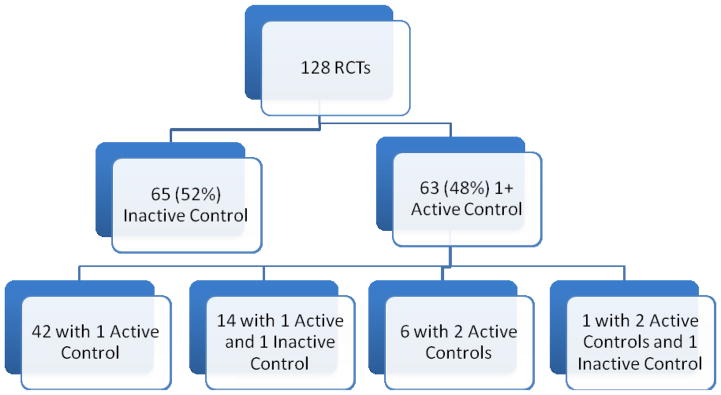
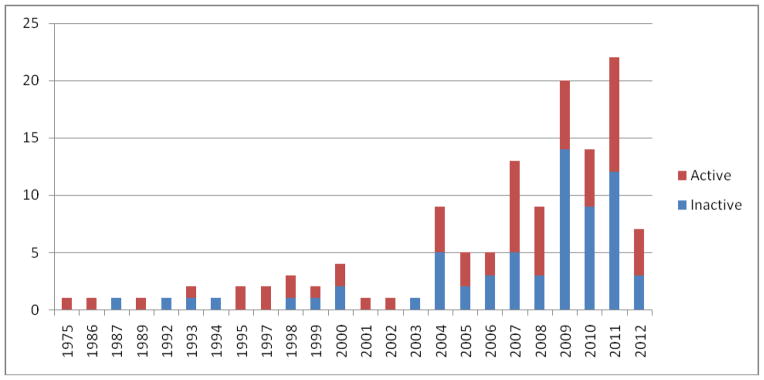
Results: We located 128 RCTs that met our inclusion criteria; of these, 65 included only a passive control and 63 included at least one active comparison group. Primary comparison groups were physical exercise (43%), relaxation/meditation (20%), and education (16%). Studies rarely provided a strong rationale for choice of comparison. Considering year of publication, the use of active controls in yoga research appears to be slowly increasing over time.
Conclusions: Given that yoga has been established as a potentially powerful intervention, future research should use active control groups. Further, care is needed to select comparison conditions that help to isolate the specific mechanisms of yoga's effects.
Keywords: Comparison group; Control group; Randomized controlled trials; Systematic review; Yoga.
Copyright © 2014 Elsevier Ltd. All rights reserved.
Conflict of interest statement
Figures
References
-
- Chong CS, Tsunaka M, Tsang H, Chan EP, Cheung WM. Effects of yoga on stress management in healthy adults: A systematic review. Alt Ther in Health and Med. 2011;17:32–38. - PubMed
-
- Posadzki P, Ernst E. Yoga for asthma? A systematic review of randomized clinical trials. J of Asthma. 2011b;48:632–639. - PubMed
Publication types
MeSH terms
Grants and funding
LinkOut - more resources
Full Text Sources
Other Literature Sources
Medical
Miscellaneous
