


Maternal immune activation in nonhuman primates alters social attention in juvenile offspring
- PMID: 25442006
- PMCID: PMC7010413
- DOI: 10.1016/j.biopsych.2014.07.035
Maternal immune activation in nonhuman primates alters social attention in juvenile offspring
Abstract
Background: Sickness during pregnancy is associated with an increased risk of offspring neurodevelopmental disorders. Rodent models have played a critical role in establishing causal relationships and identifying mechanisms of altered brain and behavior development in pups prenatally exposed to maternal immune activation (MIA). We recently developed a novel nonhuman primate model to bridge the gap between human epidemiological studies and rodent models of prenatal immune challenge. Our initial results demonstrated that rhesus monkeys given the viral mimic synthetic double-stranded RNA (polyinosinic:polycytidylic acid stabilized with poly-l-lysine) during pregnancy produce offspring with abnormal repetitive behaviors, altered communication, and atypical social interactions.
Methods: We utilized noninvasive infrared eye tracking to further evaluate social processing capabilities in a subset of the first trimester MIA-exposed offspring (n = 4) and control animals (n = 4) from our previous study.
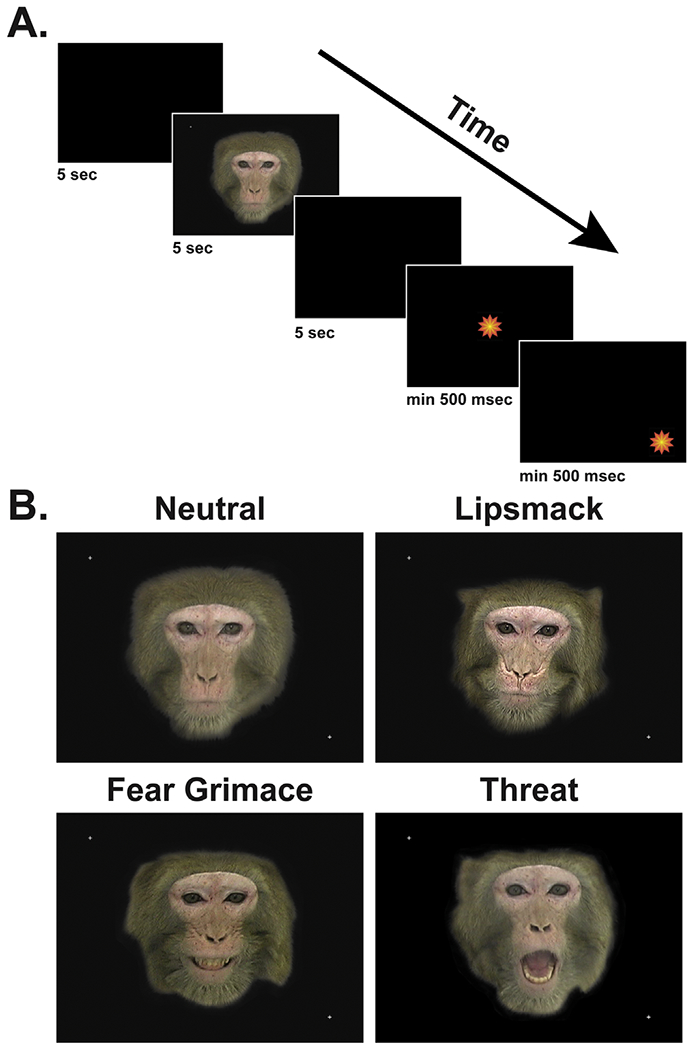
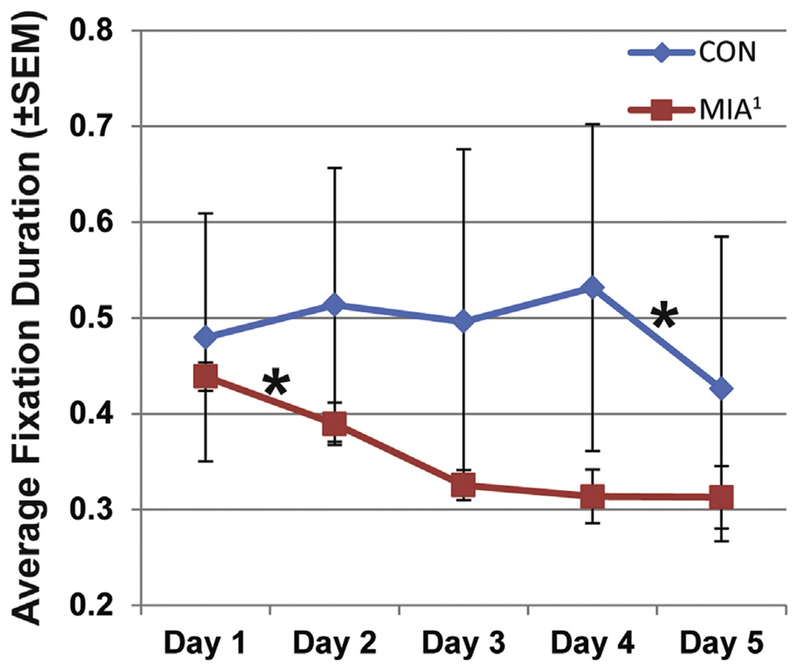
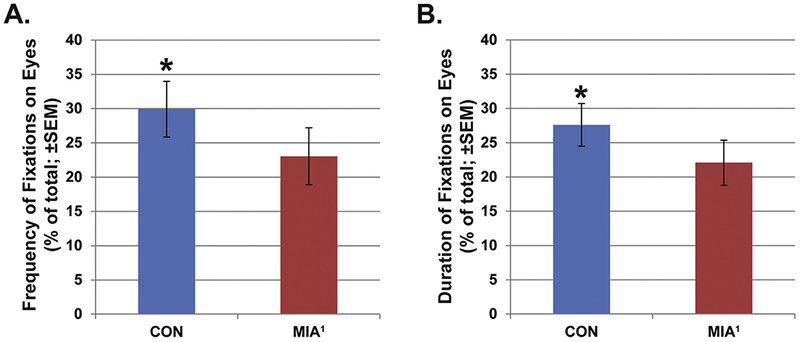
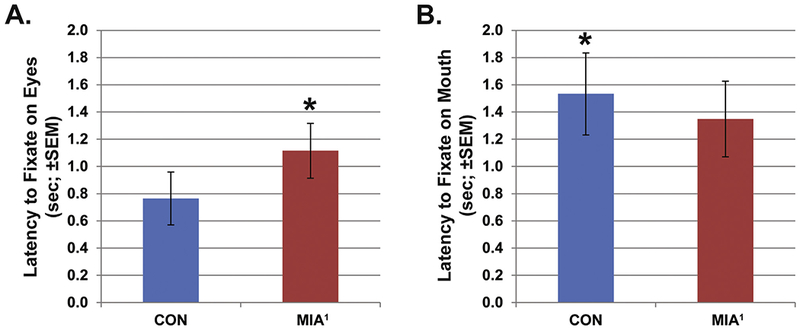
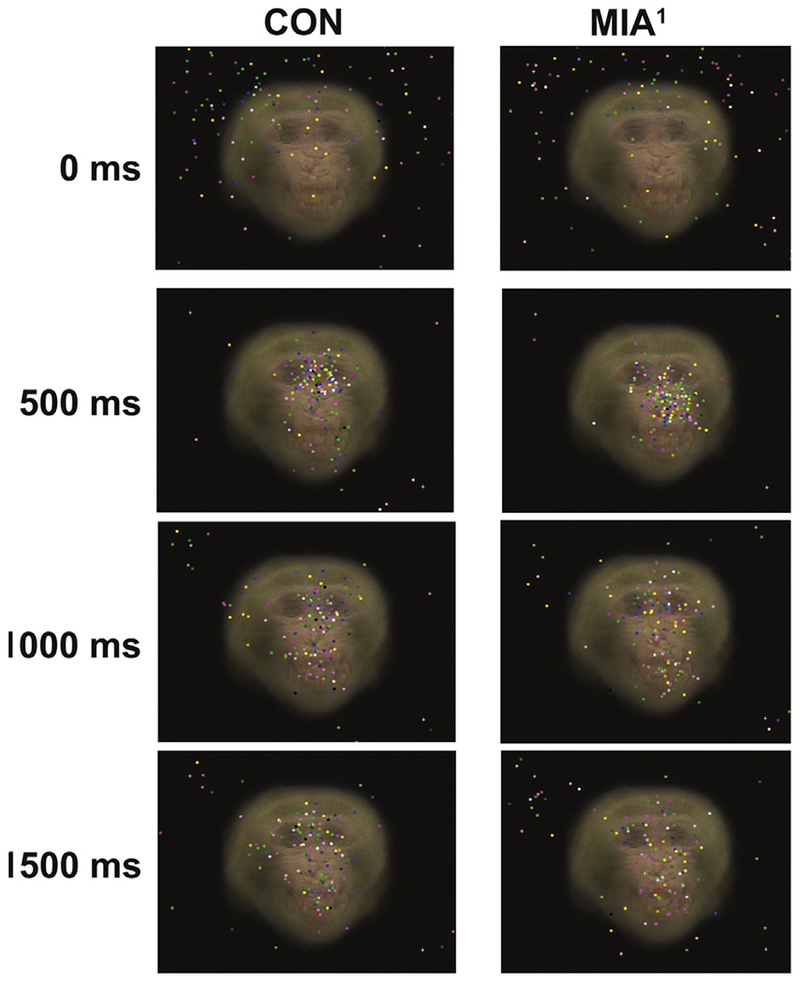
Results: As juveniles, the MIA offspring differed from control animals on several measures of social attention, particularly when viewing macaque faces depicting the fear grimace facial expression. Compared with control animals, MIA offspring had a longer latency before fixating on the eyes, had fewer fixations directed at the eyes, and spent less total time fixating on the eyes of the fear grimace images.
Conclusions: In the rhesus monkey model, exposure to MIA at the end of the first trimester results in abnormal gaze patterns to salient social information. The use of noninvasive eye tracking extends the findings from rodent MIA models to more human-like behaviors resembling those in both autism spectrum disorder and schizophrenia.
Keywords: Autism spectrum disorders; Immunology; Macaque; Nonhuman primate; Poly IC; Schizophrenia; Social attention.
Copyright © 2015 Society of Biological Psychiatry. Published by Elsevier Inc. All rights reserved.
Figures

References
-
- Hagberg H, Gressens P, Mallard C (2012): Inflammation during fetal and neonatal life: Implications for neurologic and neuropsychiatric disease in children and adults. Ann Neurol 71:444–457. - PubMed
-
- Rosenberg RE, Law JK, Yenokyan G, McGready J, Kaufmann WE, Law PA (2009): Characteristics and concordance of autism spectrum disorders among 277 twin pairs. Arch Pediatr Adolesc Med 163: 907–914. - PubMed
-
- Brown AS, Schaefer CA, Quesenberry CP Jr, Liu L, Babulas VP, Susser ES (2005): Maternal exposure to toxoplasmosis and risk of schizophrenia in adult offspring. Am J Psychiatry 162:767–773. - PubMed
Publication types
MeSH terms
Substances
Grants and funding
LinkOut - more resources
Full Text Sources
Other Literature Sources
Medical
Research Materials
Miscellaneous
