


Identification and genomic characterization of a novel porcine parvovirus (PPV6) in China
- PMID: 25442288
- PMCID: PMC4265361
- DOI: 10.1186/s12985-014-0203-2
Identification and genomic characterization of a novel porcine parvovirus (PPV6) in China
Abstract
Background: Parvoviruses are classified into two subfamilies based on their host range: the Parvovirinae, which infect vertebrates, and the Densovirinae, which mainly infect insects and other arthropods. In recent years, a number of novel parvoviruses belonging to the subfamily Parvovirinae have been identified from various animal species and humans, including human parvovirus 4 (PARV4), porcine hokovirus, ovine partetravirus, porcine parvovirus 4 (PPV4), and porcine parvovirus 5 (PPV5).
Methods: Using sequence-independent single primer amplification (SISPA), a novel parvovirus within the subfamily Parvovirinae that was distinct from any known parvoviruses was identified and five full-length genome sequences were determined and analyzed.
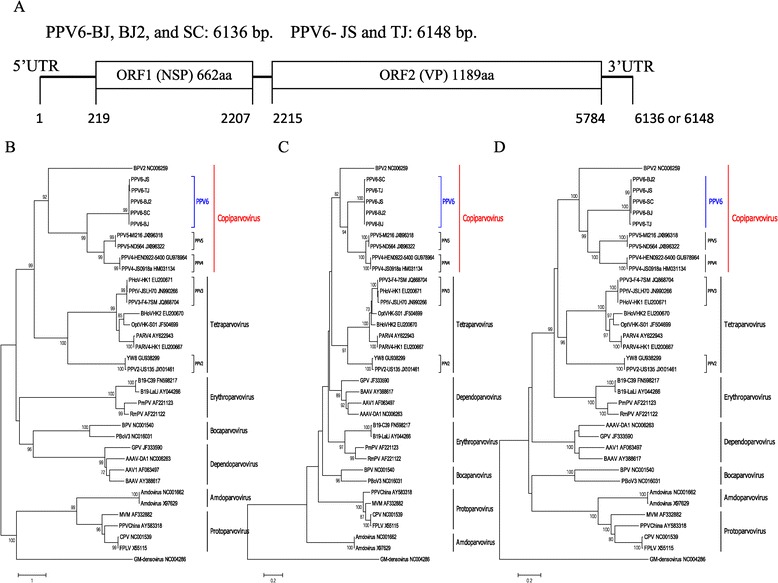
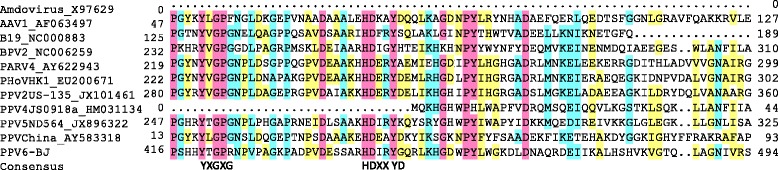
Results: A novel porcine parvovirus, provisionally named PPV6, was initially identified from aborted pig fetuses in China. Retrospective studies revealed the prevalence of PPV6 in aborted pig fetuses and piglets(50% and 75%, respectively) was apparently higher than that in finishing pigs and sows (15.6% and 3.8% respectively). Furthermore, the prevalence of PPV6 in finishing pig was similar in affected and unaffected farms (i.e. 16.7% vs. 13.6%-21.7%). This finding indicates that animal age, perhaps due to increased innate immune resistance, strongly influences the level of PPV6 viremia. Complete genome sequencing and multiple alignments have shown that the nearly full-length genome sequences were approximately 6,100 nucleotides in length and shared 20.5%-42.6% DNA sequence identity with other members of the Parvovirinae subfamily. Phylogenetic analysis showed that PPV6 was significantly distinct from other known parvoviruses and was most closely related to PPV4.
Conclusion: Our findings and review of published parvovirus sequences suggested that a novel porcine parvovirus is currently circulating in China and might be classified into the novel genus Copiparvovirus within the subfamily Parvovirinae. However, the clinical manifestations of PPV6 are still unknown in that the prevalence of PPV6 was similar between healthy pigs and sick pigs in a retrospective epidemiological study. The identification of PPV6 within the subfamily Parvovirinae provides further insight into the viral and genetic diversity of parvoviruses.
Figures
References
-
- Hueffer K, Parrish CR. Parvovirus host rang, cell tropism and evolution. Curr Top Microbiol Immunol. 2003;6:392–398. - PubMed
-
- Knowles NJ, Hovi T, Hyypiä T, King AMQ, Lindberg AM, Pallansch MA, Palmenberg AC, Simmonds P, Skern T, Stanway G, Yamashita T, Zell R. Virus Taxonomy 9th report of the International Committee on Taxonomy of Viruses. London: Academic Press; 2011. Family Parvoviridae; pp. 405–425.
-
- López-Bueno A, Villarreal LP, Almendral JM. Parvovirus variation for disease: a difference with RNA viruses? Curr Top Microbiol Immunol. 2006;299:349–370. - PubMed
Publication types
MeSH terms
Substances
Associated data
- Actions
- Actions
- Actions
- Actions
- Actions
LinkOut - more resources
Full Text Sources
Other Literature Sources
