


The ultrastructure of fibronectin fibers pulled from a protein monolayer at the air-liquid interface and the mechanism of the sheet-to-fiber transition
- PMID: 25442805
- PMCID: PMC4234482
- DOI: 10.1016/j.biomaterials.2014.08.012
The ultrastructure of fibronectin fibers pulled from a protein monolayer at the air-liquid interface and the mechanism of the sheet-to-fiber transition
Abstract
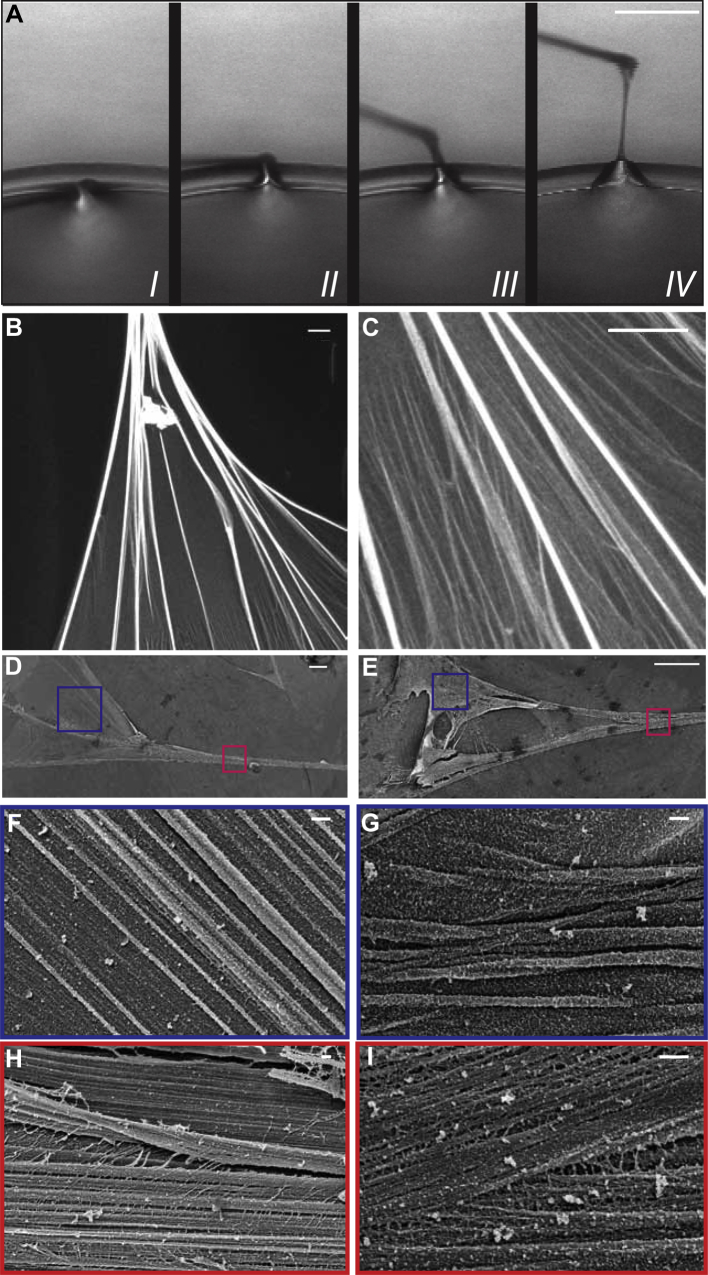
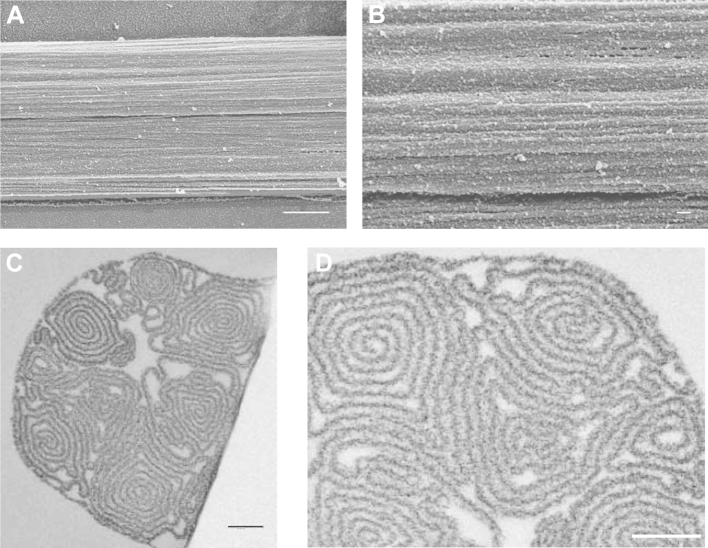
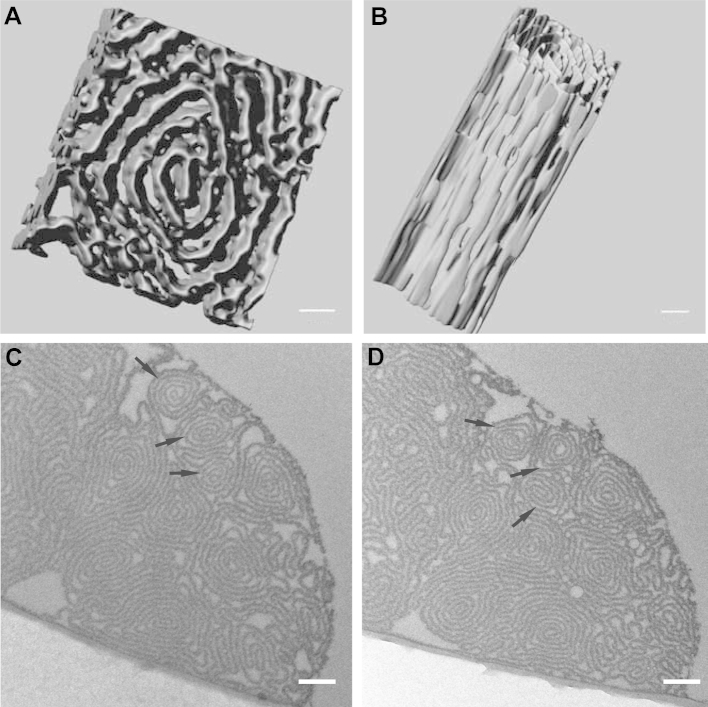
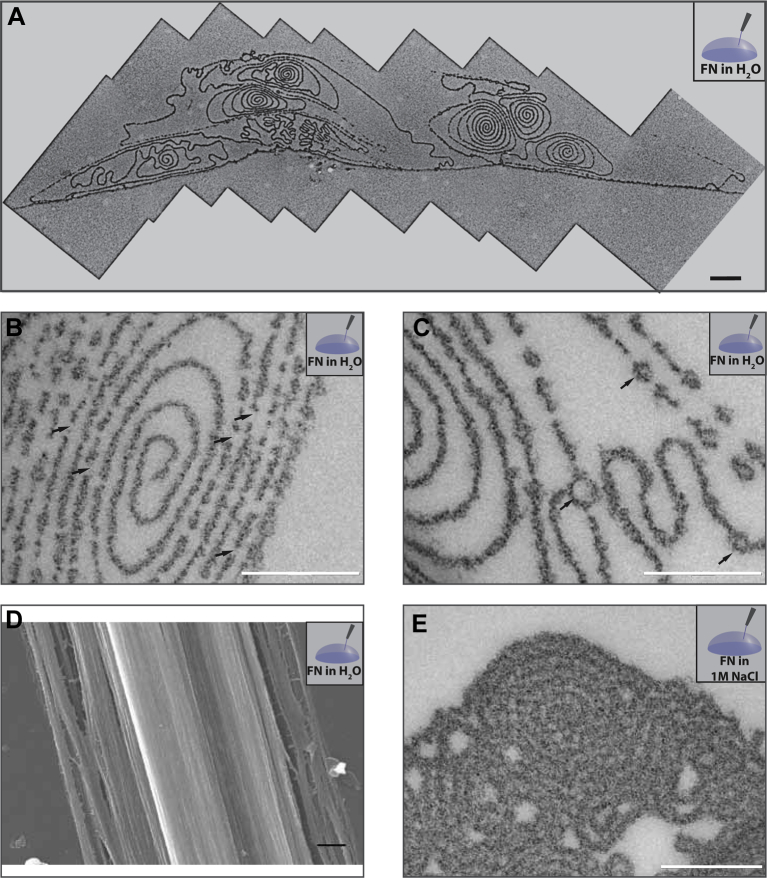
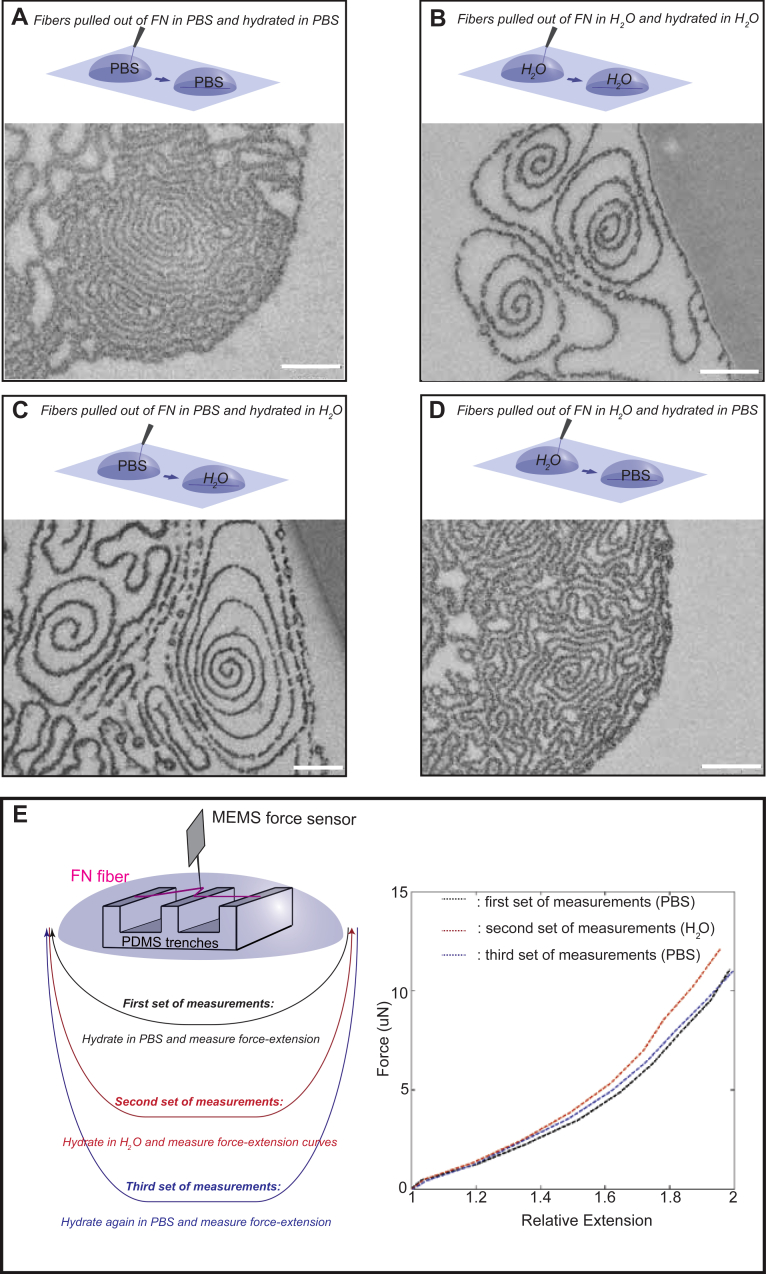
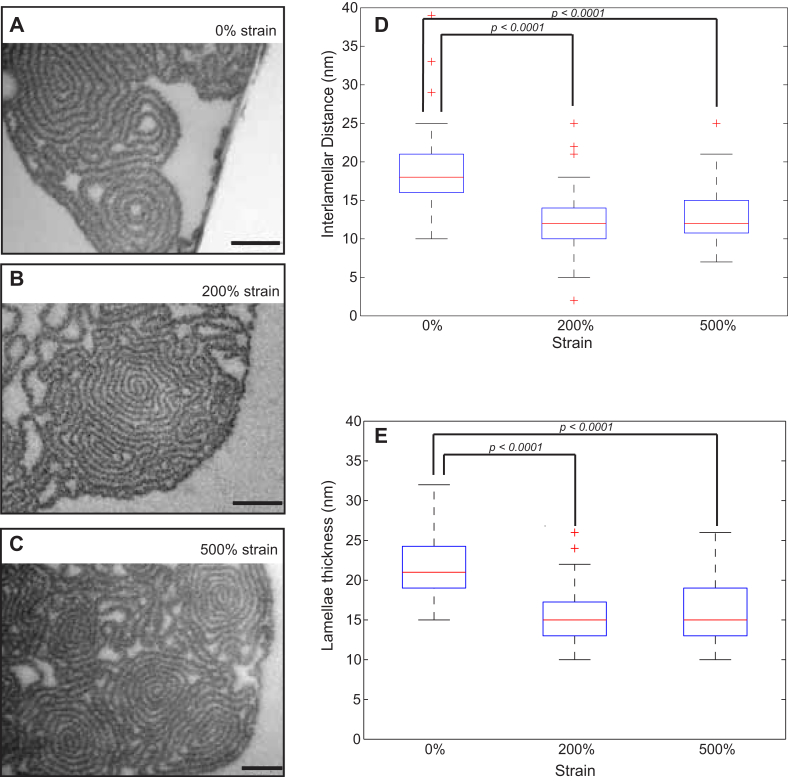
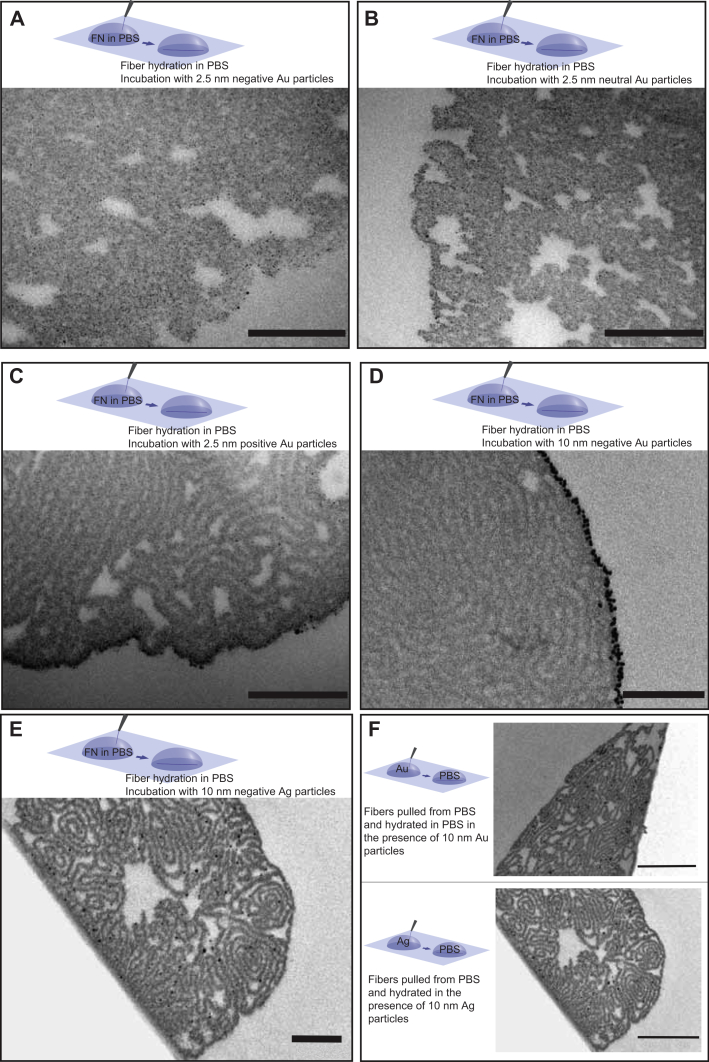
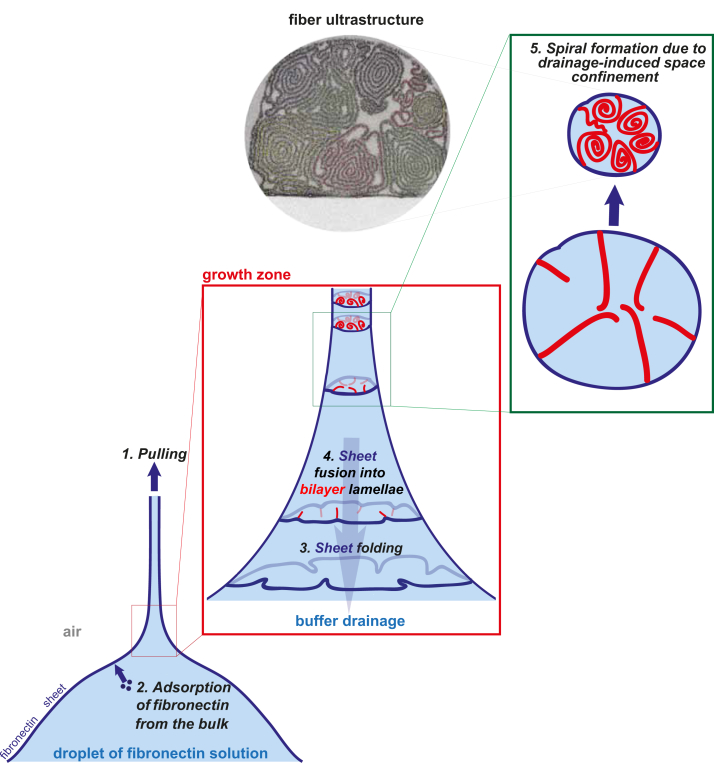
Fibronectin is a globular protein that circulates in the blood and undergoes fibrillogenesis if stretched or under other partially denaturing conditions, even in the absence of cells. Stretch assays made by pulling fibers from droplets of solutions containing high concentrations of fibronectin have previously been introduced in mechanobiology, particularly to ask how bacteria and cells exploit the stretching of fibronectin fibers within extracellular matrix to mechano-regulate its chemical display. Our electron microscopy analysis of their ultrastructure now reveals that the manually pulled fibronectin fibers are composed of densely packed lamellar spirals, whose interlamellar distances are dictated by ion-tunable electrostatic interactions. Our findings suggest that fibrillogenesis proceeds via an irreversible sheet-to-fiber transition as the fibronectin sheet formed at the air-liquid interface of the droplet is pulled off by a sharp tip. This far from equilibrium process is driven by the externally applied force, interfacial surface tension, shear-induced fibronectin self-association, and capillary force-induced buffer drainage. The ultrastructural characterization is then contrasted with previous FRET studies that characterized the molecular strain within these manually pulled fibers. Particularly relevant for stretch-dependent binding studies is the finding that the interior fiber surfaces are accessible to nanoparticles smaller than 10 nm. In summary, our study discovers the underpinning mechanism by which highly hierarchically structured fibers can be generated with unique mechanical and mechano-chemical properties, a concept that might be extended to other bio- or biomimetic polymers.
Keywords: Electron microscopy; Fibrillogenesis; Fibronectin; Kinetically trapped supramolecular system; Monolayer-to-lamella transition; Sheet-to-fiber transition.
Copyright © 2014 The Authors. Published by Elsevier Ltd.. All rights reserved.
Figures
References
-
- Ruoslahti E. Fibronectin in cell adhesion and invasion. Cancer Metastasis Rev. 1984;3:43–51. - PubMed
-
- Miyamoto S., Katz B.Z., Lafrenie R.M., Yamada K.M. Fibronectin and integrins in cell adhesion, signaling, and morphogenesis. Ann N Y Acad Sci. 1998;857:119–129. - PubMed
-
- Vogel V. Mechanotransduction involving multimodular proteins: converting force into biochemical signals. Annu Rev Biophys Biomol Struct. 2006;35:459–488. - PubMed
Publication types
MeSH terms
Substances
Grants and funding
LinkOut - more resources
Full Text Sources
Other Literature Sources
