


Alloimmunization in sickle cell disease: changing antibody specificities and association with chronic pain and decreased survival
- PMID: 25444611
- PMCID: PMC4451450
- DOI: 10.1111/trf.12940
Alloimmunization in sickle cell disease: changing antibody specificities and association with chronic pain and decreased survival
Abstract
Background: Alloimmunization remains a significant complication of transfusion and has been associated with multiple factors, including inflammation, an important pathophysiologic mechanism in sickle cell disease (SCD). We explored whether alloimmunization is associated with disease severity in SCD.
Study design and methods: Adult SCD patients were enrolled in a study of outcome-modifying genes in SCD. Historical records of patients with SCD at two participating institutions were reviewed for data on antigen phenotype and alloimmunization. Differences in demographic, clinical, and laboratory findings; end-organ damage; and overall disease severity were then compared between alloimmunized and nonalloimmunized patients.
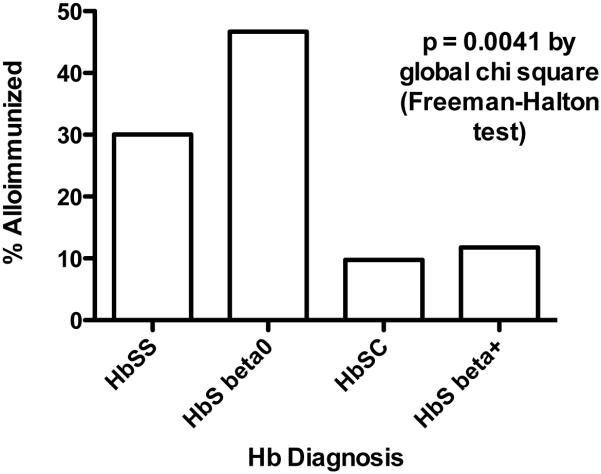
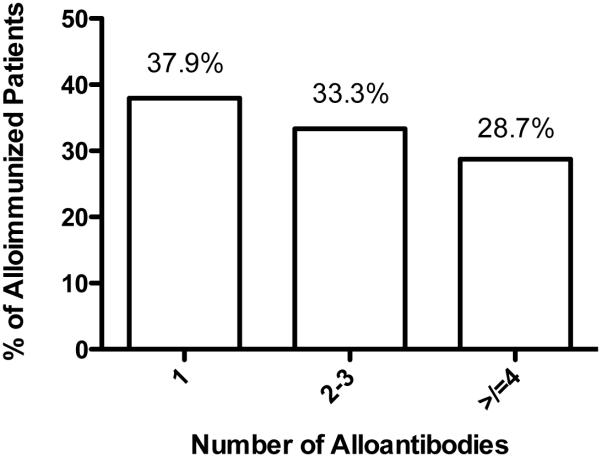
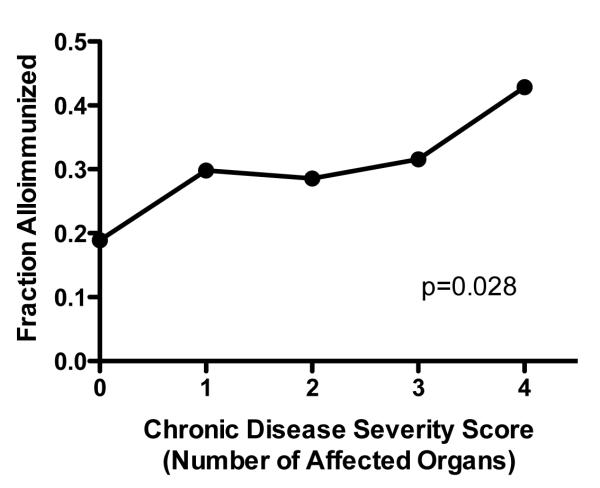
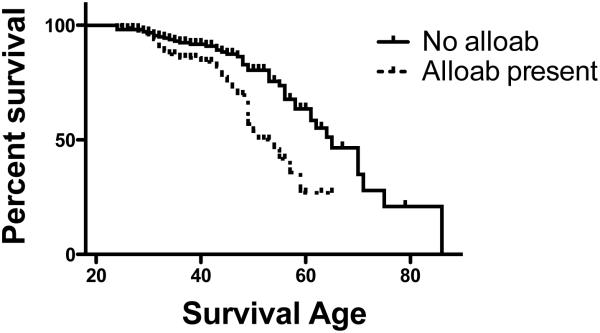
Results: Of 319 patients, 87 (27%) were alloimmunized. Alloantibody specificities differed from those previously described, especially due to the significantly higher frequency of anti-S. Although alloimmunization was not associated with frequency of vasoocclusive episodes, a higher percentage of alloimmunized patients had chronic pain, as defined by daily use of short-acting narcotics (p = 0.006), long-acting narcotics (p = 0.013), or both (p = 0.03). Additionally, alloimmunized patients had poorer survival (hazard ratio, 1.92; p = 0.01) and were more likely to have avascular necrosis (p = 0.024), end-organ damage (p = 0.049), and red blood cell autoantibodies (p < 0.001), even after controlling for the effects of age, sex, and hemoglobin diagnosis. Alloimmunization was not associated with other SCD-related complications, such as acute chest syndrome or stroke.
Conclusion: Alloimmunization in SCD may be associated with chronic pain, risk of end-organ damage, and shorter survival. These novel findings suggest new directions for the investigation of immune response-mediated pathways common to alloimmunization and chronic pain.
© 2014 AABB.
Figures
Comment in
-
Does recipient inflammation contribute to red blood cell alloimmunization?Transfusion. 2015 Jun;55(6 Pt 2):1371-3. doi: 10.1111/trf.13058. Transfusion. 2015. PMID: 26094719 No abstract available.
References
-
- Telen MJ. Principles and problems of transfusion in sickle cell disease. Semin Hematol. 2001;38:315–23. - PubMed
-
- Heddle NM, Soutar RL, O'Hoski PL, Singer J, McBride JA, Ali MA, Kelton JG. A prospective study to determine the frequency and clinical significance of alloimmunization post-transfusion. Br J Haematol. 1995;91:1000–5. - PubMed
-
- Vichinsky EP, Earles A, Johnson RA, Hoag MS, Williams A, Lubin B. Alloimmunization in sickle cell anemia and transfusion of racially unmatched blood. N Engl J Med. 1990;322:1617–21. - PubMed
-
- King KE, Shirey RS, Lankiewicz MW, Young-Ramsaran J, Ness PM. Delayed hemolytic transfusion reactions in sickle cell disease: simultaneous destruction of recipients' red cells. Transfusion. 1997;37:376–81. - PubMed
-
- Win N, New H, Lee E, de la Fuente J. Hyperhemolysis syndrome in sickle cell disease: case report (recurrent episode) and literature review. Transfusion. 2008;48:1231–8. - PubMed
Publication types
MeSH terms
Substances
Grants and funding
LinkOut - more resources
Full Text Sources
Other Literature Sources
Medical
Molecular Biology Databases
