The changing landscape of pulmonary arterial hypertension and implications for patient care
- PMID: 25445943
- PMCID: PMC9487398
- DOI: 10.1183/09059180.00007814
The changing landscape of pulmonary arterial hypertension and implications for patient care
Abstract
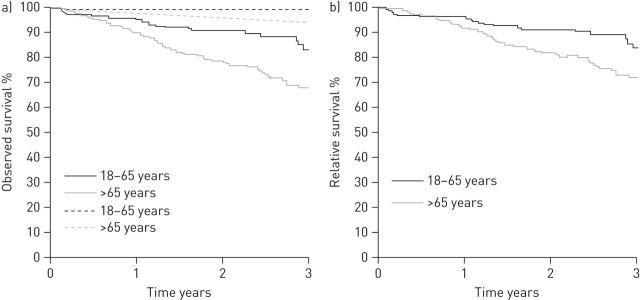
Registries have provided a wealth of information on the clinical and disease characteristics of patients living with pulmonary arterial hypertension (PAH) since the 1980s. Certain PAH demographics, such as the prevalence of various PAH subgroups and preponderance of female patients, appear to have remained stable over time. Contemporary registry data indicate that the average age of patients diagnosed with PAH has increased, at least in the Western world. Older patients with PAH are more likely to be diagnosed with a more advanced stage of the disease, have lower exercise capacity and present with multiple comorbidities. They also have worse survival compared with younger patients. Within the PAH population, there is also a subset of patients with a lower diffusing capacity of the lung for carbon monoxide who are generally older and display more severe disease characteristics. This review discusses the implications that the increased age of the PAH population at diagnosis has on the treatment and management of the disease, as well as the need for earlier and improved diagnosis in these patients.
©ERS 2014.
Conflict of interest statement
Conflict of interest: Disclosures can be found alongside the online version of this article at
Figures
References
-
- Galiè N, Torbicki A, Barst R, et al. Guidelines on diagnosis and treatment of pulmonary arterial hypertension. The Task Force on Diagnosis and Treatment of Pulmonary Arterial Hypertension of the European Society of Cardiology. Eur Heart J 2004; 25: 2243–2278. - PubMed
-
- Peacock AJ, Murphy NF, McMurray JJ, et al. An epidemiological study of pulmonary arterial hypertension. Eur Respir J 2007; 30: 104–109. - PubMed
-
- Frost AE, Badesch DB, Barst RJ, et al. The changing picture of patients with pulmonary arterial hypertension in the United States: how REVEAL differs from historic and non-US Contemporary Registries. Chest 2011; 139: 128–137. - PubMed
-
- Humbert M, Sitbon O, Chaouat A, et al. Pulmonary arterial hypertension in France. Results from a national registry. Am J Respir Crit Care Med 2006; 173: 1023–1030. - PubMed
-
- Escribano-Subias P, Blanco I, López-Meseguer M, et al. Survival in pulmonary hypertension in Spain: insights from the Spanish registry. Eur Respir J 2012; 40: 596–603. - PubMed
Publication types
MeSH terms
LinkOut - more resources
Full Text Sources
Other Literature Sources
Medical