


Sensitivity to hepatotoxicity due to epigallocatechin gallate is affected by genetic background in diversity outbred mice
- PMID: 25446466
- PMCID: PMC4324012
- DOI: 10.1016/j.fct.2014.11.008
Sensitivity to hepatotoxicity due to epigallocatechin gallate is affected by genetic background in diversity outbred mice
Abstract
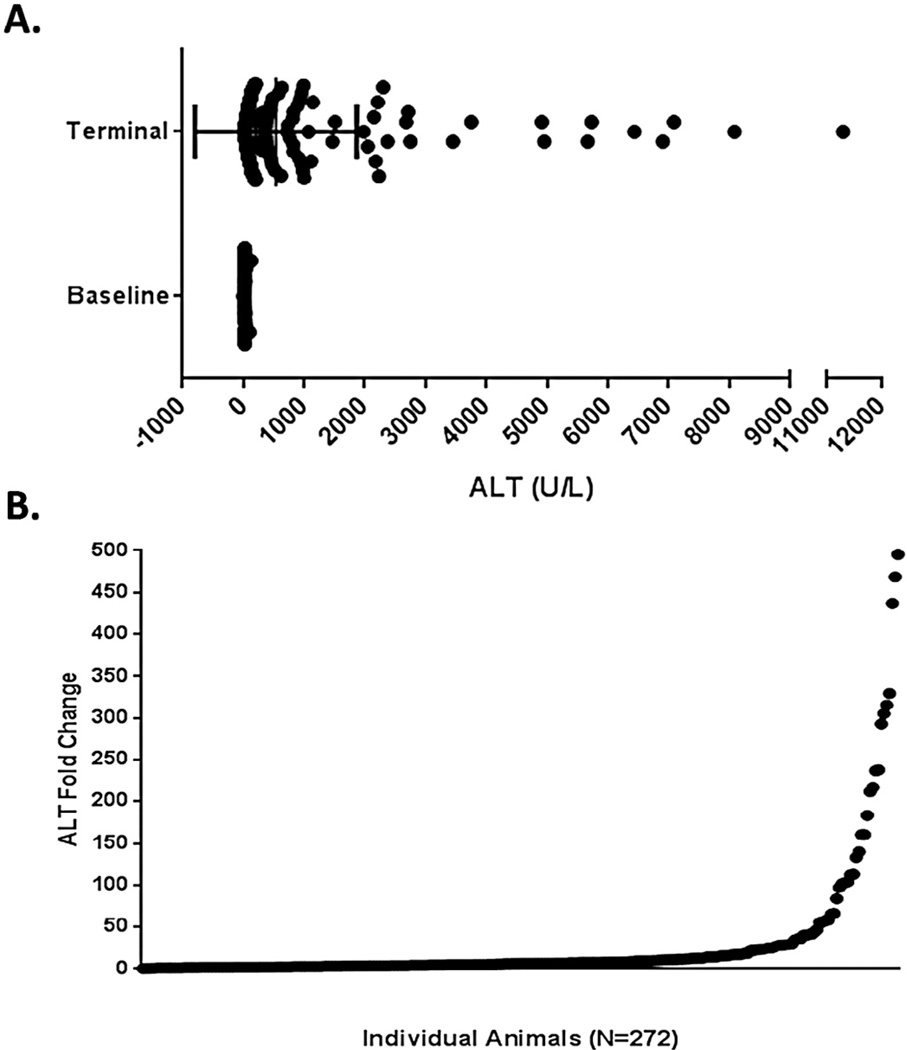
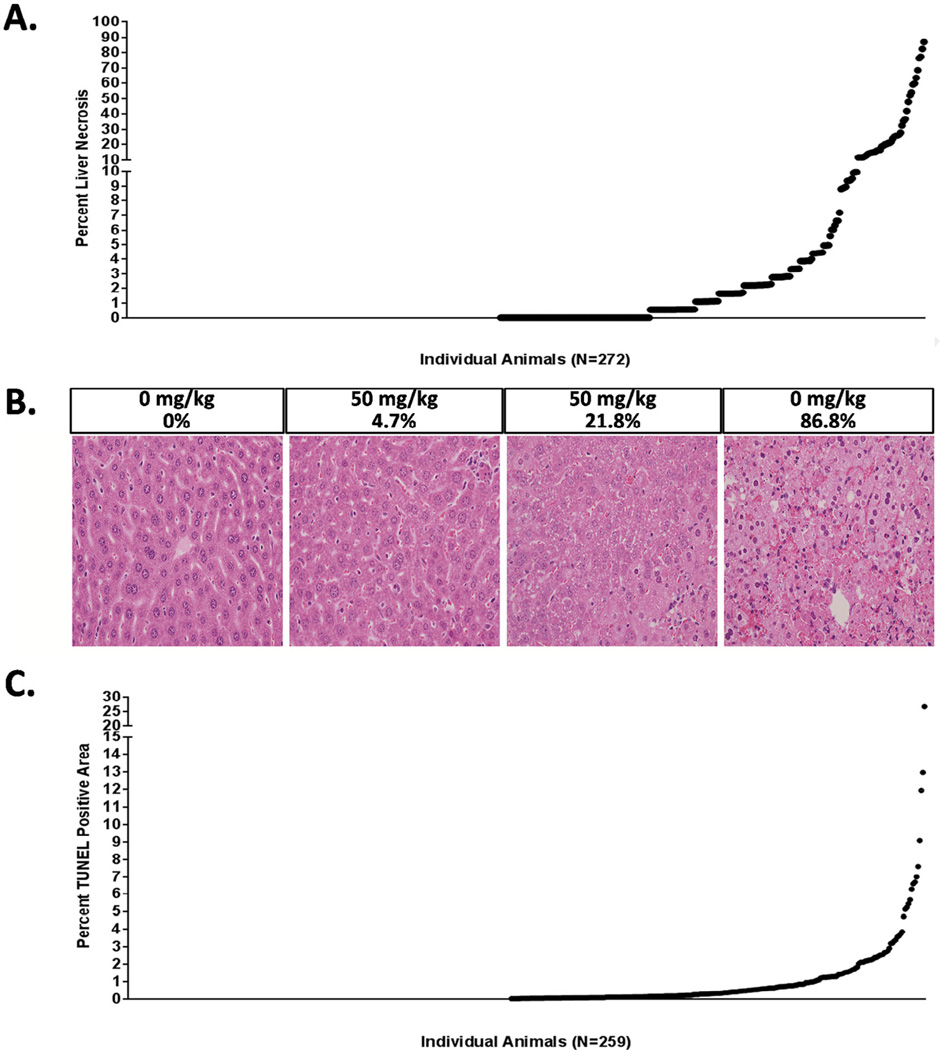
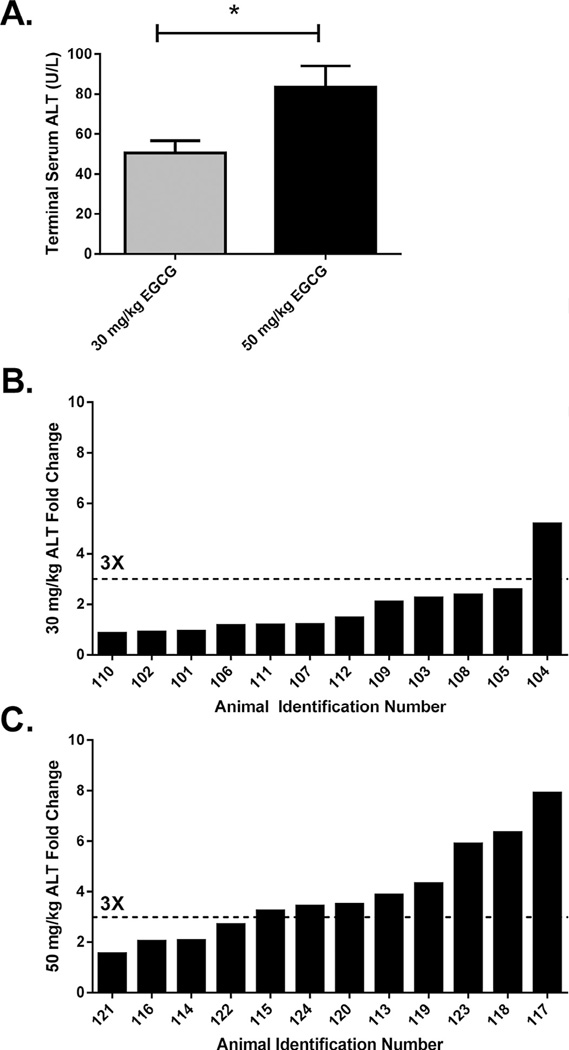
Consumer use of herbal and dietary supplements has recently grown in the United States and, with increased use, reports of rare adverse reactions have emerged. One such supplement is green tea extract, containing the polyphenol epigallocatechin gallate (EGCG), which has been shown to be hepatotoxic at high doses in animal models. The Drug-Induced Liver Injury Network has identified multiple patients who have experienced liver injury ascribed to green tea extract consumption and the relationship to dose has not been straightforward, indicating that differences in sensitivity may contribute to the adverse response in susceptible people. The Diversity Outbred (DO), a genetically heterogeneous mouse population, provides a potential platform for study of interindividual toxicity responses to green tea extract. Within the DO population, an equal exposure to EGCG (50 mg/kg; daily for three days) was found to be tolerated in the majority of mice; however, a small fraction of the animals (16%; 43/272) exhibited severe hepatotoxicity (10-86.8% liver necrosis) that is analogous to the clinical cases. The data indicate that the DO mice may provide a platform for informing risk of rare, adverse reactions that may occur in consumer populations upon ingestion of concentrated herbal products.
Keywords: Diversity outbred; Epigallocatechin gallate; Green tea; Hepatotoxicity; Herbal; Population variability.
Copyright © 2014 The Authors. Published by Elsevier Ltd.. All rights reserved.
Conflict of interest statement
The authors declare that there are no conflicts of interest.
Figures
References
-
- Bjornsson E, Olsson R. Serious adverse liver reactions associated with herbal weight-loss supplements. J. Hepatol. 2007;47(2):295–297. author reply 7–8. - PubMed
-
- Bonkovsky HL. Hepatotoxicity associated with supplements containing Chinese green tea (Camellia sinensis) Ann. Intern. Med. 2006;144(1):68–71. - PubMed
-
- Cavaliere C, Rea P, Lynch ME, Blumenthal M. Herbal supplement sales rise in all channels in 2009. HerbalGram. 2010;86:62–65.
Publication types
MeSH terms
Substances
Grants and funding
LinkOut - more resources
Full Text Sources
Other Literature Sources
Medical
Molecular Biology Databases
