


Live attenuated H7N7 influenza vaccine primes for a vigorous antibody response to inactivated H7N7 influenza vaccine
- PMID: 25446831
- PMCID: PMC9002966
- DOI: 10.1016/j.vaccine.2014.09.070
Live attenuated H7N7 influenza vaccine primes for a vigorous antibody response to inactivated H7N7 influenza vaccine
Abstract
Background: H7 influenza viruses have emerged as potential pandemic threat. We evaluated the safety and immunogenicity of two candidate H7 pandemic live attenuated influenza vaccines (pLAIV) and their ability to prime for responses to an unadjuvanted H7 pandemic inactivated influenza vaccine (pIIV).
Methods: Healthy seronegative adults received two doses of A/Netherlands/219/03 (H7N7) or one dose of A/chicken/British Columbia/CN-6/04 (H7N3) pLAIV all given as 10(7.5) 50% tissue culture infective doses (TCID50) intranasally. A subset of subjects received one 45 μg dose of H7N7 pIIV containing the A/Mallard/Netherlands/12/2000 HA intramuscularly 18-24 months after pLAIV. Viral shedding was assessed by culture and real-time polymerase chain reaction (rRT-PCR), B cell responses following pLAIV were evaluated by ELISPOT and flow cytometry. Serum antibody was assessed by hemagglutination-inhibition (HAI), microneutralization (MN) and ELISA assays after each vaccine.
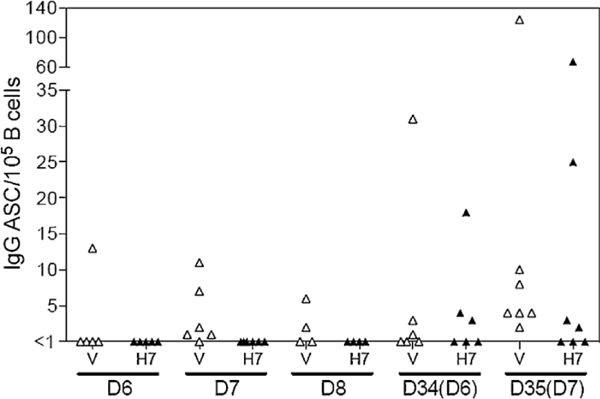
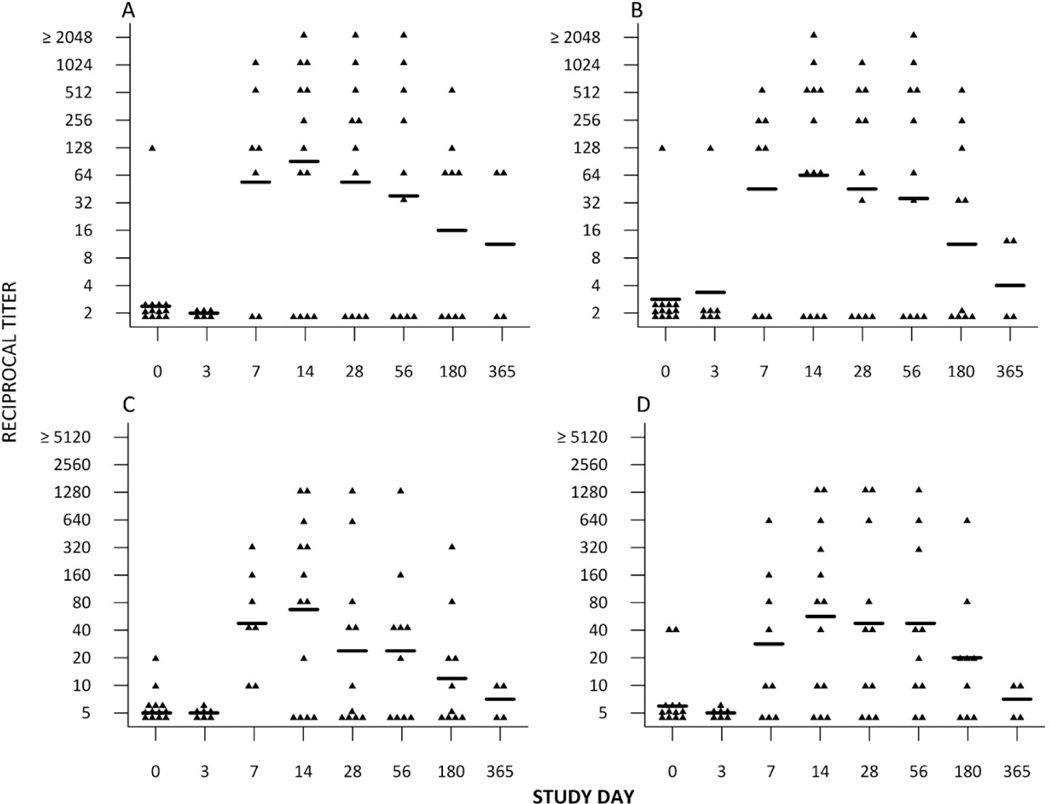
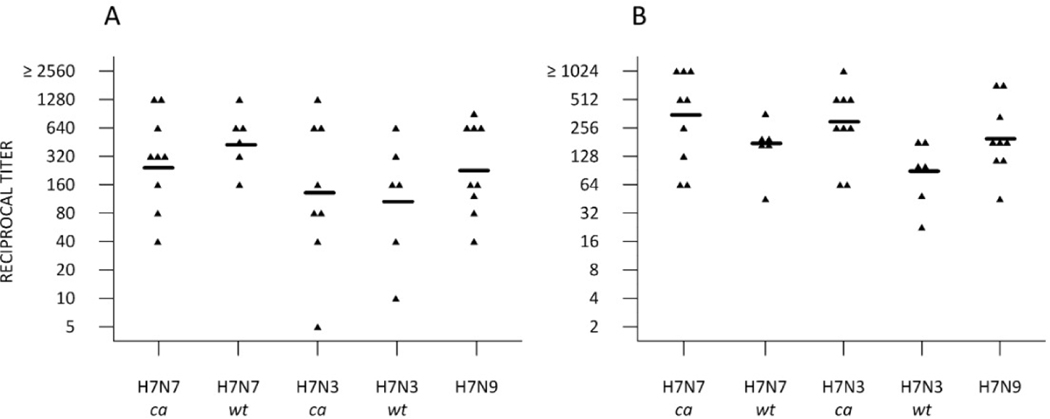
Results: Serum HAI or MN responses were not detected in any subject following one or two doses of either H7 pLAIV, although some subjects had detectable H7 specific B cells after vaccination. However, 10/13 subjects primed with two doses of H7N7 pLAIV responded to a subsequent dose of the homologous H7N7 pIIV with high titer HAI and MN antibody that cross-reacted with both North American and Eurasian lineage H7 viruses, including H7N9. In contrast, naïve subjects and recipients of a single dose of the mismatched H7N3 pLAIV did not develop HAI or MN antibody after pIIV.
Conclusions: While pLAIVs did not elicit detectable serum MN or HAI antibody, strain-specific pLAIV priming established long term immune memory that was cross-reactive with other H7 influenza strains. Understanding the mechanisms underlying priming by pLAIV may aid in pandemic vaccine development.
Trial registration: ClinicalTrials.gov NCT01534468.
Keywords: H7N7; Influenza; Live attenuated vaccine; Pandemic; Priming.
Copyright © 2014. Published by Elsevier Ltd.
Conflict of interest statement
Figures
References
-
- Koopmans M, Wilbrink B, Conyn M, Natrop G, van der Nat H, Vennema H, et al. Transmission of H7N7 avian influenza A virus to human beings during a large outbreak in commercial poultry farms in the Netherlands. Lancet 2004;363:587–93 - PubMed
-
- Gao R, Cao B, Hu Y, Feng Z, Wang D, Hu W, et al. Human infection with a novel avian-origin influenza A (H7N9) virus. N Engl J Med 2013;368:1888–97. - PubMed
Publication types
MeSH terms
Substances
Associated data
Grants and funding
LinkOut - more resources
Full Text Sources
Other Literature Sources
Medical
