Review
. 2014 Dec:29:259-67.
doi: 10.1016/j.ijid.2014.10.015. Epub 2014 Nov 5.

Role of innate immunity in the pathogenesis of otitis media

Affiliations
Review

Role of innate immunity in the pathogenesis of otitis media

Rahul Mittal et al. Int J Infect Dis. 2014 Dec.

Abstract

Otitis media (OM) is a public health problem in both developed and developing countries. It is the leading cause of hearing loss and represents a significant healthcare burden. In some cases, acute OM progresses to chronic suppurative OM (CSOM), characterized by effusion and discharge, despite antimicrobial therapy. The emergence of antibiotic resistance and potential ototoxicity of antibiotics has created an urgent need to design non-conventional therapeutic strategies against OM based on modern insights into its pathophysiology. In this article, we review the role of innate immunity as it pertains to OM and discuss recent advances in understanding the role of innate immune cells in protecting the middle ear. We also discuss the mechanisms utilized by pathogens to subvert innate immunity and thereby overcome defensive responses. A better knowledge about bacterial virulence and host resistance promises to reveal novel targets to design effective treatment strategies against OM. The identification and characterization of small natural compounds that can boost innate immunity may provide new avenues for the treatment of OM. There is also a need to design novel methods for targeted delivery of these compounds into the middle ear, allowing higher therapeutic doses and minimizing systemic side effects.

Keywords: Epithelial cells; Innate immunity; Mucin; Otitis media.


Conflict of interest statement

Conflict of interest: No conflict of interest to declare.

Figures

Figure 1
Figure 1
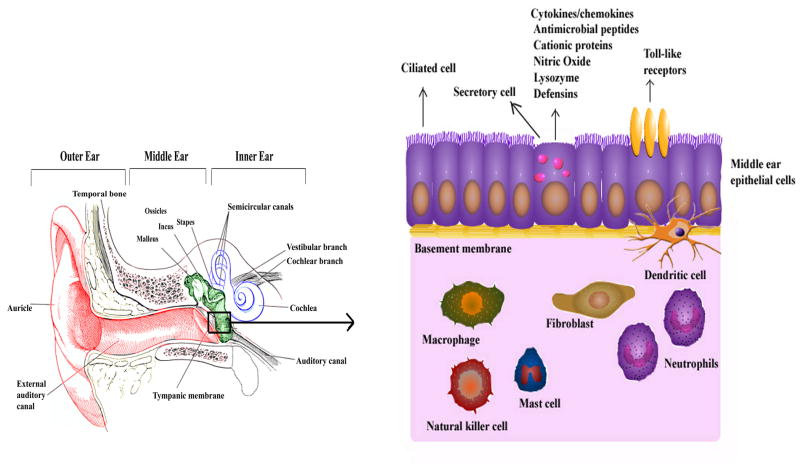
Middle ear innate immunity. The middle ear is lined by epithelial cells, which can provide protection by secreting antimicrobial molecules, or through toll-like receptors (TLRs). The middle ear also possesses innate immune cells such as neutrophils, macrophages, dendritic cells, mast cells, and natural killer cells providing defense against intruding pathogens.
Figure 2
Figure 2
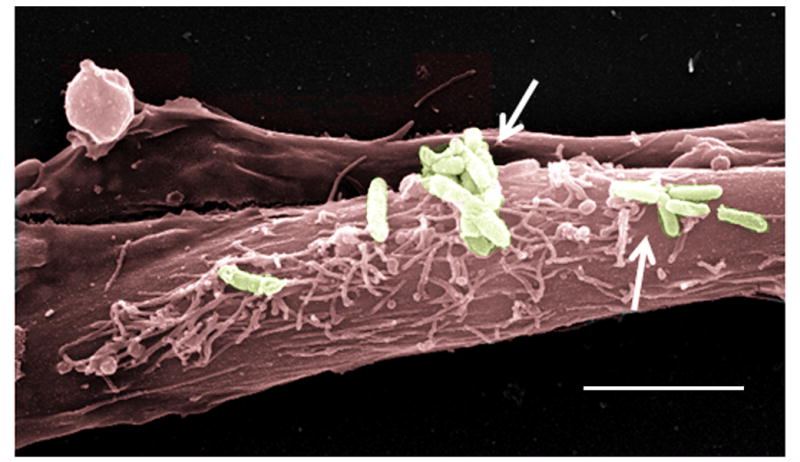
Pseudomonas aeruginosa binds to human middle ear epithelial cells (HMEECs). Scanning electron micrograph showing adhesion of P. aeruginosa to HMEECs. The micrograph was pseudo-colored using Adobe photoshop software. Arrows indicate bacteria. Scale bar 5 μm.
Figure 3
Figure 3
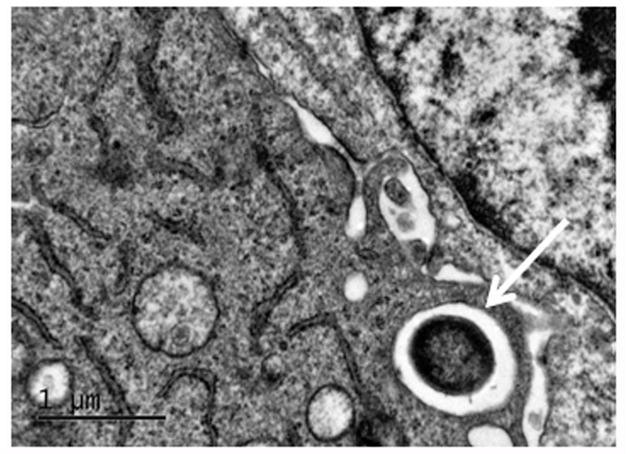
Pseudomonas aeruginosa invades human middle ear epithelial cells (HMEECs). Transmission electron micrograph demonstrating internalization of P. aeruginosa inside HMEECs. Arrow indicates bacteria. Scale bar 1 μm.
Figure 4
Figure 4
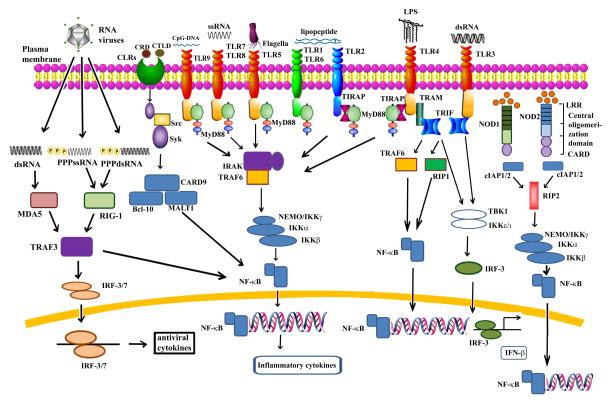
Toll-like receptor (TLR), nucleotide-binding oligomerization domain (NOD)-like receptor (NLR), and retinoic acid-inducible gene (RIG-I)-like receptor (RLR) signaling. TLR1 or TLR2 or TLR6 recognizes lipoproteins, TLR3 recognizes dsRNA, TLR4 recognizes bacterial lipopolysaccharide (LPS), TLR5 recognizes bacterial flagellin, TLR7/8 mediates recognition of ssRNA. TLR9 acts as a DNA sensor and recognizes CpG DNA of bacteria and viruses. The NLR proteins NOD1 and NOD2 are cytosolic pattern recognition receptors (PRRs). NOD1 senses intracellular meso-diaminopimelic acid (DAP), whereas NOD2 recognizes muramyl dipeptide (MDP). C-type lectin receptor (CLR) signaling senses carbohydrate recognition domains (CRDs), or structurally similar C-type lectin-like domains (CTLDs). The RLR pathway is involved in the recognition of viral dsRNA. TLR, NLR, CLR, and RLR signaling causes activation of NF-κB, leading to the production of proinflammatory cytokines and the stimulation of immune responses.

References

    1. Pichichero ME. Otitis media. Pediatr Clin North Am. 2013;60:391–407. - PubMed
    1. Monasta L, Ronfani L, Marchetti F, Montico M, Vecchi Brumatti L, Bavcar A, et al. Burden of disease caused by otitis media: systematic review and global estimates. PLoS One. 2012;7:e36226. - PMC - PubMed
    1. Qureishi A, Lee Y, Belfield K, Birchall JP, Daniel M. Update on otitis media—prevention and treatment. Infect Drug Resist. 2014;7:15–24. - PMC - PubMed
    1. Jensen RG, Koch A, Homøe P. The risk of hearing loss in a population with a high prevalence of chronic suppurative otitis media. Int J Pediatr Otorhinolaryngol. 2013;77:1530–5. - PubMed
    1. Kolo ES, Salisu AD, Yaro AM, Nwaorgu OG. Sensorineural hearing loss in patients with chronic suppurative otitis media. Indian J Otolaryngol Head Neck Surg. 2012;64:59–62. - PMC - PubMed

Publication types