Review
. 2015 Mar:147:91-110.
doi: 10.1016/j.pharmthera.2014.11.006. Epub 2014 Nov 15.

Epigenetic targets for novel therapies of lung diseases

Affiliations
Review

Epigenetic targets for novel therapies of lung diseases

Brian S Comer et al. Pharmacol Ther. 2015 Mar.

Abstract

In spite of substantial advances in defining the immunobiology and function of structural cells in lung diseases there is still insufficient knowledge to develop fundamentally new classes of drugs to treat many lung diseases. For example, there is a compelling need for new therapeutic approaches to address severe persistent asthma that is insensitive to inhaled corticosteroids. Although the prevalence of steroid-resistant asthma is 5-10%, severe asthmatics require a disproportionate level of health care spending and constitute a majority of fatal asthma episodes. None of the established drug therapies including long-acting beta agonists or inhaled corticosteroids reverse established airway remodeling. Obstructive airways remodeling in patients with chronic obstructive pulmonary disease (COPD), restrictive remodeling in idiopathic pulmonary fibrosis (IPF) and occlusive vascular remodeling in pulmonary hypertension are similarly unresponsive to current drug therapy. Therefore, drugs are needed to achieve long-acting suppression and reversal of pathological airway and vascular remodeling. Novel drug classes are emerging from advances in epigenetics. Novel mechanisms are emerging by which cells adapt to environmental cues, which include changes in DNA methylation, histone modifications and regulation of transcription and translation by noncoding RNAs. In this review we will summarize current epigenetic approaches being applied to preclinical drug development addressing important therapeutic challenges in lung diseases. These challenges are being addressed by advances in lung delivery of oligonucleotides and small molecules that modify the histone code, DNA methylation patterns and miRNA function.

Keywords: Asthma; COPD; DNA methylation; Fibrosis; Histone code; Noncoding RNA.


Conflict of interest statement

Conflict of Interest

BSC, MB, CAS and WTG declare they have no conflicts of interest.

Figures
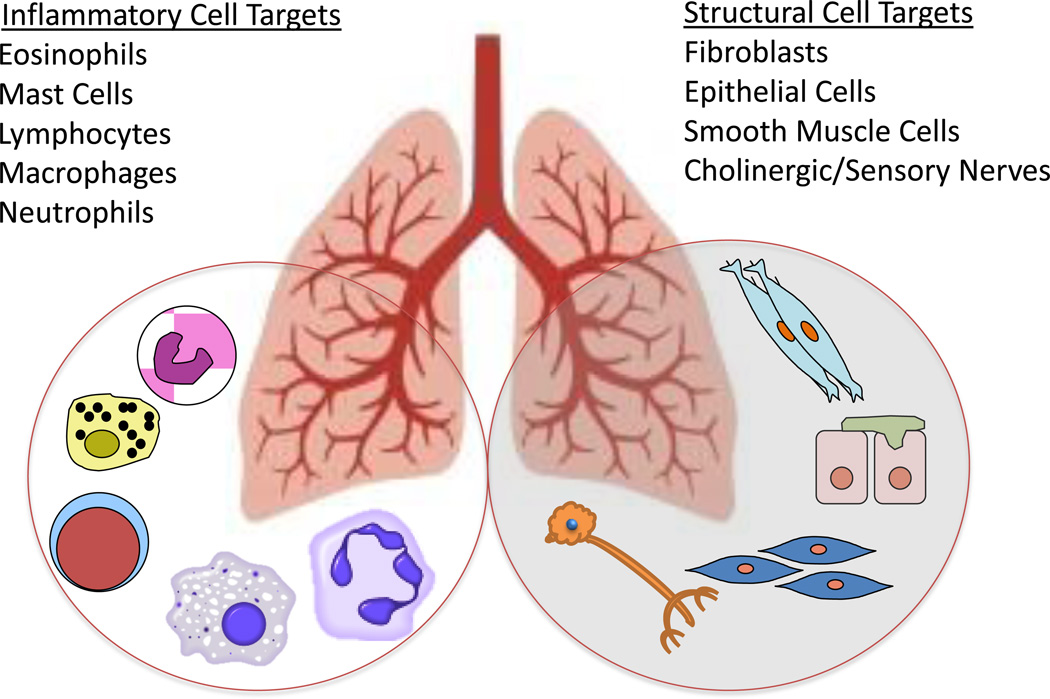
Figure 1
Figure 1
Lung cells involved in airway, vascular and parenchymal remodeling are potential targets for novel epigenetic therapies designed to prevent or repair remodeling. Both inflammatory and structural cells contribute to remodeling in asthma, COPD, IPF and pulmonary hypertension. The contributions of epigenetic processes to the function of each cell type in the lung is a topic of intense interest and rapid progress in lung cell biology.
Figure 2
Figure 2
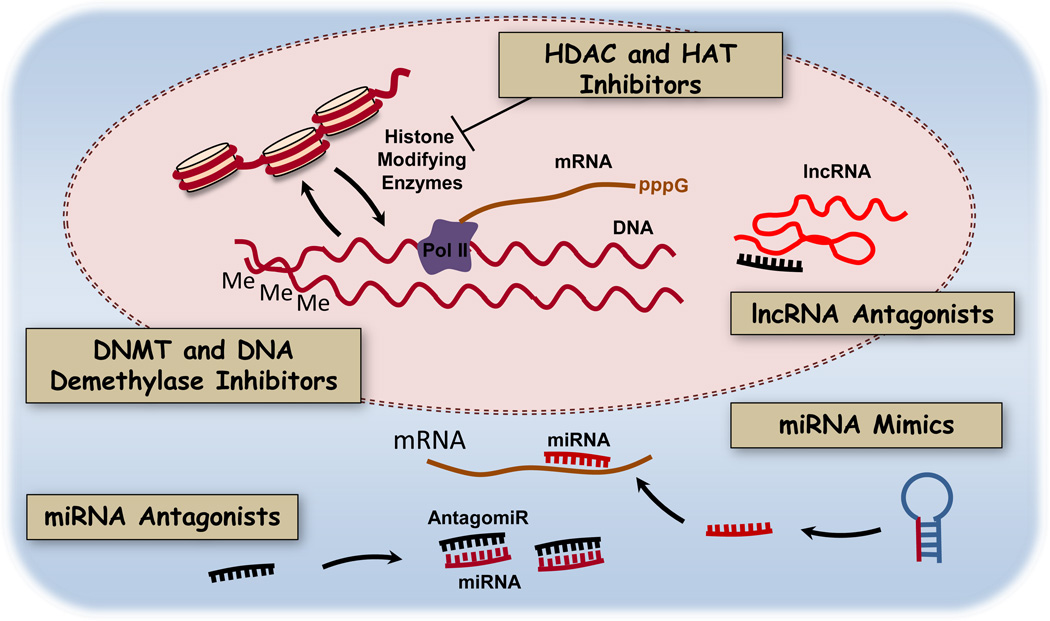
Epigenetic processes in lung cells that mediate cell adaptation and tissue remodeling. Conserved biochemical processes in lung cells may be valid therapeutic targets for small molecule inhibitors of DNA methylation and histone modifications or oligonucleotide antagonists of short and long noncoding RNAs (miRNAs, lncRNAs). MiRNA mimics could be delivered to rescue miRNA function when it is dysregulated in disease.
Figure 3
Figure 3
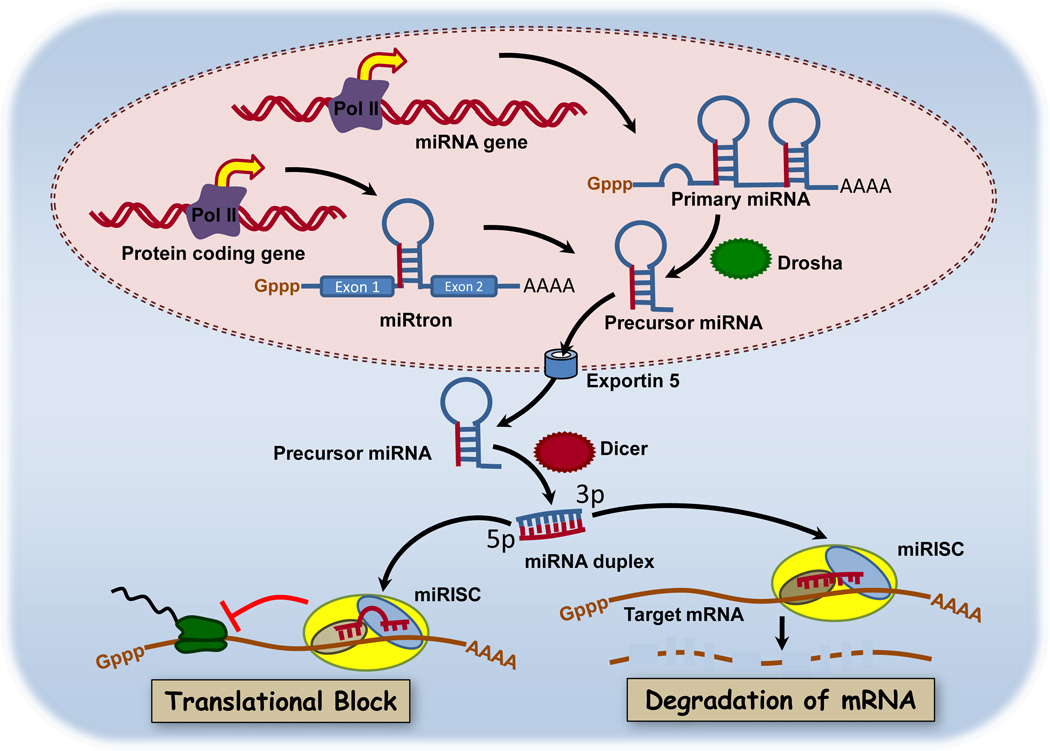
MicroRNA biogenesis and mechanisms of gene silencing. The primary RNA transcript of miRNA genes and intronic primary miRNAs are transcribed by RNA polymerase II and processed by Drosha to pre-miRNA. Pre-miRNAs are transported from the nucleus via exportin-5 where they are further processed by Dicer. The mature miRNA is then bound to miRNA-associated RNA-induced silencing complexes (miRISC). Within miRISC, the miRNA can bind to the 3’-untranslated region (3’-UTR) of target mRNA to either repress translation or induce cleavage. This simplified schematic does not show other known interactions of miRNAs with 5’UTRs or with long noncoding RNAs, both of which are known to regulate expression of some proteins. Reprinted under terms of the Creative Commons license from Joshi et al., 2011.
Figure 4
Figure 4
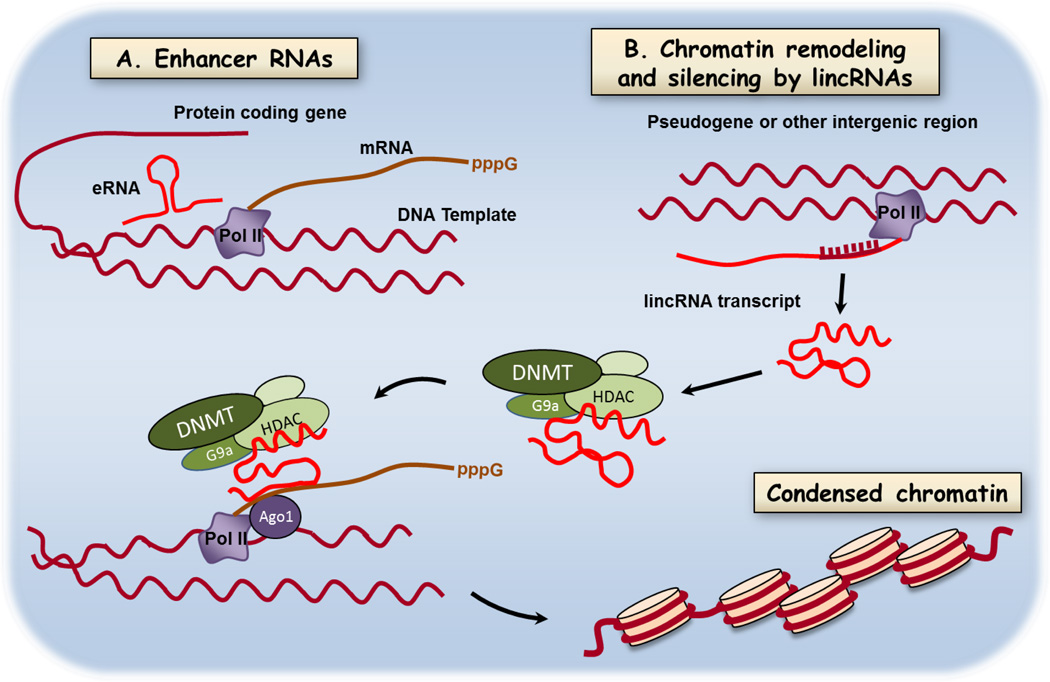
Mechanisms of regulation of gene expression by long noncoding RNAs. Long nonprotein coding RNAs are transcribed from a variety of genomic loci including enhancer sequences (eRNAs), intergenic, multiexomic sequences (lincRNAs), and noncoding strands of protein-coding genes (naturally occurring antisense transcripts. Shown here are a few of the rapidly emerging mechanisms by which lncRNAs modify gene expression and protein abundance. A. Binding of RNAs coded in enhancer regions to effect DNA looping and B. lncRNA serving as an adapter molecule in chromatin remodeling by DNA methylation and histone modifications. A salient feature of lncRNAs is the potential bind chromatin remodeling proteins, DNA, and in some cases other RNAs. Two important functions not shown are regulation of mRNA splicing and regulating mRNA decay. Targeting new oligonucleotide drugs to lncRNA function will require identification of key lncRNAs in lung diseases and defining the contribution these mechanisms to pathology.

Similar articles

Cited by

References

    1. Adenuga D, Yao H, March TH, Seagrave J, Rahman I. Histone deacetylase 2 is phosphorylated, ubiquitinated, and degraded by cigarette smoke. American Journal of Respiratory Cell and Molecular Biology. 2009;40:464–473. - PMC - PubMed
    1. Akbas F, Coskunpinar E, Aynaci E, Oltulu YM, Yildiz P. Analysis of serum micro-RNAs as potential biomarker in chronic obstructive pulmonary disease. Exp Lung Res. 2012;38:286–294. - PubMed
    1. Akhtar S, Benter IF. Nonviral delivery of synthetic siRNAs in vivo. J Clin Invest. 2007;117:3623–3632. - PMC - PubMed
    1. Aleku M, Schulz P, Keil O, Santel A, Schaeper U, Dieckhoff B, Janke O, Endruschat J, Durieux B, Roder N, Loffler K, Lange C, Fechtner M, Mopert K, Fisch G, Dames S, Arnold W, Jochims K, Giese K, Wiedenmann B, Scholz A, Kaufmann J. Atu027, a liposomal small interfering RNA formulation targeting protein kinase N3, inhibits cancer progression. Cancer Res. 2008;68:9788–9798. - PubMed
    1. Allfrey VG, Faulkner R, Mirsky AE. Acetylation and methylation of histones and their possible role in the regulaton of RNA synthesis. Proceedings of the National Academy of Sciences of the United States of America. 1964;51:786–794. - PMC - PubMed

Publication types

MeSH terms

Substances