. 2014 Dec 1:124:49-68.
doi: 10.1016/j.colsurfb.2014.09.040. Epub 2014 Sep 28.

Proteins, platelets, and blood coagulation at biomaterial interfaces

Affiliations

Proteins, platelets, and blood coagulation at biomaterial interfaces

Li-Chong Xu et al. Colloids Surf B Biointerfaces. .

Abstract

Blood coagulation and platelet adhesion remain major impediments to the use of biomaterials in implantable medical devices. There is still significant controversy and question in the field regarding the role that surfaces play in this process. This manuscript addresses this topic area and reports on state of the art in the field. Particular emphasis is placed on the subject of surface engineering and surface measurements that allow for control and observation of surface-mediated biological responses in blood and test solutions. Appropriate use of surface texturing and chemical patterning methodologies allow for reduction of both blood coagulation and platelet adhesion, and new methods of surface interrogation at high resolution allow for measurement of the relevant biological factors.

Keywords: Biological response; Biomaterials; Blood compatibility; Coagulation; Surfaces; Thrombosis.


Figures

Figure 1
Figure 1
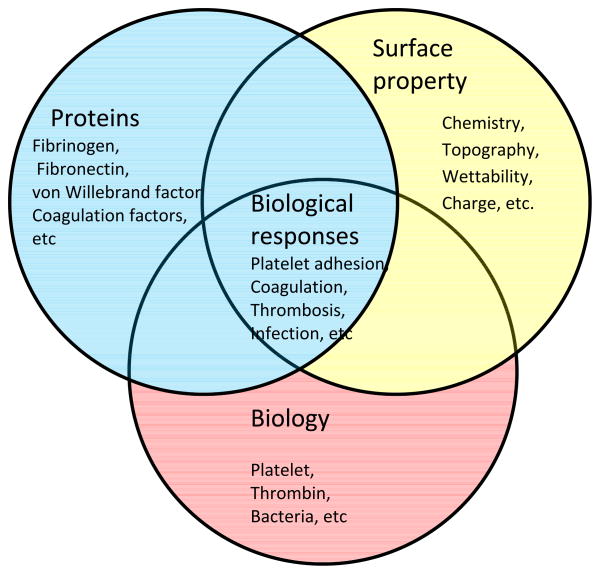
The interaction between biomaterials and biological entities at the interface is influenced by surface property and proteins.
Figure 2
Figure 2
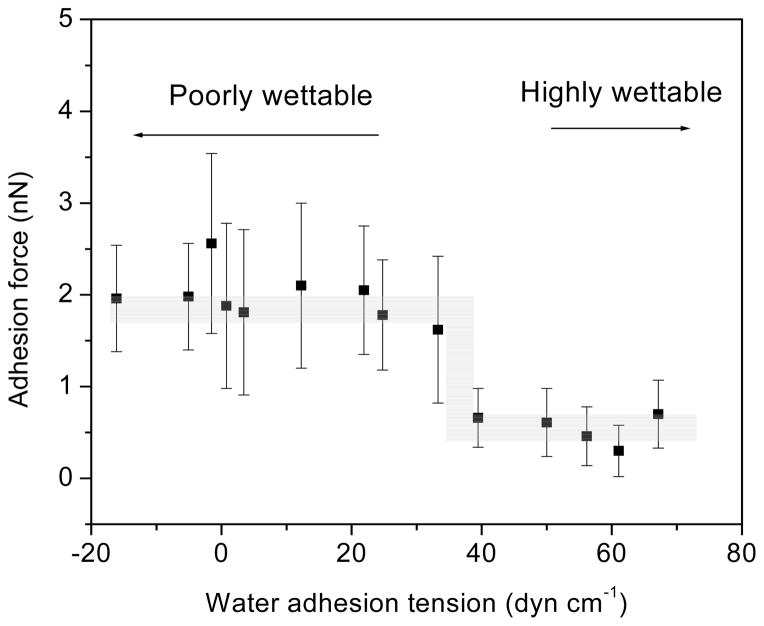
Average adhesion forces of human fibrinogen coated AFM tips to LDPE surfaces with different water adhesion tensions. (error bar: standard deviation) (Reprint from Xu and Siedlecki with permission from Elsevier)
Figure 3
Figure 3
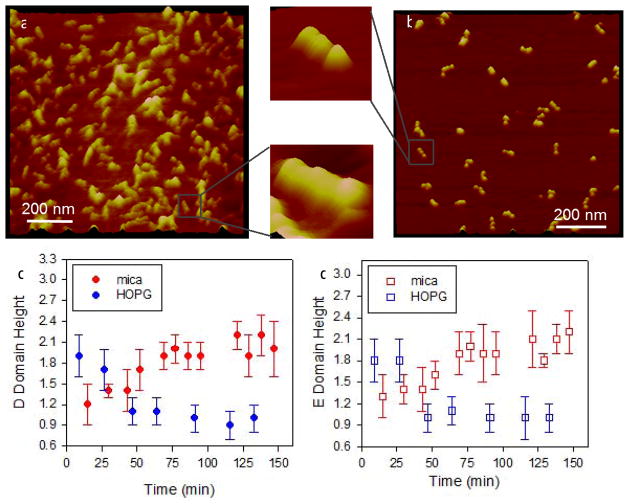
Time dependent spreading of fibrinogen on model substrates, (a) HOPG and (b) muscovite mica. Individual molecules could clearly be observed as seen in the higher magnification images. Spreading of the molecules was followed by measuring heights of the (c) D domains and (d) E domains for ~ 2 hrs following adsorption. (error bar: standard deviation) (Reproduced from Agnihotri and Siedlecki with permission from ACS)
Figure 4
Figure 4
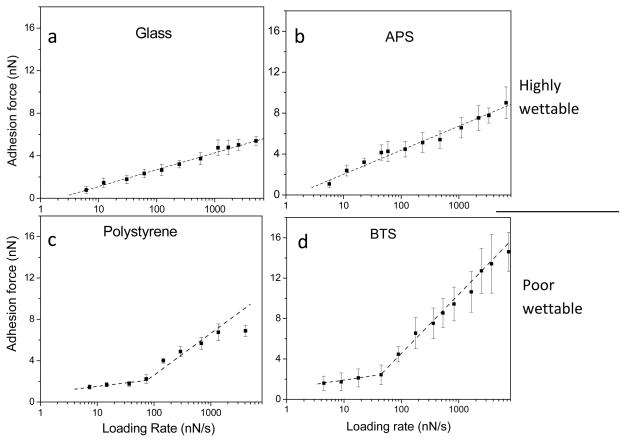
Adhesion forces of fibrinogen and colloid surfaces under different loading rates. High wettable surfaces: (a) glass and (b) 3-aminopropyltrichlorosilane (APS), and poorly wettable surfaces: (c) polystyrene and (d) n-butyltrichlorosilane (BTS). Multiple energy barriers are present between fibrinogen and hydrophobic surfaces while a single energy barrier is present between fibrinogen and hydrophilic surfaces. (error bar: standard deviation) (Reprint from Xu and Siedlecki with permission from ACS)
Figure 5
Figure 5
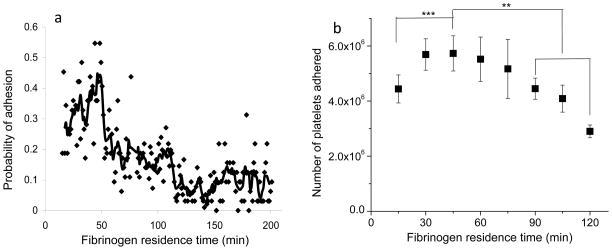
(a) Probability of interaction between a mAb against γchain 392–411 and its antigen on fibrinogen measured by AFM. The solid line, the average of 5 points, is included for visualization purposes. (b) Platelet adhesion data from multiple experiments (n ≥ 6 for each time point) showing changes in platelet adhesion as a function of fibrinogen residence time on mica substrates. (**: p<0.01, ***: p<0.001, error bar: standard deviation) (Reprint from Soman, Rice and Siedlecki with permission from ACS)
Figure 6
Figure 6
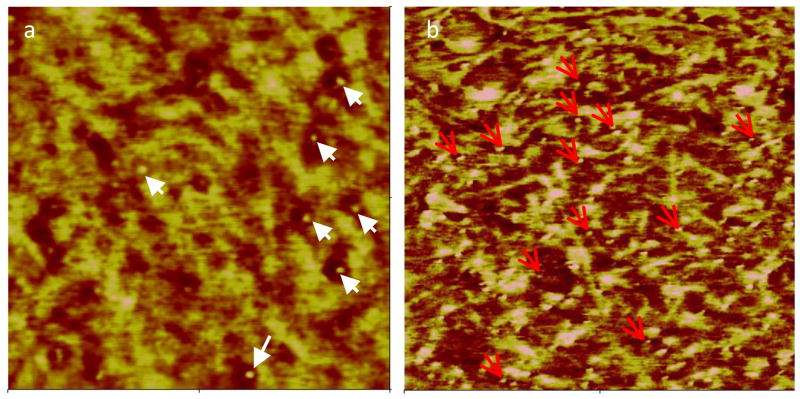
AFM images of nanogold conjugated BSA adsorbed on PUU surface imaged under (a) ambient condition and (b) in PBS buffer. Gold beads indicated by arrows are seen in phase image where lighter color represents hard domains. Quantification reveals more than 2 fold increase in number of labeled proteins per unit area on the soft segment regions compared to the hard segment. (Scan size: 500 ×500 nm2, reprint from Xu and Siedlecki with permission from Wiley)
Figure 7
Figure 7
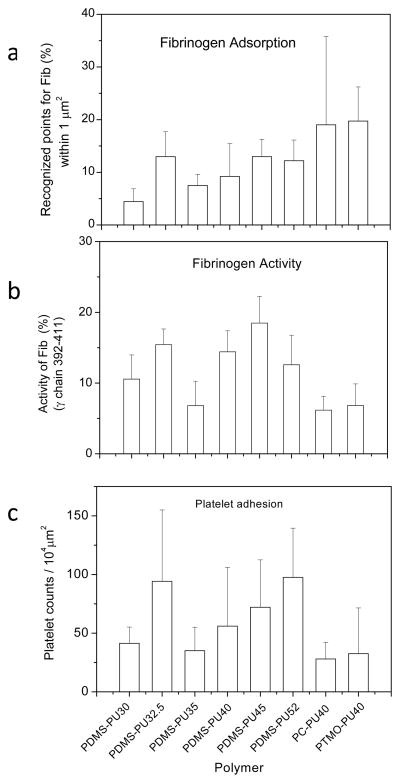
(a) Fibrinogen adsorption on PUs as recognized by a polyclonal antibody; (b) Functional activity of adsorbed fibrinogen detected by a monoclonal antibody against the fibrinogen γchain 392–411; (c) platelets adhesion on PU surfaces. Note: The number following the type of PU is the percentage hard segment content. (mean ± standard deviation) (Reprint with permission from )
Figure 8
Figure 8
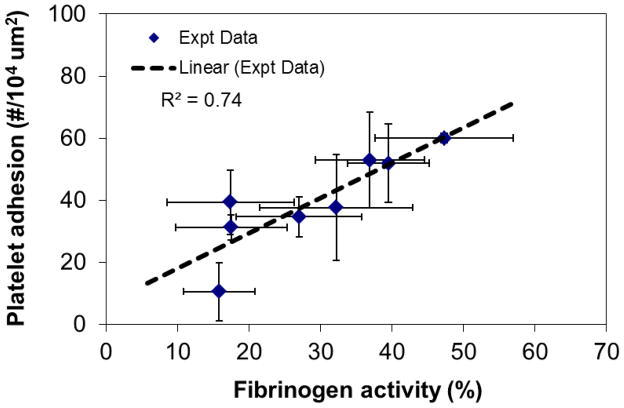
Relationship of platelet adhesion and fibrinogen bioactivity on polyurethane surfaces. (mean ± standard deviation)
Figure 9
Figure 9
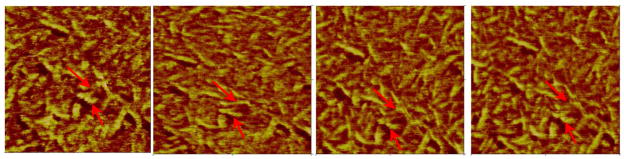
Sequential phase images of PUU under PBS buffer hydrated for 21 hrs, showing hard domain reorientation and reorganization due to hydration. The images were captured at approximately 9 min intervals and high phase angle shifts (lighter colors) represent the “harder” regions. The lines point to landmarks that can be used for reference in monitoring the dynamic changes.
Figure 10
Figure 10
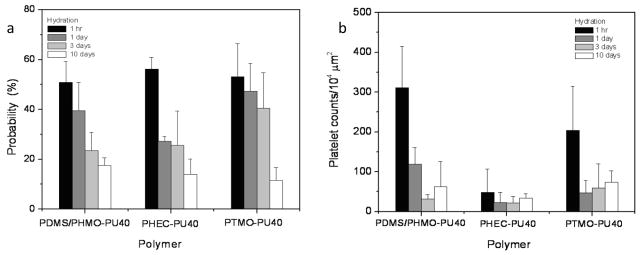
(a) Probability of recognition by mAb shows the functional activity of fibrinogen on polyurethane surfaces following hydration for 1 hr, 1 day, 3 days and 10 days, (b) platelet adhesion on polyurethane surfaces following hydration with same duration. (reprint from reference). (error bar: standard deviation) (reprint from Xu, Runt, and Siedlecki with permission from Elsevier)
Figure 11
Figure 11
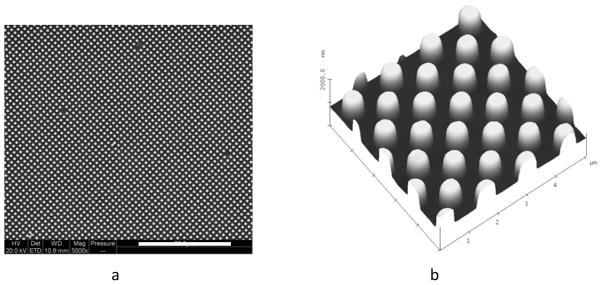
(a) SEM and (b) AFM images showing topography of textured PUU film surface with 500/500 nm pattern. (Reprint from Xu and Siedlecki with permission from Elsevier)
Figure 12
Figure 12
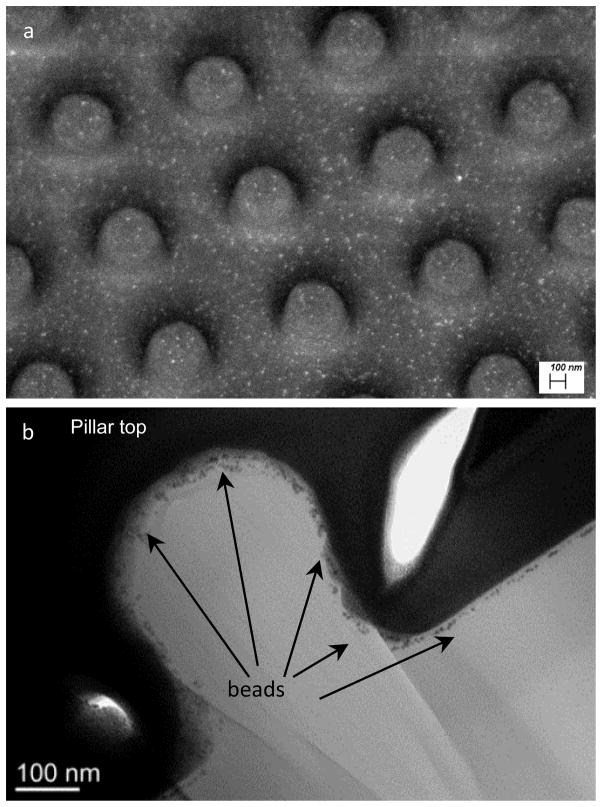
(a) FESEM with 30 degree angle and (b) TEM images of 500/500 nm patterned PUU surfaces adsorbed with nano-gold conjugated BSA, showing the distribution of protein adsorbed on textured pillar surface.
Figure 13
Figure 13
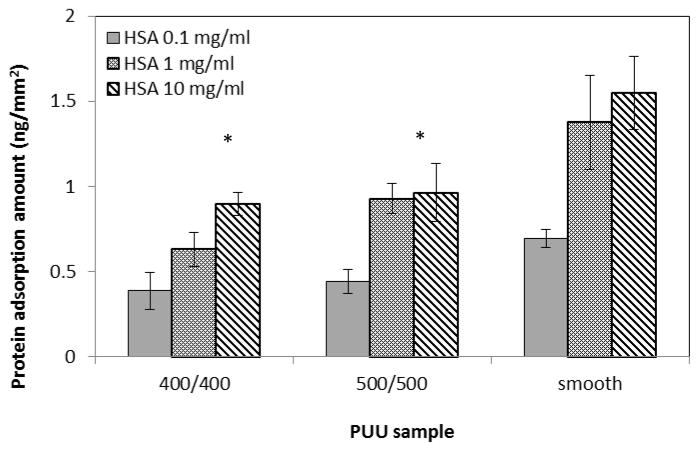
Human albumin adsorption on textured PUU surfaces at different concentrations. (*: p<0.05, error bar: standard deviation)
Figure 14
Figure 14
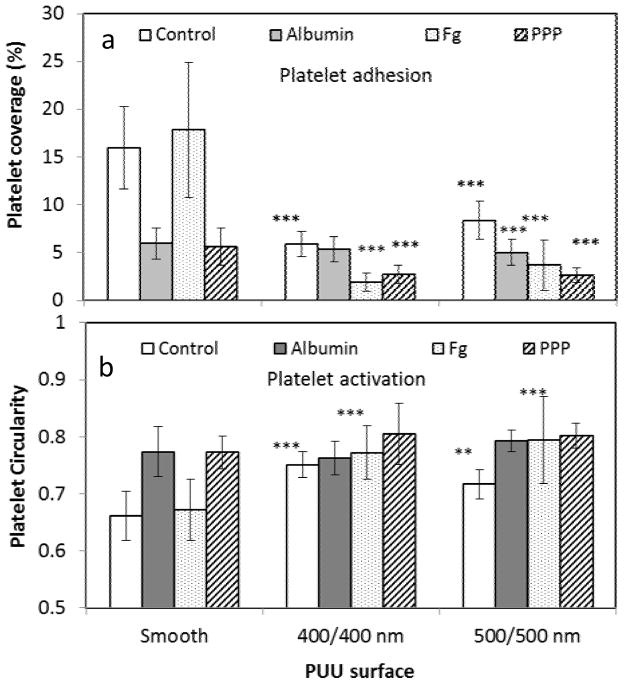
(a) Platelet adhesion and (b) activation on PUU surfaces with pre-adsorbed with plasma proteins. The statistical analysis is performed between textured and smooth PUU samples. (**: p<0.01; ***:p<0.001, error bar: standard deviation)
Figure 15
Figure 15
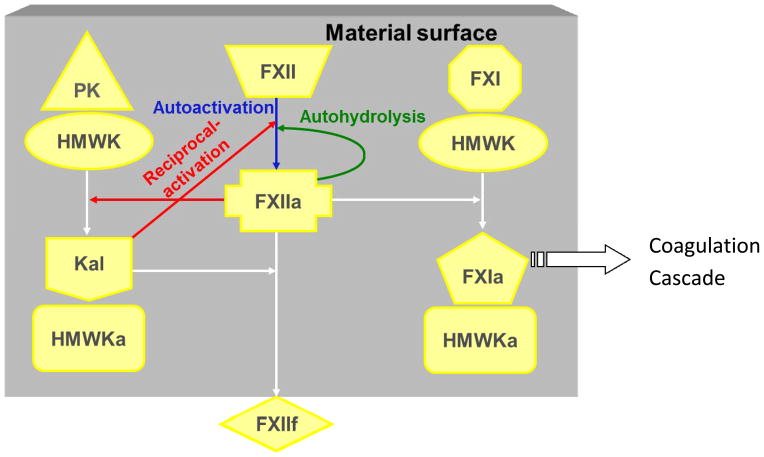
Surface-mediated interactions in contact activation of plasma coagulation. PK: prekallikrein; HMWK: high molecular weight kinnogen; Kal: kallikrein; FXII: factor XII; FXI: Factor XI. Suffixes “a” and “f” represent activated and fragmented form. (Reprint from Vogler and Siedlecki with permission from Elsevier)
Figure 16
Figure 16
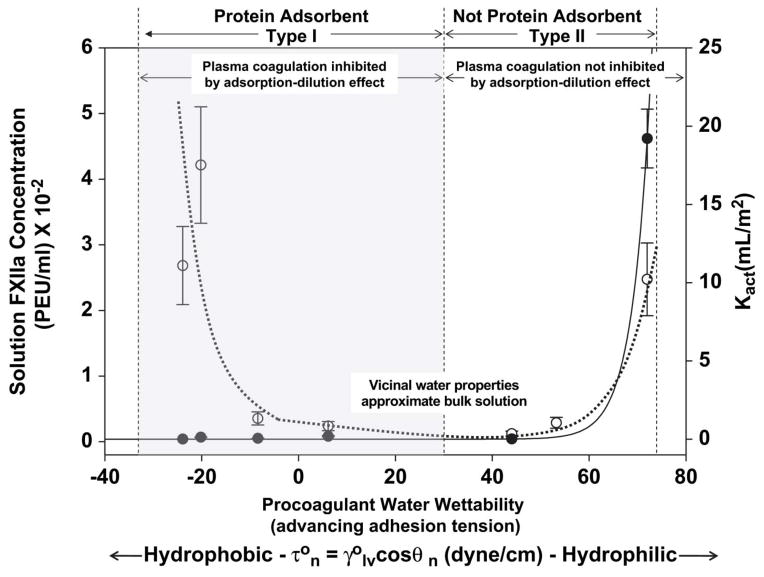
Comparison of FXII activation in neat-buffer solution (left-hand ordinate, dashed line) to catalytic potential in plasma Kact (right-hand ordinate, solid line) for activator (procoagulant) particles exhibiting different surface energy (abscissa) expressed as water adhesion tension τa=γlvcosθ in dyne/cm (where γlv is water interfacial tension in dyne/cm and θ is the advancing contact angle) (reprint from with permission from Elsevier).
Figure 17
Figure 17
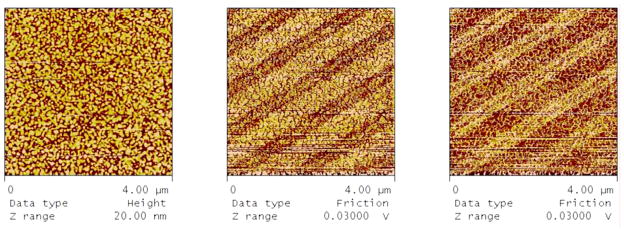
From left to right – height, friction mode retrace, and friction mode trace AFM images of patterned thiol surfaces. Bare gold surface was stamped with a linear pattern PDMS stamp inked with octadecanethiol and backfilled with 11-mercaptoundecanoic acid. The light colored bands in the friction retrace image (middle) correspond to the stamped octadecanethiol.

References

    1. Langer R, Tirrell DA. Designing materials for biology and medicine. Nature. 2004;428:487–492. doi: 10.1038/nature02388. - DOI - PubMed
    1. Peppas NA, Langer R. New challanges in biomaterials. Science. 1994;263:1715–1720. - PubMed
    1. Hu WJ, Eaton JW, Ugarova TP, Tang L. Molecular basis of biomaterial-mediated foreign body reactions. Blood. 2001;98:1231–1238. - PubMed
    1. Anderson JM. Biological responses to materials. Annual Review of Materials Research. 2001;31:81–110.
    1. Anderson JM, Rodriguez A, Chang DT. Foreign body reaction to biomaterials. Seminars in Immunology. 2008;20:86–100. doi: http://dx.doi.org/10.1016/j.smim.2007.11.004. - DOI - PMC - PubMed

Publication types