


Cell-based articular cartilage repair: the link between development and regeneration
- PMID: 25450846
- PMCID: PMC4339504
- DOI: 10.1016/j.joca.2014.11.004
Cell-based articular cartilage repair: the link between development and regeneration
Abstract
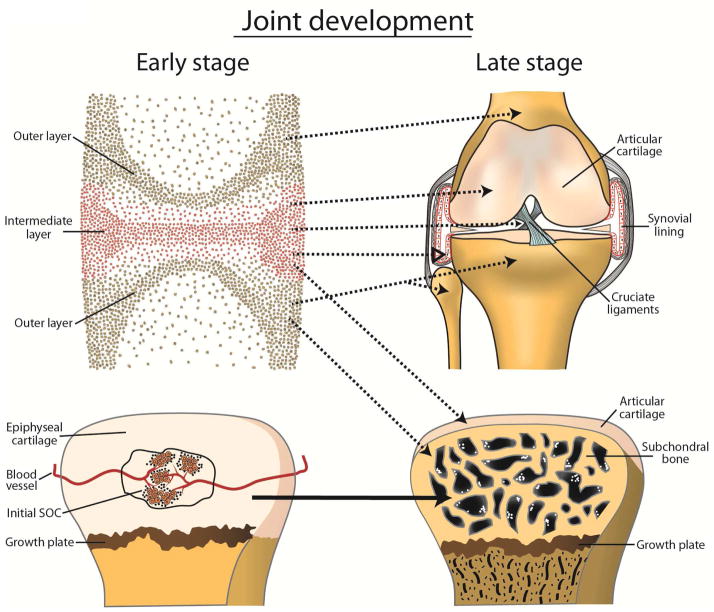
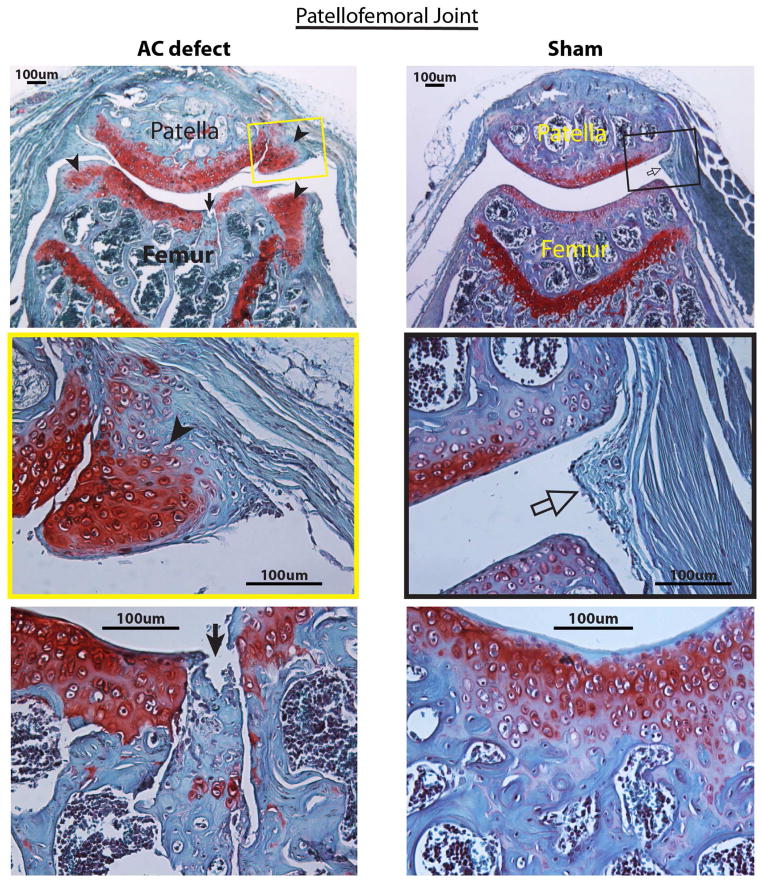
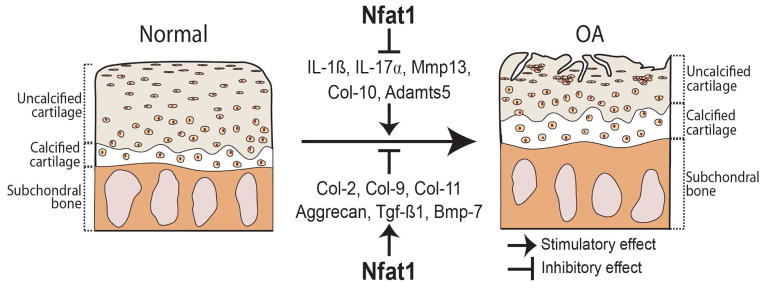
Clinical efforts to repair damaged articular cartilage (AC) currently face major obstacles due to limited intrinsic repair capacity of the tissue and unsuccessful biological interventions. This highlights a need for better therapeutic strategies. This review summarizes the recent advances in the field of cell-based AC repair. In both animals and humans, AC defects that penetrate into the subchondral bone marrow are mainly filled with fibrocartilaginous tissue through the differentiation of bone marrow mesenchymal stem cells (MSCs), followed by degeneration of repaired cartilage and osteoarthritis (OA). Cell therapy and tissue engineering techniques using culture-expanded chondrocytes, bone marrow MSCs, or pluripotent stem cells with chondroinductive growth factors may generate cartilaginous tissue in AC defects but do not form hyaline cartilage-based articular surface because repair cells often lose chondrogenic activity or result in chondrocyte hypertrophy. The new evidence that AC and synovium develop from the same pool of precursors with similar gene profiles and that synovium-derived chondrocytes have stable chondrogenic activity has promoted use of synovium as a new cell source for AC repair. The recent finding that NFAT1 and NFAT2 transcription factors (TFs) inhibit chondrocyte hypertrophy and maintain metabolic balance in AC is a significant advance in the field of AC repair. The use of synovial MSCs and discovery of upstream transcriptional regulators that help maintain the AC phenotype have opened new avenues to improve the outcome of AC regeneration.
Keywords: Articular cartilage repair; Cartilage tissue-engineering; NFAT; Post-traumatic osteoarthritis; Stem cell; Synovium.
Copyright © 2014 Osteoarthritis Research Society International. Published by Elsevier Ltd. All rights reserved.
Conflict of interest statement
The authors have no competing interests.
Figures
References
-
- Bekkers JE, Inklaar M, Saris DB. Treatment selection in articular cartilage lesions of the knee: a systematic review. Am J Sports Med. 2009;37 (Suppl 1):148S–55S. - PubMed
-
- Grimm NL, Weiss JM, Kessler JI, Aoki SK. Osteochondritis Dissecans of the Knee: Pathoanatomy, Epidemiology, and Diagnosis. Clin Sports Med. 2014;33:181–8. - PubMed
-
- Pridie KH. A method of resurfacing osteoarthritic knee joints. Journal of Bone and Joint Surgery [Br] 1959;41-B:618–9.
-
- Steadman JR, Briggs KK, Rodrigo JJ, Kocher MS, Gill TJ, Rodkey WG. Outcomes of microfracture for traumatic chondral defects of the knee: average 11-year follow-up. Arthroscopy. 2003;19:477–84. - PubMed
Publication types
MeSH terms
Substances
Grants and funding
LinkOut - more resources
Full Text Sources
Other Literature Sources
Medical
Miscellaneous
