


Perioperative blood transfusion in gynecologic oncology surgery: analysis of the National Surgical Quality Improvement Program Database
- PMID: 25451693
- PMCID: PMC4492800
- DOI: 10.1016/j.ygyno.2014.11.009
Perioperative blood transfusion in gynecologic oncology surgery: analysis of the National Surgical Quality Improvement Program Database
Abstract
Objective: To use a large-scale multi-institutional dataset to quantify the prevalence of packed red blood cell transfusions and examine the associations between transfusion and perioperative outcomes in gynecologic cancer surgery.
Methods: The American College of Surgeons National Surgical Quality Improvement Program (NSQIP) participant use file was queried for all gynecologic cancer cases between 2010 and 2012. Demographic, preoperative and intraoperative variables were compared between transfusion and non-transfusion groups using chi-squared, Fisher's exact and Wilcoxon rank-sum tests. The primary endpoint was 30-day composite morbidity. Secondary endpoints included composite surgical site infections, mortality and length of stay.
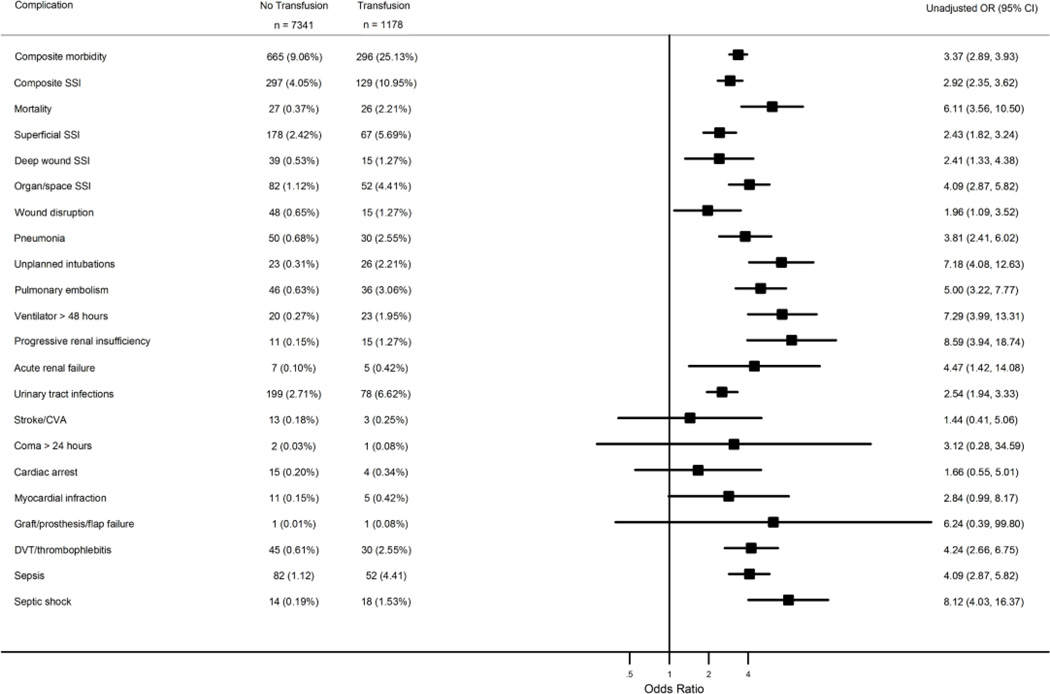
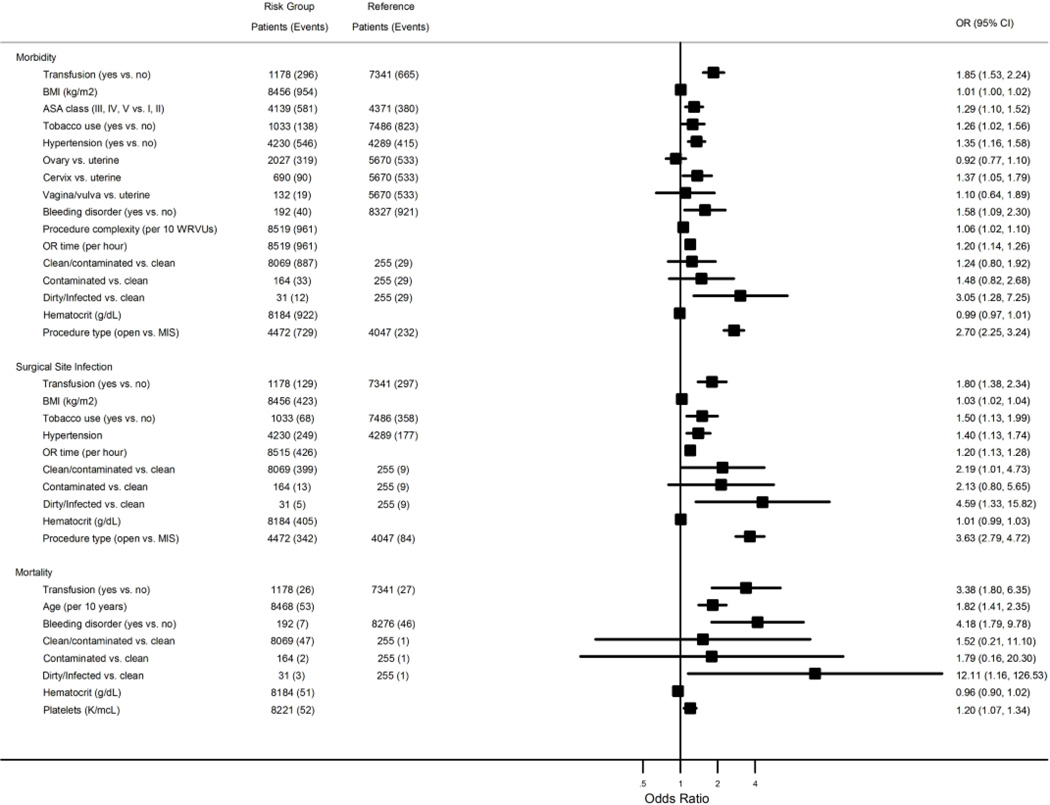
Results: A total of 8519 patients were analyzed, and 13.8% received a packed red blood cell transfusion. In the multivariate analysis, after adjusting for key clinical and perioperative factors, including preoperative anemia and case magnitude, transfusion was associated with higher composite morbidity (OR = 1.85, 95% CI 1.5-2.24), surgical site infections (OR 1.80, 95% CI 1.39-2.35), mortality (OR 3.38, 95% CI 1.80-6.36) and length of hospital stay (3.02 days v. 7.17 days, P < 0.001).
Conclusions: Blood transfusions are associated with increased surgical wound infections, composite morbidity and mortality. Based on our analysis of the NSQIP database, transfusion practices in gynecologic cancer should be scrutinized. Examination of institutional practices and creation of transfusion guidelines for gynecologic malignancies could potentially result in better utilization of blood bank resources and clinical outcomes among patients.
Keywords: Blood utilization; Gynecologic oncology; NSQIP; Perioperative outcomes; Transfusion.
Copyright © 2014 Elsevier Inc. All rights reserved.
Conflict of interest statement
The authors have no conflicts of interest.
Figures
References
-
- Whitacker BI, Henry RA. The 2011 National Blood Collection and Utilization Survey. Washington, DC: US Department of Health and Human Services, Office of the Assistant Secretary for Health; 2011. [Accessed 2014]. Report of the US Department of Health and Human Services; pp. 1–98. http://www.hhs.gov/ash/bloodsafety/2011-nbcus.pdf.
-
- Backes FJ, Brudie LA, Farrell MR, Ahmad S, Finkler NJ, Bigsby GE, et al. Short- and long-term morbidity and outcomes after robotic surgery for comprehensive endometrial cancer staging. Gynecol Oncol. 2012;125:546–551. - PubMed
-
- Spirtos NM, Westby CM, Averette HE, Soper JT. Blood transfusion and the risk of recurrence in squamous cell carcinoma of the cervix: a gynecologic oncology group study. Am J Clin Oncol. 2002;25:398–403. - PubMed
-
- Azuma C, Koyama M, Inagaki M, Ito S, Sawada M, Saji F, et al. The influence of peri-operative blood transfusion during radical hysterectomy on the prognosis of uterine cervical cancer. Transfus Sci. 1997;18:55–62. - PubMed
MeSH terms
Grants and funding
LinkOut - more resources
Full Text Sources
Other Literature Sources
