. 2014 Nov 14:5:565.
doi: 10.3389/fpls.2014.00565. eCollection 2014.

Transcriptional responses of Arabidopsis thaliana to chewing and sucking insect herbivores

Affiliations

Transcriptional responses of Arabidopsis thaliana to chewing and sucking insect herbivores

Heidi M Appel et al. Front Plant Sci. .

Abstract

We tested the hypothesis that Arabidopsis can recognize and respond differentially to insect species at the transcriptional level using a genome wide microarray. Transcriptional reprogramming was characterized using co-expression analysis in damaged and undamaged leaves at two times in response to mechanical wounding and four insect species. In all, 2778 (10.6%) of annotated genes on the array were differentially expressed in at least one treatment. Responses differed mainly between aphid and caterpillar and sampling times. Responses to aphids and caterpillars shared only 10% of up-regulated and 8% of down-regulated genes. Responses to two caterpillars shared 21 and 12% of up- and down-regulated genes, whereas responses to the two aphids shared only 7 and 4% of up-regulated and down-regulated genes. Overlap in genes expressed between 6 and 24 h was 3-15%, and depended on the insect species. Responses in attacked and unattacked leaves differed at 6 h but converged by 24 h. Genes responding to the insects are also responsive to many stressors and included primary metabolism. Aphids down-regulated amino acid catabolism; caterpillars stimulated production of amino acids involved in glucosinolate synthesis. Co-expression analysis revealed 17 response networks. Transcription factors were a major portion of differentially expressed genes throughout and responsive genes shared most of the known or postulated binding sites. However, cis-element composition of genes down regulated by the aphid M. persicae was unique, as were those of genes down-regulated by caterpillars. As many as 20 cis-elements were over-represented in one or more treatments, including some from well-characterized classes and others as yet uncharacterized. We suggest that transcriptional changes elicited by wounding and insects are heavily influenced by transcription factors and involve both enrichment of a common set of cis-elements and a unique enrichment of a few cis-elements in responding genes.

Keywords: Arabidopsis thaliana; Brevicoryne brassicae; Myzus persicae; Pieris brassicae; Spodoptera exigua; glucosinolates; herbivory; hormone signaling.


Figures
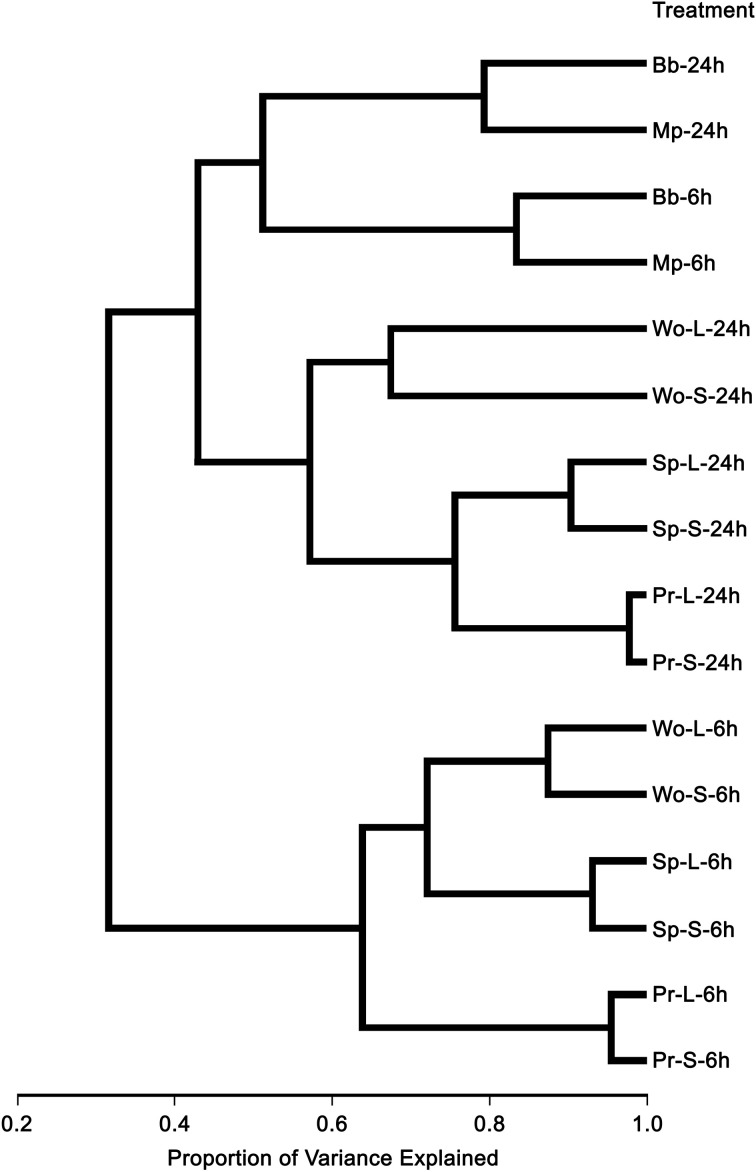
Figure 1
Figure 1
Hierarchical cluster tree of A. thaliana genes differentially expressed in response to insect feeding and mechanical wounding. Abbreviations for treatment names are the same as those used in Table 1.
Figure 2
Figure 2
Proportion of A. thaliana genes differentially expressed at both time points and leaf types. (A) Proportion of genes differentially expressed at both time points, by treatment. (B) Proportion of genes differentially expressed in both leaf types, by treatment and time. Black bars, upregulated genes; cross hatched bars, downregulated genes; Mp, Myzus persicae; Bb, Brevicoryne brassicae; Se, Spodoptera exigua; Pr, Pieris rapae; L, local damaged leaves; S, systemic undamaged leaves (local and systemic leaves were from the same plant).
Figure 3
Figure 3
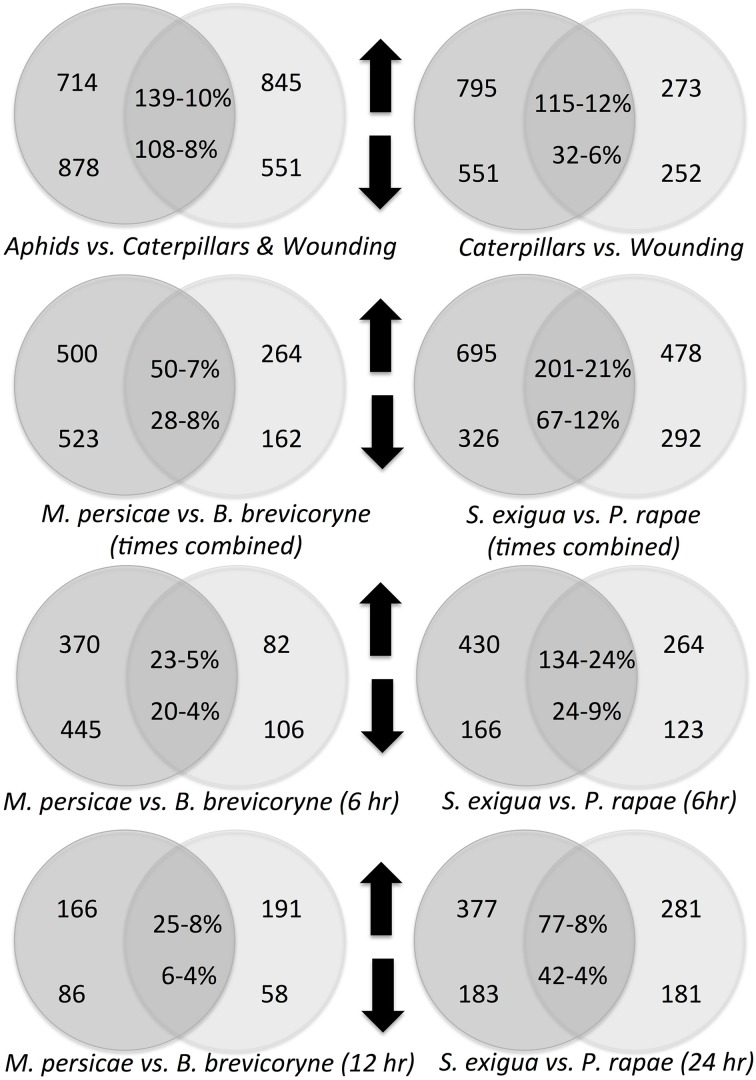
Treatment comparisons with the number of genes differentially expressed in each treatment, the number of genes expressed in both treatments, and their proportional overlap. Upward pointing arrows indicate upregulated genes, downward pointing arrows indicate downregulated genes.
Figure 4
Figure 4
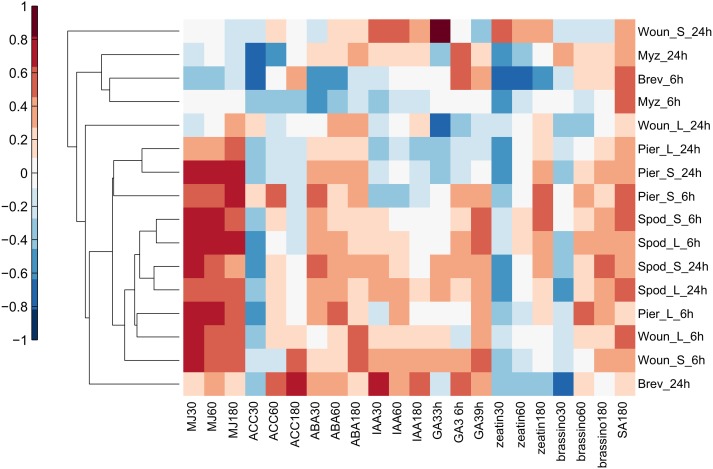
Hormonometer analysis of differential gene expression by A. thaliana in response to insect feeding and mechanical wounding. The response in gene expression of Arabidopsis in our treatments is compared with that of Arabidopsis at 30, 60, and 180 min, or 3, 6, and 9 h, after hormone application. The magnitude of correlation in gene expression is indicated by the color scale at bottom and correlation values of 0.4 and above are considered statistically significant. Treatment abbreviations are the same as in Table 1. MJ, methyl jasmonate; ACC, 1-aminocyclopropane-1-caroxylic acid; ABA, abscisic acid; IAA, indole-3-acetic acid; GA3, gibberellic acid 3; zeatin, cytokinin; brassino, brassinosteroid.
Figure 5
Figure 5
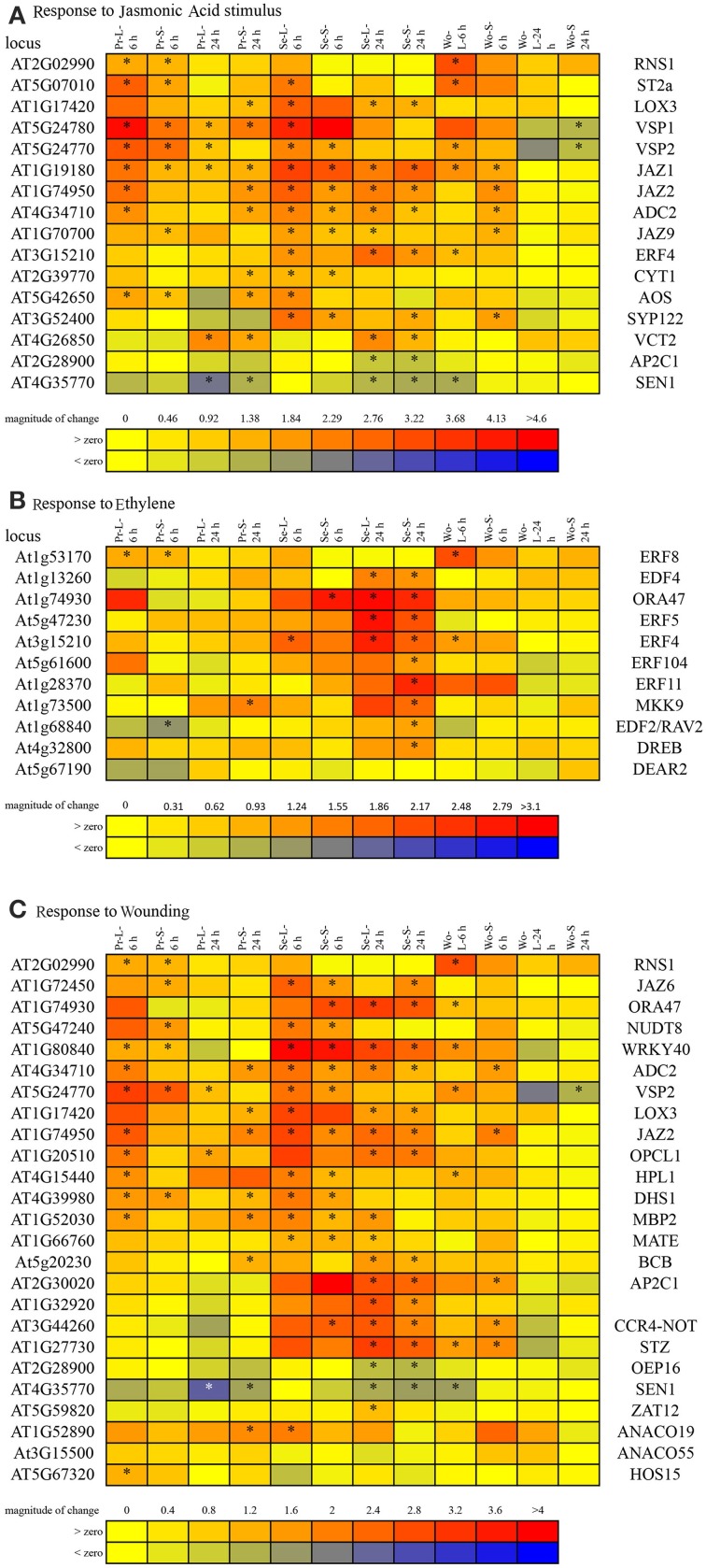
Differential expression of genes enriched in both leaf types (local and systemic) of the caterpillar treatments and associated with responses to: (A) Jasmonic acid stimulus, (B) Wounding, and (C) ethylene. Asterisks indicate treatments for which gene expression was significantly different from controls. Abbreviations for plant treatments as in Table 1.
Figure 6
Figure 6
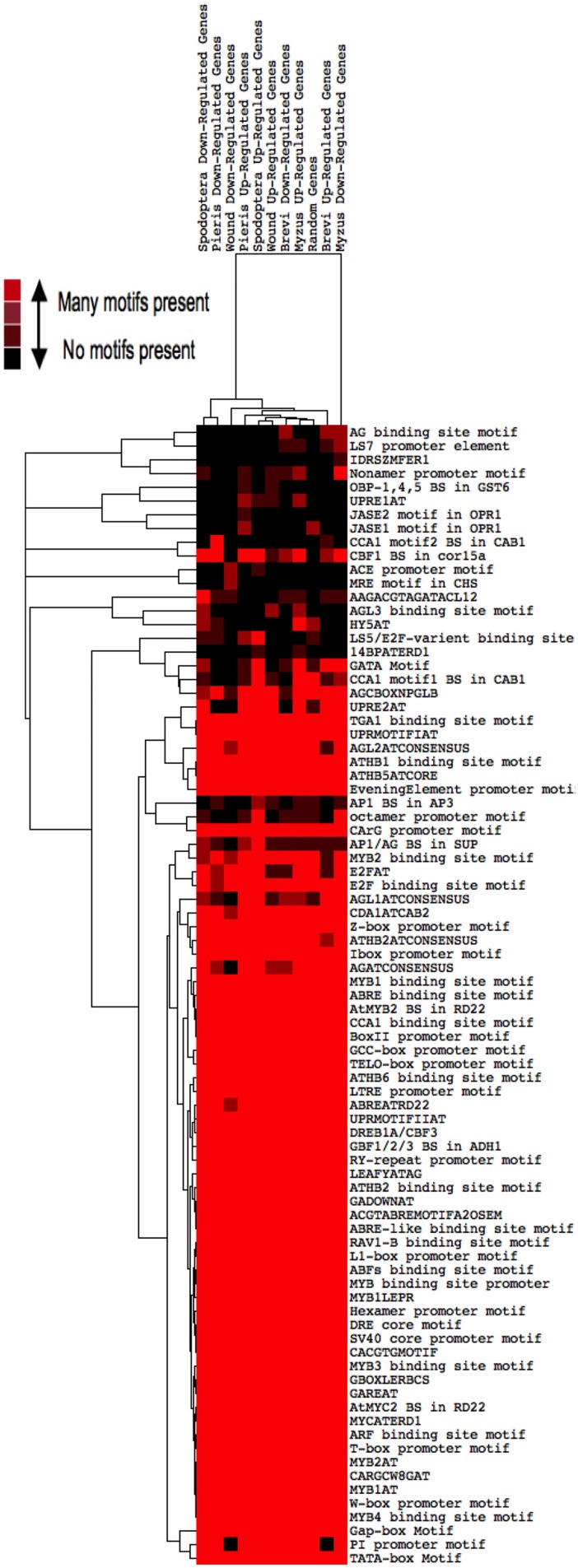
Heat map of Cis-element distributions in genes differentially expressed by insect herbivory and mechanical wounding. Transcription factor binding sites up to 1000 bp upstream of all differentially expressed genes were located using the PLACE database and clustered by treatment. Copies of a motif found is indicated by the color scale; e.g., red, many; black, none.

References

    1. Abbot P., Withgott J. (2004). Phylogenetic and molecular evidence for allochronic speciation in gall-forming aphids (Pemphigus). Evolution 58, 539–553. 10.1111/j.0014-3820.2004.tb01677.x - DOI - PubMed
    1. Abe H., Yamaguchi-Shinozaki K., Urao T., Iwasaki T., Hosokawa D., Shinozaki K. (1997). Role of arabidopsis MYC and MYB homologs in drought- and abscisic acid-regulated gene expression. Plant Cell 9, 1859–1868. 10.1105/tpc.9.10.1859 - DOI - PMC - PubMed
    1. Aggarwal R., Subramanyam S., Zhao C., Chen M.-S., Harris M. O., Stuart J. J. (2014). Avirulence effector discovery in a plant galling and plant parasitic arthropod, the hessian fly (Mayetiola destructor). PLoS ONE 9:e100958. 10.1371/journal.pone.0100958 - DOI - PMC - PubMed
    1. Agrawal A. A., Hastings A. P., Johnson M. T., Maron J. L., Salminen J. P. (2012). Insect herbivores drive real-time ecological and evolutionary change in plant populations. Science 338, 113–116. 10.1126/science.1225977 - DOI - PubMed
    1. Alba J., Allmann S., Glas J., Schimmel B. J., Spyropoulou E., Stoops M., et al. (2012). Induction and suppression of herbivore-induced indirect defenses, in Biocommunication of Plants, eds Witzany G., Baluška F. (Berlin; Heidelberg: Springer; ), 197–212.