Review
. 2014 Dec;25(12):649-55.
doi: 10.1016/j.tem.2014.10.001. Epub 2014 Nov 4.

Cholesterol and breast cancer pathophysiology

Affiliations
Review

Cholesterol and breast cancer pathophysiology

Erik R Nelson et al. Trends Endocrinol Metab. 2014 Dec.

Abstract

Cholesterol is a risk factor for breast cancer although the mechanisms by which this occurs are not well understood. One hypothesis is that dyslipidemia results in increased cholesterol content in cell membranes, thus impacting upon membrane fluidity and subsequent signaling. In addition, studies demonstrate that the metabolite, 27-hydroxycholesterol (27HC), can function as an estrogen, increasing the proliferation of estrogen receptor (ER)-positive breast cancer cells. This was unexpected because 27HC and other oxysterols activate the liver X receptors (LXR), resulting in a reduction of intracellular cholesterol. Resolution of this paradox will require dissection of the molecular mechanisms by which ER and LXR converge in breast cancer cells. Regardless, the observation that 27HC influences breast cancer provides a rationale for strategies that target cholesterol metabolism.


Figures

Figure 1
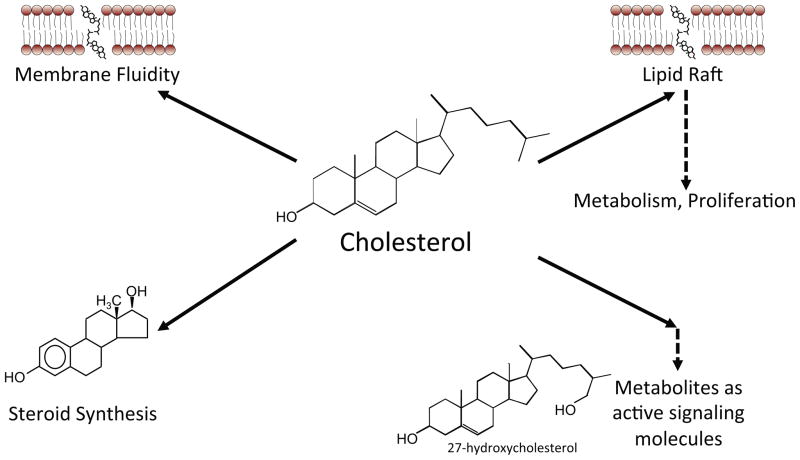
Figure 1. Potential mechanisms by which cholesterol impacts breast cancer physiology
Cholesterol is central to multiple key cellular functions. It is a required component of membrane synthesis and may become a limiting agent in rapidly dividing cancer cells. Cholesterol is also required for lipid raft formation and subsequent signaling such as AKT signaling. Cholesterol is also the precursor for steroid synthesis. Recently, it has been shown that cholesterol metabolites such as 27-hydroxycholesterol have the capacity to signal through the estrogen receptor (ER) or liver x receptor (LXR), impacting breast cancer pathophysiology.
Figure 2
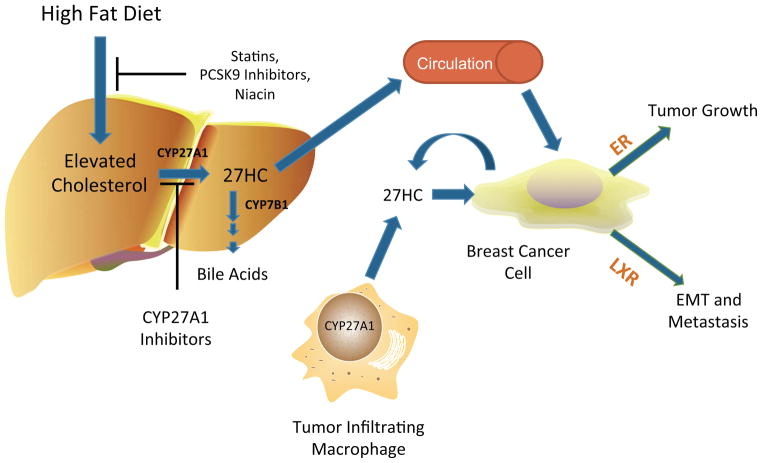
Figure 2. 27-hydroxycholesterol biochemically links obesity and elevated cholesterol to breast cancer
Obesity leads to elevated cholesterol synthesis, primarily in the liver. This increase can be inhibited by HMGCoAR inhibitors (statins), PCSK9 inhibitors, or niacin. Cholesterol can be catabolized by CYP27A1 into 27-hydroxycholesterol (27HC). High CYP27A1 expression is found in the liver, tumor infiltrating macrophages, or the breast cancer cells themselves. Thus 27HC can originate from an endocrine, paracrine or autocrine source. The enzyme which catabolizes 27HC, CYP7B1, is also expressed in breast cancer cells, and its expression is associated with an increased relapse free survival of breast cancer patients. 27HC acts on the estrogen receptors (ERs) to drive breast cancer tumor growth and the liver X receptors (LXRs) to influence metastasis.

References

    1. American Cancer Society. Breast Cancer Facts & Figures 2011–2012. Atlanta: American Cancer Society, Inc;
    1. Shah R, Rosso K, Nathanson SD. Pathogenesis, prevention, diagnosis and treatment of breast cancer. World journal of clinical oncology. 2014;5:283–298. - PMC - PubMed
    1. Petracci E, Decarli A, Schairer C, Pfeiffer RM, Pee D, Masala G, Gail MH. Risk factor modification and projections of absolute breast cancer risk. J Natl Cancer Inst. 2011;103:1037–1048. - PMC - PubMed
    1. Bianchini F, Kaaks R, Vainio H. Overweight, obesity, and cancer risk. Lancet Oncol. 2002;3:565–574. - PubMed
    1. Capasso I, Esposito E, Pentimalli F, Crispo A, Montella M, Grimaldi M, Giordano A. Metabolic syndrome affects breast cancer risk in postmenopausal women: National Cancer Institute of Naples experience. Cancer Biol Ther. 2011;10:1240–1243. - PubMed

Publication types