


Experiences of stigma and discrimination of people with schizophrenia in India
- PMID: 25462616
- PMCID: PMC4259492
- DOI: 10.1016/j.socscimed.2014.10.035
Experiences of stigma and discrimination of people with schizophrenia in India
Abstract
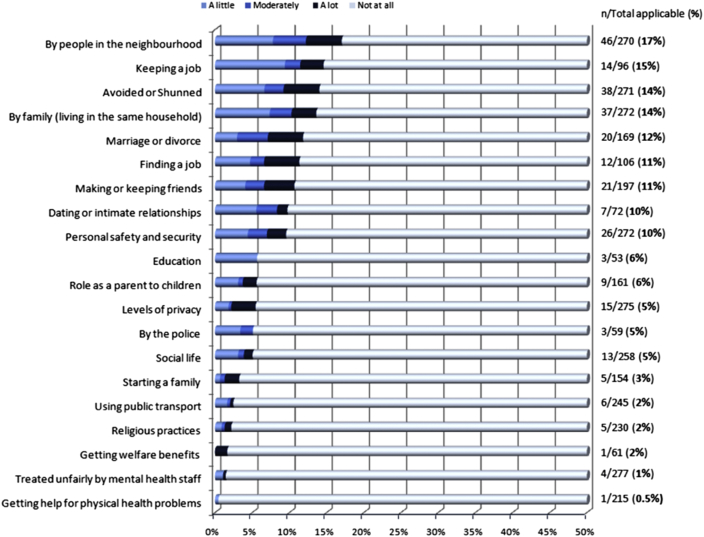
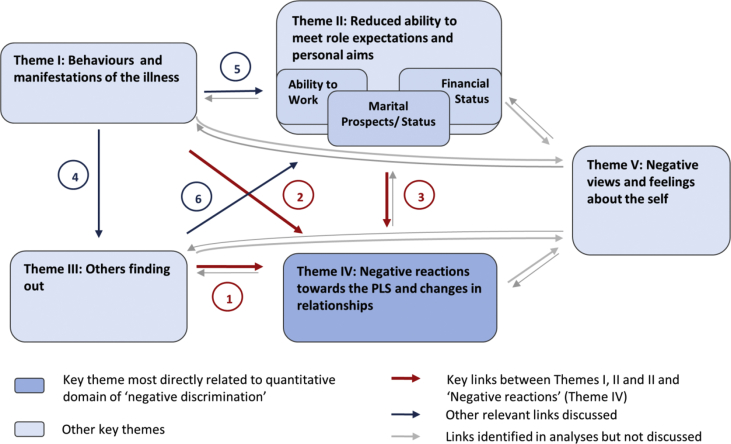
Stigma contributes greatly to the burden of schizophrenia and is a major obstacle to recovery, yet, little is known about the subjective experiences of those directly affected in low and middle income countries. This paper aims to describe the experiences of stigma and discrimination of people living with schizophrenia (PLS) in three sites in India and to identify factors influencing negative discrimination. The study used mixed methods and was nested in a randomised controlled trial of community care for schizophrenia. Between November 2009 and October 2010, data on four aspects of stigma experienced by PLS and several clinical variables were collected from 282 PLS and 282 caregivers and analysed using multivariate regression. In addition, in-depth-interviews with PLS and caregivers (36 each) were carried out and analysed using thematic analysis. Quantitative findings indicate that experiences of negative discrimination were reported less commonly (42%) than more internalised forms of stigma experience such as a sense of alienation (79%) and significantly less often than in studies carried out elsewhere. Experiences of negative discrimination were independently predicted by higher levels of positive symptoms of schizophrenia, lower levels of negative symptoms of schizophrenia, higher caregiver knowledge about symptomatology, lower PLS age and not having a source of drinking water in the home. Qualitative findings illustrate the major impact of stigma on 'what matters most' in the lives of PLS and highlight three key domains influencing the themes of 'negative reactions' and 'negative views and feelings about the self', i.e., 'others finding out', 'behaviours and manifestations of the illness' and 'reduced ability to meet role expectations'. Findings have implications for conceptualising and measuring stigma and add to the rationale for enhancing psycho-social interventions to support those facing discrimination. Findings also highlight the importance of addressing public stigma and achieving higher level social and political structural change.
Keywords: Discrimination; India; Mental illness; Mixed methods; Schizophrenia; Stigma.
Copyright © 2014 The Authors. Published by Elsevier Ltd.. All rights reserved.
Figures
References
-
- Barrowclough C., Tarrier N. Chapman and Hill; London: 1992. Families of People with Schizophrenia: Cognitive Behavioural Interventions.
-
- Braun V., Clarke V. Using thematic analysis in psychology. Qual. Res. Psychol. 2006;3(2):77–101.
Publication types
MeSH terms
Grants and funding
LinkOut - more resources
Full Text Sources
Other Literature Sources
Medical
