


Household air pollution from solid fuel use and risk of adverse pregnancy outcomes: a systematic review and meta-analysis of the empirical evidence
- PMID: 25463771
- PMCID: PMC4252082
- DOI: 10.1371/journal.pone.0113920
Household air pollution from solid fuel use and risk of adverse pregnancy outcomes: a systematic review and meta-analysis of the empirical evidence
Abstract
Background: About 41% of households globally, mainly in developing countries rely on solid fuels for cooking with consequences for fetal growth and development. Previous reviews were limited in scope, assessing only two outcomes (birth weight, stillbirth). With important evidence accumulating, there is a need to improve the previous estimates and assess additional outcomes. We conducted a systematic review and meta-analysis to evaluate the quality and strength of available evidence on household air pollution (HAP) and the whole range of adverse pregnancy outcomes.
Methods: PubMed, Ovid Medline, Scopus and CINAHL were searched from their inception to the end of April 2013. All epidemiological study designs were eligible for inclusion in the review. The random-effects model was applied in computing the summary-effect estimates (EE) and their corresponding 95% confidence interval (CI).
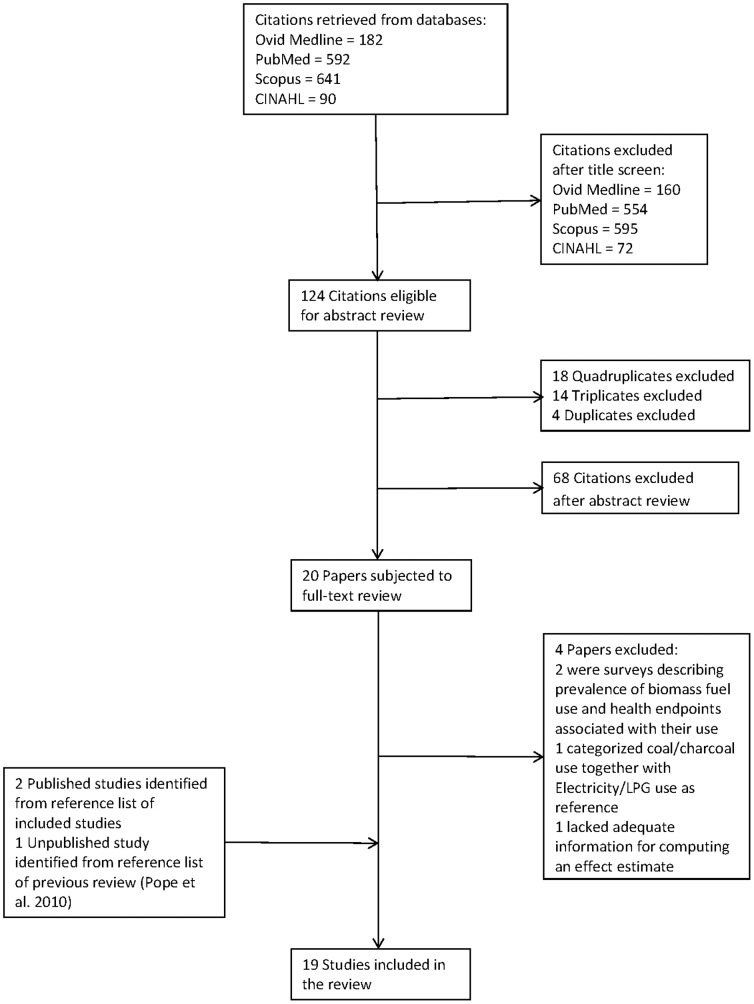
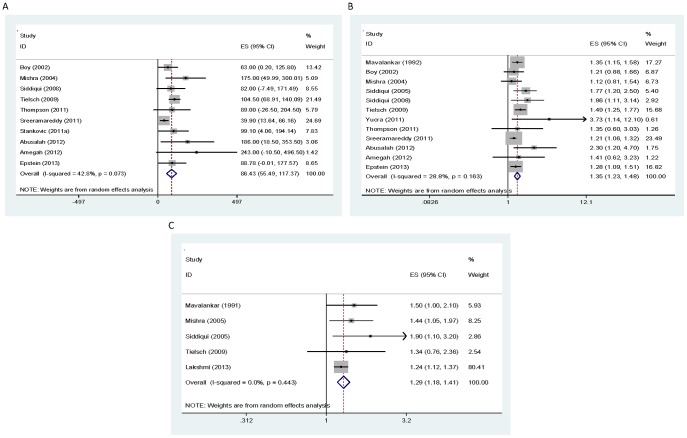
Results: Of 1505 studies screened, 19 studies satisfied the inclusion criteria. Household combustion of solid fuels resulted in an 86.43 g (95% CI: 55.49, 117.37) reduction in birth weight, and a 35% (EE = 1.35, 95% CI: 1.23, 1.48) and 29% (EE = 1.29, 95% CI: 1.18, 1.41) increased risk of LBW and stillbirth respectively.
Conclusion: Combustion of solid fuels at home increases the risk of a wide range of adverse pregnancy outcomes. Access to clean household energy solutions is the surest way to combat HAP and mitigate their adverse effects.
Conflict of interest statement
Figures
References
-
- Smith KR (2002) Indoor air pollution in developing countries: recommendations for research. Indoor Air 12:198–207. - PubMed
-
- World Health Organization (WHO) (2014) Burden of disease from Household Air Pollution for 2012. Geneva: WHO. Available: http://www.who.int/phe/health_topics/outdoorair/databases/FINAL_HAP_AAP_.... Accessed 2014 Apr 20.
-
- Smith KR, Mehta S, Feuz M (2004) Indoor air pollution from household use of solid fuels. In: Ezzati M, Rodgers A, Lopez AD, Murray, CJLeditors. Comparative quantification of health risk: Global and regional burden of disease due to selected major risk factors. Geneva: WHO.
Publication types
MeSH terms
Substances
LinkOut - more resources
Full Text Sources
Other Literature Sources
Medical
Miscellaneous
