


Are Ureaplasma spp. a cause of nongonococcal urethritis? A systematic review and meta-analysis
- PMID: 25463970
- PMCID: PMC4252037
- DOI: 10.1371/journal.pone.0113771
Are Ureaplasma spp. a cause of nongonococcal urethritis? A systematic review and meta-analysis
Abstract
Background: Nongonococcal urethritis (NGU) is the most common male reproductive tract syndrome. Ureaplasmas spp. including U. urealyticum and U. parvum, have been increasingly reported to be implicated in NGU. However, there are still many contradictions about their pathogenic role in NGU.
Aims: The goals of this study were to evaluate the association of Ureaplasmas spp. with NGU, and to compare the prevalence of Ureaplasmas spp. infection in China relative to the world average.
Methods: A systematic review and meta-analysis was conducted following standard guidelines for meta-analysis. The quality of included studies was assessed by Newcastle-Ottawa scale.
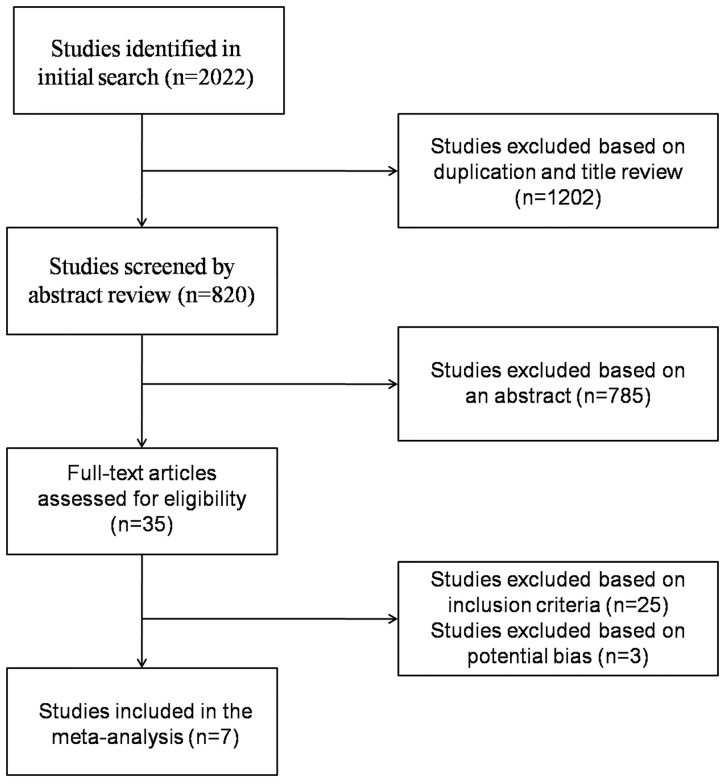
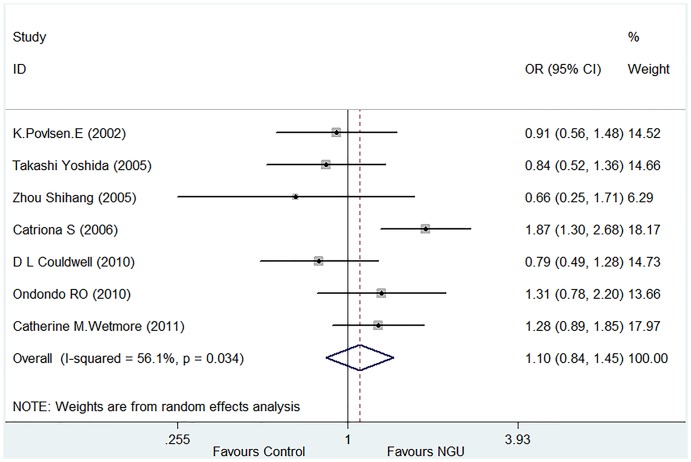
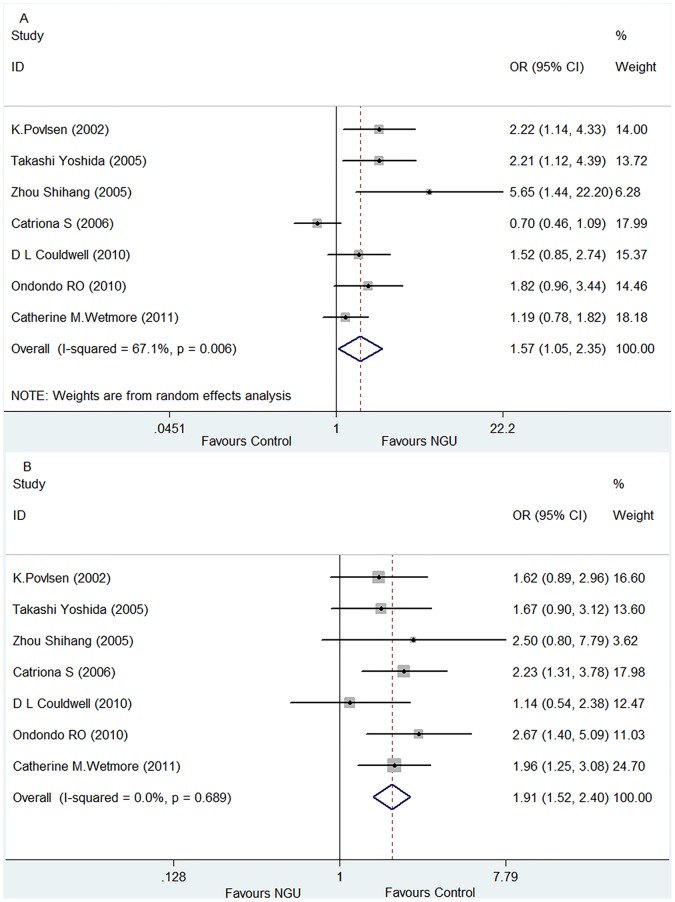
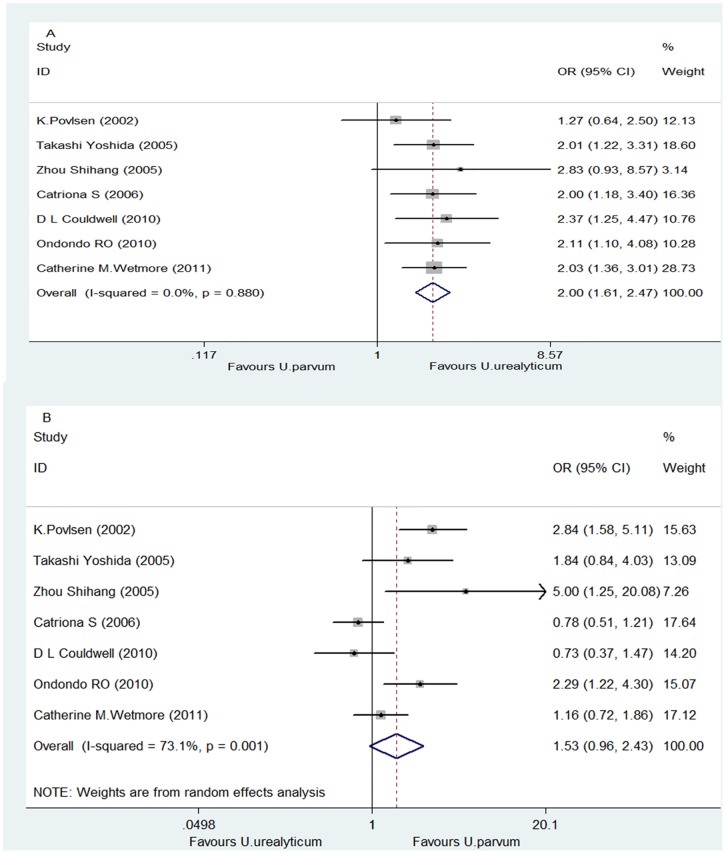
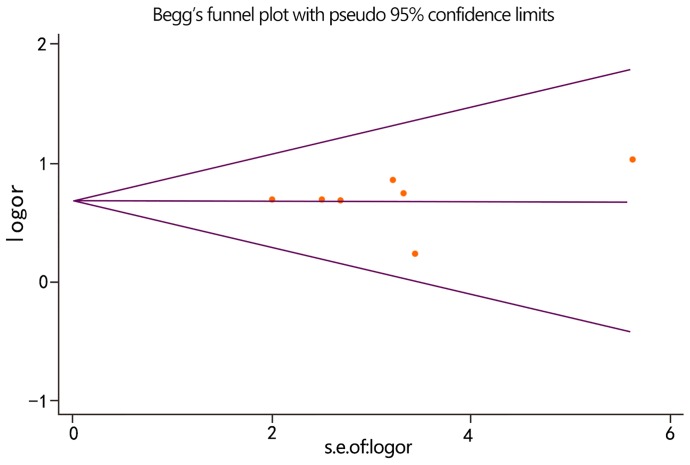
Results: A total of seven studies involving 1,507 NGU patients and 1,223 controls were eligible for meta-analysis. There was no significant difference in the Ureaplasma spp. positive rate between the NGU and control groups. However, the U. urealyticum positive rate was significantly higher in NGU patients compared to controls; the U. parvum positive rate was significantly higher in controls compared to NGU patients. Furthermore, within the NGU patient group, the positive rate of U. urealyticum was significantly higher than that of U. parvum, whereas within the control group, the opposite trend was observed. Compared to the world average, a significantly higher positive rate of Ureaplasma spp. was observed in both the NGU and control groups in China.
Conclusions: Our analysis supports that U. urealyticum, but not U. parvum, is an etiological agent in NGU. More detailed studies of these two species in China and the world could contribute to a better understanding of the epidemiology and pathogenesis, and facilitate the development of better strategies for treatment and prevention of NGU.
Conflict of interest statement
Figures
References
-
- (2005) Sexually Transmitted Diseases Surveillance. Centers for Disease Control and Prevention. Available at http://www.cdc.gov/std/stats05/. Accessed 10 July 2014.
-
- Martin DH (2008) Nongonococcal urethritis: new views through the prism of modern molecular microbiology. Curr Infect Dis Rep 10:128–132. - PubMed
-
- Bradshaw CS, Tabrizi SN, Read TR, Garland SM, Hopkins CA, et al. (2006) Etiologies of nongonococcal urethritis: bacteria, viruses, and the association with orogenital exposure. J Infect Dis 193:336–345. - PubMed
-
- Shepard MC (1954) The recovery of pleuropneumonia-like organisms from Negro men with and without nongonococcal urethritis. Am J Syph Gonorrhea Vener Dis 38:113–124. - PubMed
Publication types
MeSH terms
LinkOut - more resources
Full Text Sources
Other Literature Sources
Miscellaneous
