


Body weight-supported treadmill training is no better than overground training for individuals with chronic stroke: a randomized controlled trial
- PMID: 25467394
- PMCID: PMC4255918
- DOI: 10.1310/tsr2106-462
Body weight-supported treadmill training is no better than overground training for individuals with chronic stroke: a randomized controlled trial
Abstract
Background: Body weight-supported treadmill training (BWSTT) has produced mixed results compared with other therapeutic techniques.
Objective: The purpose of this study was to determine whether an intensive intervention (intensive mobility training) including BWSTT provides superior gait, balance, and mobility outcomes compared with a similar intervention with overground gait training in place of BWSTT.
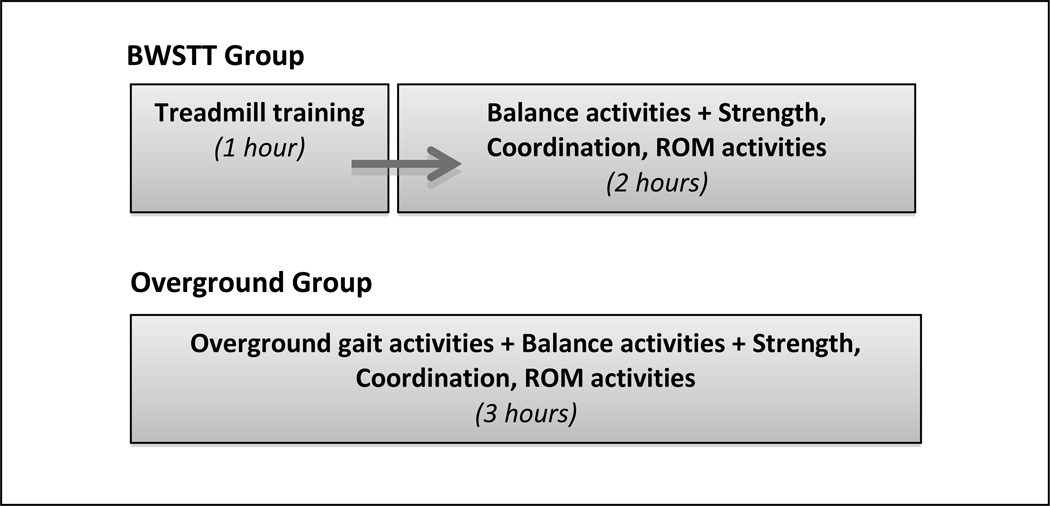
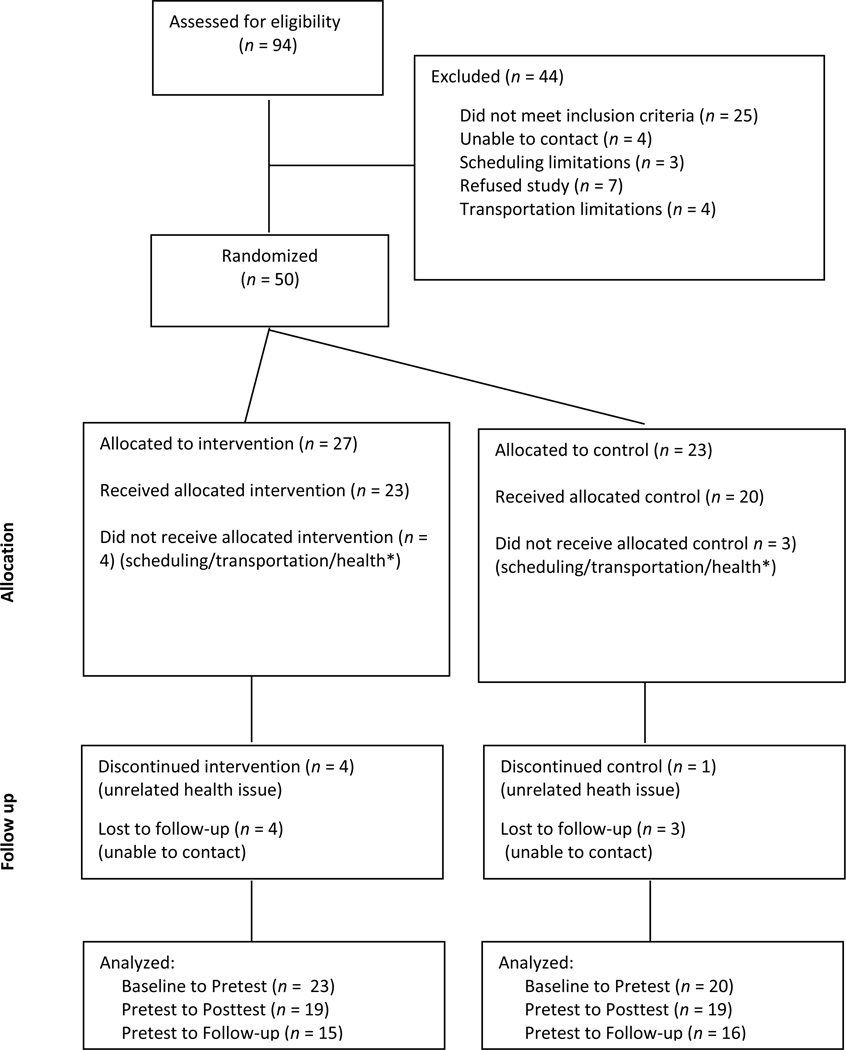
Methods: Forty-three individuals with chronic stroke (mean [SD] age, 61.5 [13.5] years; mean [SD] time since stroke, 3.3 [3.8] years), were randomized to a treatment (BWSTT, n = 23) or control (overground gait training, n = 20) group. Treatment consisted of 1 hour of gait training; 1 hour of balance activities; and 1 hour of strength, range of motion, and coordination for 10 consecutive weekdays (30 hours). Assessments (step length differential, self-selected and fast walking speed, 6-minute walk test, Berg Balance Scale [BBS], Dynamic Gait Index [DGI], Activities-specific Balance Confidence [ABC] scale, single limb stance, Timed Up and Go [TUG], Fugl-Meyer [FM], and perceived recovery [PR]) were conducted before, immediately after, and 3 months after intervention.
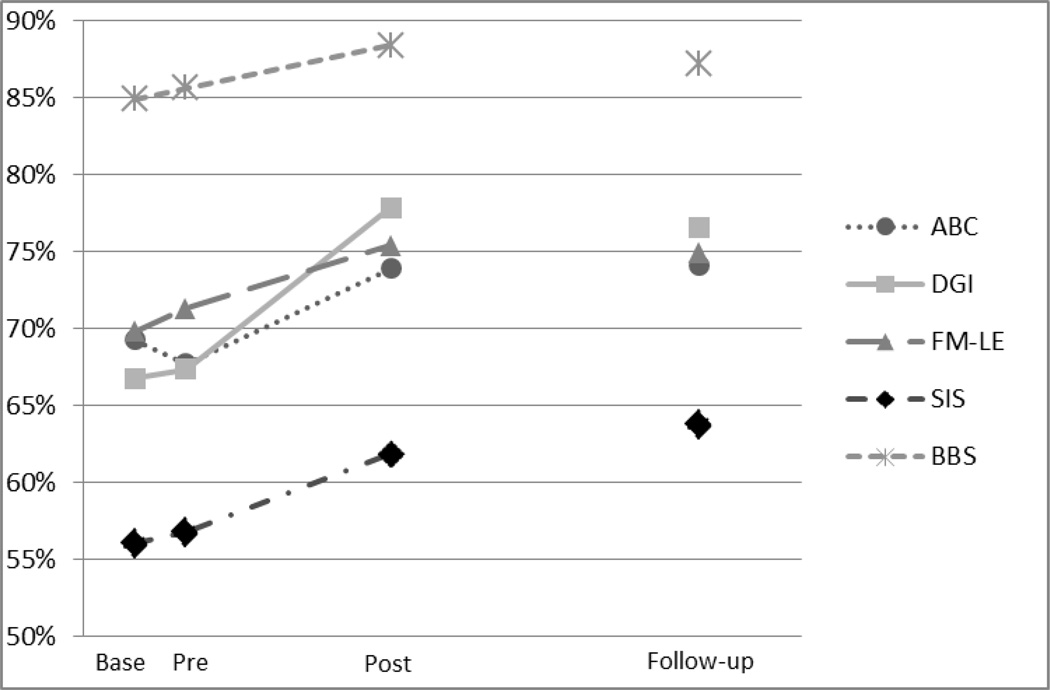
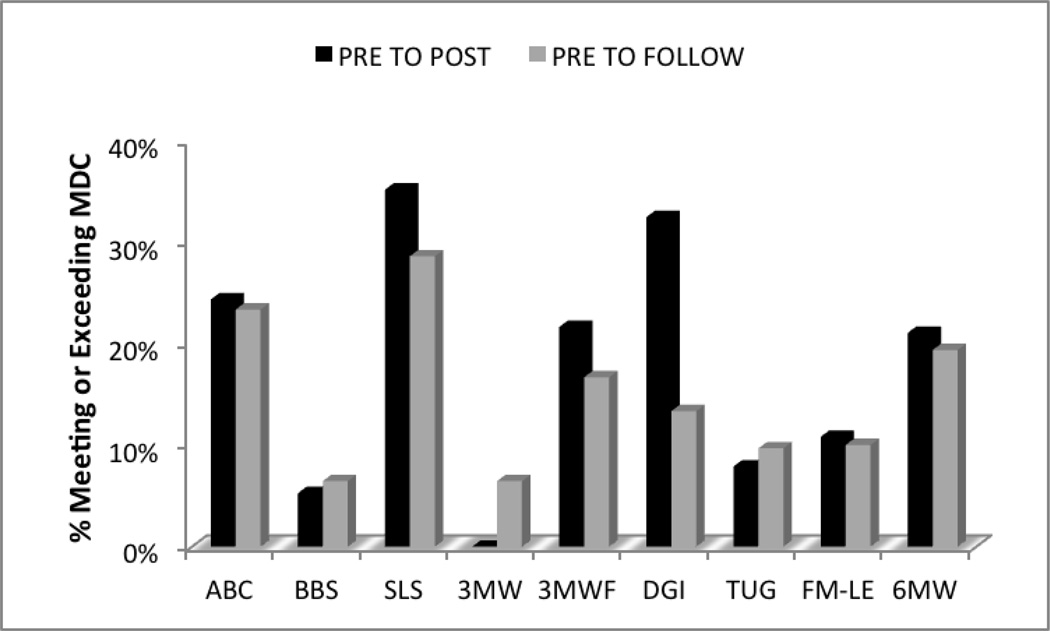
Results: No significant differences (α = 0.05) were found between groups after training or at follow-up; therefore, groups were combined for remaining analyses. Significant differences (α = 0.05) were found pretest to posttest for fast walking speed, BBS, DGI, ABC, TUG, FM, and PR. DGI, ABC, TUG, and PR results remained significant at follow-up. Effect sizes were small to moderate in the direction of improvement.
Conclusions: Future studies should investigate the effectiveness of intensive interventions of durations greater than 10 days for improving gait, balance, and mobility in individuals with chronic stroke.
Keywords: balance; gait; mobility; rehabilitation; stroke; treadmill training.
Conflict of interest statement
Figures
References
-
- Combs SA, Dugan EL, Ozimek EN, Curtis AB. Bilateral coordination and gait symmetry after body-weight supported treadmill training for persons with chronic stroke. Clin Biomech (Bristol, Avon) 2013;28(4):448–453. - PubMed
-
- da Cunha IT, Jr, Lim PA, Qureshy H, Henson H, Monga T, Protas EJ. Gait outcomes after acute stroke rehabilitation with supported treadmill ambulation training: A randomized controlled pilot study. Arch Phys Med Rehabil. 2002;83(9):1258–1265. - PubMed
-
- Hornby TG, Campbell DD, Kahn JH, Demott T, Moore JL, Roth HR. Enhanced gait-related improvements after therapist-versus robotic-assisted locomotor training in subjects with chronic stroke: A randomized controlled study. Stroke. 2008;39(6):1786–1792. - PubMed
-
- Kosak MC, Reding MJ. Comparison of partial body weight-supported treadmill gait training versus aggressive bracing assisted walking post stroke. Neurorehabil Neural Repair. 2000;14(1):13–19. - PubMed
-
- Moore JL, Roth EJ, Killian C, Hornby TG. Locomotor training improves daily stepping activity and gait efficiency in individuals poststroke who have reached a “plateau” in recovery. Stroke. 2010;41(1):129–135. - PubMed
Publication types
MeSH terms
Grants and funding
LinkOut - more resources
Full Text Sources
Other Literature Sources
Medical
Research Materials
