. 2014 Dec 4;159(6):1341-51.
doi: 10.1016/j.cell.2014.10.049. Epub 2014 Nov 20.

Species-wide genetic incompatibility analysis identifies immune genes as hot spots of deleterious epistasis

Affiliations

Species-wide genetic incompatibility analysis identifies immune genes as hot spots of deleterious epistasis

Eunyoung Chae et al. Cell. .

Abstract

Intraspecific genetic incompatibilities prevent the assembly of specific alleles into single genotypes and influence genome- and species-wide patterns of sequence variation. A common incompatibility in plants is hybrid necrosis, characterized by autoimmune responses due to epistatic interactions between natural genetic variants. By systematically testing thousands of F1 hybrids of Arabidopsis thaliana strains, we identified a small number of incompatibility hot spots in the genome, often in regions densely populated by nucleotide-binding domain and leucine-rich repeat (NLR) immune receptor genes. In several cases, these immune receptor loci interact with each other, suggestive of conflict within the immune system. A particularly dangerous locus is a highly variable cluster of NLR genes, DM2, which causes multiple independent incompatibilities with genes that encode a range of biochemical functions, including NLRs. Our findings suggest that deleterious interactions of immune receptors limit the combinations of favorable disease resistance alleles accessible to plant genomes.


Figures

Figure 1
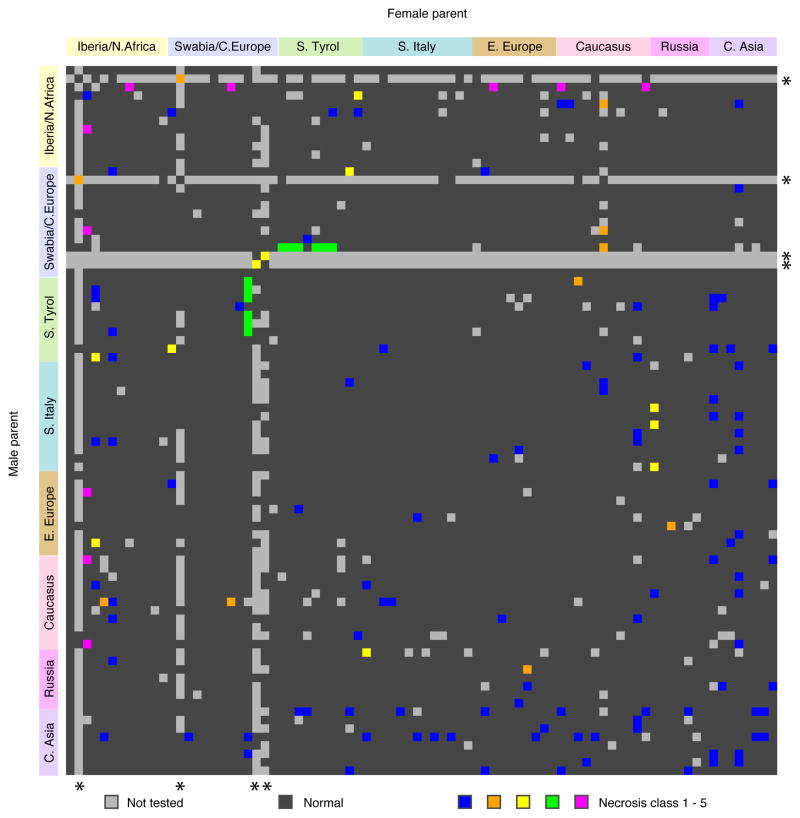
Figure 1. Crosses for Detection of Hybrid Incompatibilities
Accessions are color coded by region of origin. Accessions that are not part of the 80 accessions from (Cao et al., 2011) are marked with asterisks. See also Figure S1 and Table S1.
Figure 2
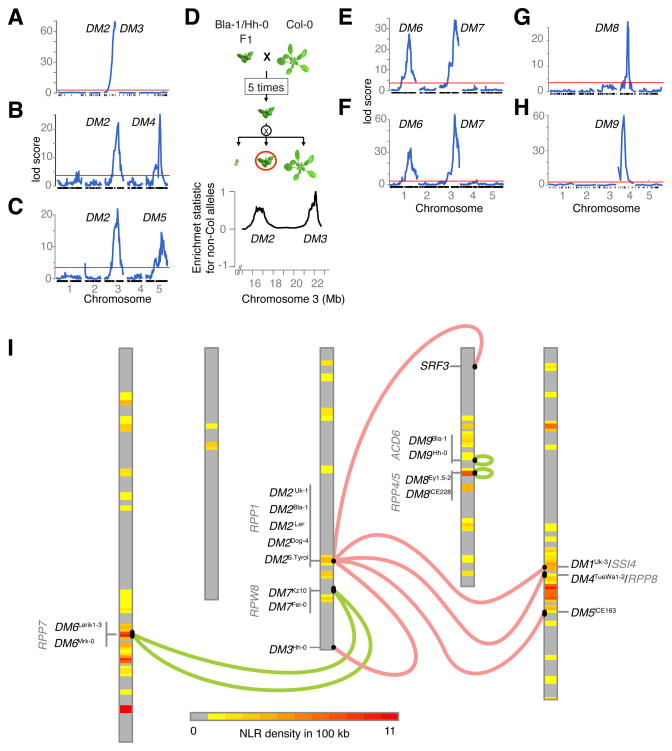
Figure 2. Linkage Mapping of Seven Hybrid Incompatibilities
Hybrid necrosis QTL maps in (A) Bla-1/Hh-0 (leaf twisting), (B) TueWa1-2/ICE163, (C) Dog-4/ICE163, (E) Fei-0/Lerik1-3, (F) KZ10/Mrk-0, (G) Ey1.5-2/ICE228, and (H) Bla-1/Hh-0 (late-onset lesioning). Red lines mark significance threshold (p=0.05, 1,000 permutations); vertical marks along the X-axes indicate marker positions. (D) Scheme for Illumina sequencing of bulk segregants to delineate DM2 and DM3. (I) Genomic location of DM alleles compared to NLR gene density (1 Mb windows) on the five chromosomes of the reference strain Col-0. SRF3, DM2Ler and DM1/SSI4 have been reported before (Alcázar et al., 2010; Alcázar et al., 2009; Bomblies et al., 2007). DM2/RPP1 interactions in red, others in green. See also Figure S2, Tables S2, S3 and S4.
Figure 3
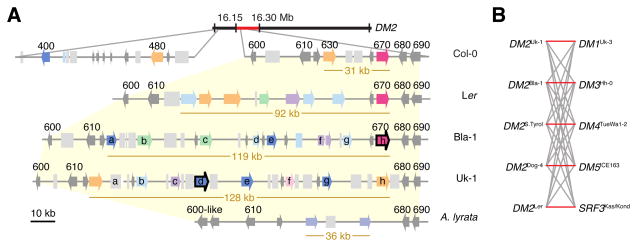
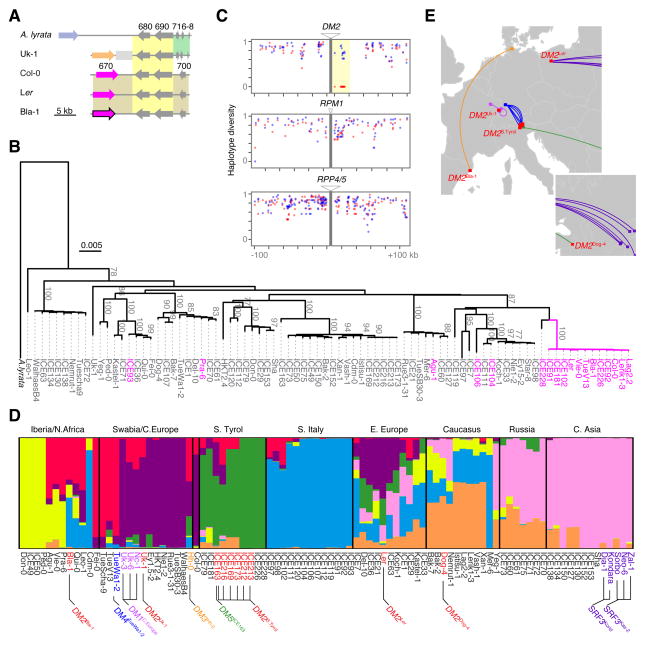
Figure 3. The DM2 Cluster in Arabidopsis
(A) DM2 clusters in four A. thaliana accessions and in A. lyrata MN47. The mapping interval for DM2 in Bla-1 is indicated in red. Genes are indicated with colored arrows, pseudogenes with colored boxes and transposons with light grey boxes. Non-NLR genes are in dark grey. NLR genes are colored according to their phylogenetic history (see Figure S4), with unresolved relationships indicated in light blue. Numbers above arrows indicate the last three digits of At3g44XXX and are given only when there are homologs in the reference genome. The two incompatibility genes are outlined in black. The DM2Ler cluster was re-annotated based on GenBank FJ446580.1. The sizes in kb refer to the core DM2 clusters, defined as the coding regions of all NLRs (colored arrows) in a cluster. (B) Test crosses between DM2 carriers and interacting allele carriers. Red and grey lines indicate incompatible and compatible interactions, respectively. See also Figure S3.
Figure 4
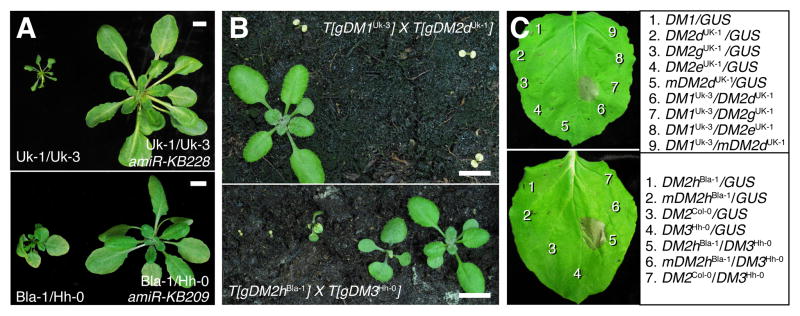
Figure 4. Identification of DM2dUk-1 and DM2hBla-1 as Hybrid Necrosis Genes
(A) Arabidopsis thaliana F1 hybrids and rescued siblings expressing amiRNAs at 16 °C. (B) Reconstitution of incompatibilities in Col-0, with transgenic F1 hybrids at 16°C. Transgenic effects were often stronger than F1 hybrid phenotypes. (C) HR-like cell death in N. benthamiana induced by co-expression of A. thaliana DM proteins at 23°C. mDM2 indicates P-loop mutant versions (GIGKTT to GIAATT), which should not be able to bind and hydrolyze ATP (Chung et al., 2011). Scale bars in (A) and (B) represent 1 cm. See also Figure S4.
Figure 5
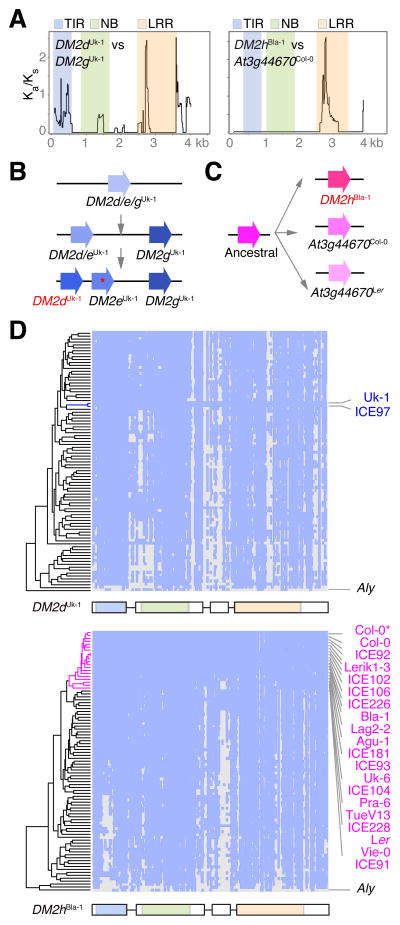
Figure 5. Origin and Variation of DM2 Hybrid Necrosis Genes
(A) Ka/Ks ratios of closely related DM2 genes (window length 150 bp, step size 9 bp). (B) Most parsimonious path for evolution of DM2dUk-1 paralogs. (C) Most parsimonious path for evolution of DM2hBla-1 orthologs. (D) DM2dUk-1- and DM2hBla-1-type profiling using Illumina reads from accessions with one mismatch. Grey indicates uncovered regions. Accessions carrying a DM2h-type are labeled in magenta. See also Figure S5, Tables S5 and S6.
Figure 6
Figure 6. Haplotype Sharing Around DM2h and Geographic Distribution of DM2 alleles
(A) Syntenic overview of the region beyond the DM2 clusters in A. thaliana accessions and in A. lyrata MN47. See Fig. 3A legend for color and number code. (B) Phylogeny of 8-kb conserved sequences spanning At3g44680 and At3g44690 (yellow shade in panel A). DM2h-type carriers are magenta, non-carriers grey. Bootstrap values over 70% are indicated. (C) Haplotype diversity based on groups of 10 adjacent SNPs in the regions flanking NLR loci DM2, RPM1 and RPP4/5. Twelve DM2h-type carriers in red and 12 non-carriers in blue. (D) STRUCTURE analysis (k = 7) of hybrid necrosis risk allele carriers together with a selection of global accessions. At the bottom, accessions carrying different DM2 hybrid necrosis alleles in red, and those carrying DM2 interacting alleles in other colors. These colors are unrelated to the ones used to identify membership in STRUCTURE clusters on top. (E) Carriers of DM2 hybrid necrosis alleles in red, carriers of interacting alleles in other colors. DM2/SRF3 interactions are from (Alcázar et al., 2010). See also Figure S6.

Comment in

References

    1. Alcázar R, García AV, Kronholm I, de Meaux J, Koornneef M, Parker JE, Reymond M. Natural variation at Strubbelig Receptor Kinase 3 drives immune-triggered incompatibilities between Arabidopsis thaliana accessions. Nat Genet. 2010;42:1135–1139. - PubMed
    1. Alcázar R, Garcia AV, Parker JE, Reymond M. Incremental steps toward incompatibility revealed by Arabidopsis epistatic interactions modulating salicylic acid pathway activation. Proc Natl Acad Sci USA. 2009;106:334–339. - PMC - PubMed
    1. Allen RL, Bittner-Eddy PD, Grenville-Briggs LJ, Meitz JC, Rehmany AP, Rose LE, Beynon JL. Host-parasite coevolutionary conflict between Arabidopsis and downy mildew. Science. 2004;306:1957–1960. - PubMed
    1. Bakker EG, Toomajian C, Kreitman M, Bergelson J. A genome-wide survey of R gene polymorphisms in Arabidopsis. Plant Cell. 2006;18:1803–1818. - PMC - PubMed
    1. Bateson V. Heredity and variation in modern lights. In: Seward AC, editor. Darwin and Modern Science. Cambridge: Cambridge University Press; 1909. pp. 85–101.

Publication types

Associated data