


Expanding Paramedicine in the Community (EPIC): study protocol for a randomized controlled trial
- PMID: 25467772
- PMCID: PMC4289358
- DOI: 10.1186/1745-6215-15-473
Expanding Paramedicine in the Community (EPIC): study protocol for a randomized controlled trial
Abstract
Background: The incidence of chronic diseases, including diabetes mellitus (DM), heart failure (HF) and chronic obstructive pulmonary disease (COPD) is on the rise. The existing health care system must evolve to meet the growing needs of patients with these chronic diseases and reduce the strain on both acute care and hospital-based health care resources. Paramedics are an allied health care resource consisting of highly-trained practitioners who are comfortable working independently and in collaboration with other resources in the out-of-hospital setting. Expanding the paramedic's scope of practice to include community-based care may decrease the utilization of acute care and hospital-based health care resources by patients with chronic disease.
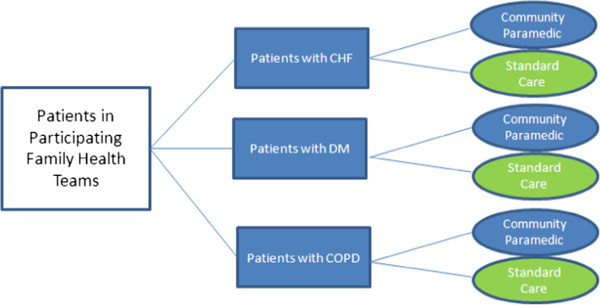
Methods/design: This will be a pragmatic, randomized controlled trial comparing a community paramedic intervention to standard of care for patients with one of three chronic diseases. The objective of the trial is to determine whether community paramedics conducting regular home visits, including health assessments and evidence-based treatments, in partnership with primary care physicians and other community based resources, will decrease the rate of hospitalization and emergency department use for patients with DM, HF and COPD. The primary outcome measure will be the rate of hospitalization at one year. Secondary outcomes will include measures of health system utilization, overall health status, and cost-effectiveness of the intervention over the same time period. Outcome measures will be assessed using both Poisson regression and negative binomial regression analyses to assess the primary outcome.
Discussion: The results of this study will be used to inform decisions around the implementation of community paramedic programs. If successful in preventing hospitalizations, it has the ability to be scaled up to other regions, both nationally and internationally. The methods described in this paper will serve as a basis for future work related to this study.
Trial registration: ClinicalTrials.gov: NCT02034045. Date: 9 January 2014.
Figures
References
-
- Canadian Institute for Health Information . All-Cause Readmission to Acute Care and Return to the Emergency Department. Ottawa, ON: CIHI; 2012.
-
- Smetanin P, Stiff D, Briante C, Ahmad S, Wong L, Ler A. Risk Analytica on Behalf of the Ontario Lung Association. 2011. Life and economic impact of lung disease in Ontario: 2011 to 2041.
-
- Canadian Diabetes Association . An Economic Tsunami: the Cost of Diabetes in Canada. 2009.
-
- Public Health Agency of Canada . Diabetes in Canada: Facts and Figures from a Public Health Perspective. Ottawa: Public Health Agency of Canada; 2011.
Publication types
MeSH terms
Associated data
LinkOut - more resources
Full Text Sources
Other Literature Sources
Medical
Research Materials
Miscellaneous
