


Micronutrient levels and supplement intake in pregnancy after bariatric surgery: a prospective cohort study
- PMID: 25470614
- PMCID: PMC4254913
- DOI: 10.1371/journal.pone.0114192
Micronutrient levels and supplement intake in pregnancy after bariatric surgery: a prospective cohort study
Abstract
Background: Studies report frequent micronutrient deficiencies after bariatric surgery, but less is known about micronutrient levels of pregnant women after bariatric surgery.
Objective: To prospectively evaluate micronutrient levels and supplement intake in pregnancy following bariatric surgery.
Design: A multicenter prospective cohort study including women with restrictive or malabsorptive types of bariatric surgery. Nutritional deficiencies, together with supplement intake, were screened during pregnancy.
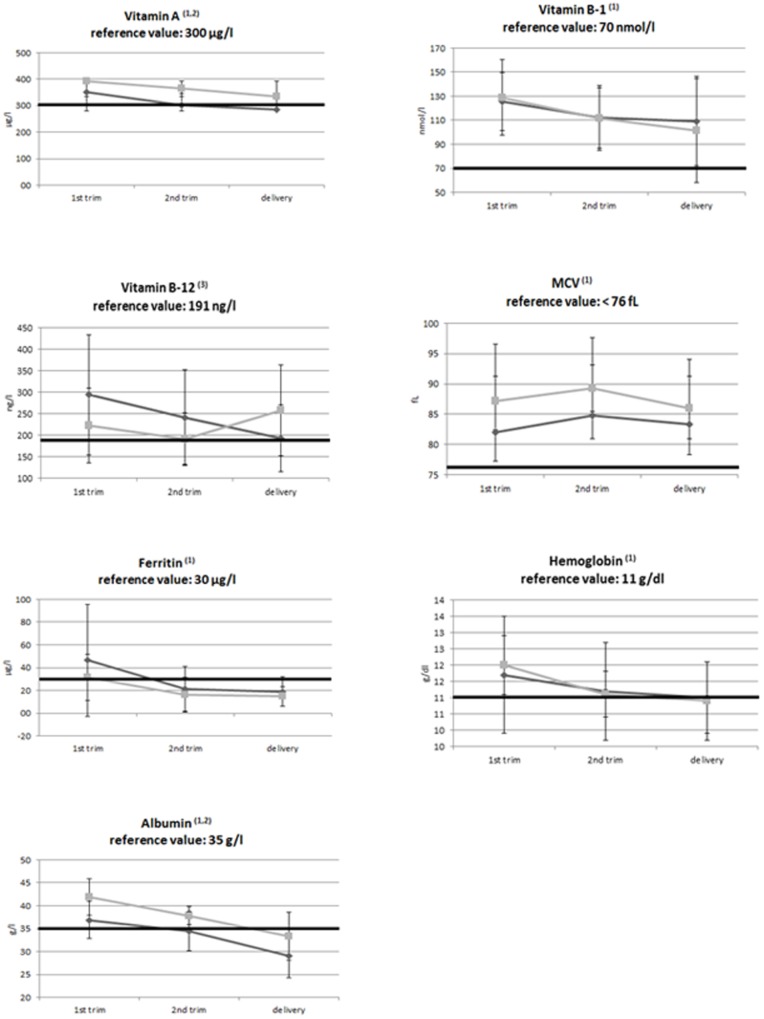
Results: The total population included 18 women in the restrictive and 31 in the malabsorptive group. Most micronutrients were depleted and declined significantly during pregnancy. The proportion of women with low vitamin A and B-1 levels increased to respectively 58 and 17% at delivery (P = 0.005 and 0.002). The proportion of women with vitamin D deficiency decreased from 14% at trimester 1 to 6% at delivery (P = 0.030). Mild anemia was found in respectively 22 and 40% of the women at trimester 1 and delivery. In the first trimester, most women took a multivitamin (57.1%). In the second and third trimester, the majority took additional supplements (69.4 and 73.5%). No associations were found between supplement intake and micronutrient deficiencies.
Conclusion: Pregnant women with bariatric surgery show frequent low micronutrient levels. Supplementation partially normalizes low levels of micronutrients.
Conflict of interest statement
Figures
References
-
- Bogaerts A, Van den Bergh B, Nuyts E, Martens E, Witters I, et al. (2012) Socio-demographic and obstetrical correlates of pre-pregnancy body mass index and gestational weight gain. Clinical Obesity 2:150–159. - PubMed
-
- Santry HP, Gillen DL, Lauderdale DS (2005) Trends in bariatric surgical procedures. JAMA 294:1909–1917. - PubMed
-
- Guelinckx I, Devlieger R, Vansant G (2009) Reproductive outcome after bariatric surgery: a critical review. Hum Reprod Update 15:189–201. - PubMed
-
- Maggard MA, Yermilov I, Li Z, Maglione M, Newberry S, et al. (2008) Pregnancy and fertility following bariatric surgery: a systematic review. JAMA 300:2286–2296 doi: 2210.1001/jama.2008.2641 - PubMed
-
- (2006) Nationale richtlijn prenatale zorg: een basis voor een klinisch pad voor de opvolging van zwangerschappen. KCE (Federaal Kenniscentrum voor de Gezondheidszorg).
Publication types
MeSH terms
Substances
LinkOut - more resources
Full Text Sources
Other Literature Sources
Medical
