Effects of polydeoxyribonucleotide in the treatment of pressure ulcers
- PMID: 25473213
- PMCID: PMC4248009
- DOI: 10.3346/jkms.2014.29.S3.S222
Effects of polydeoxyribonucleotide in the treatment of pressure ulcers
Abstract
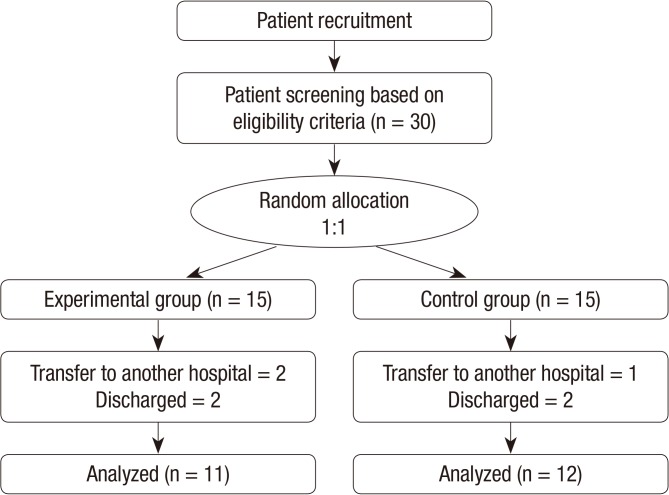
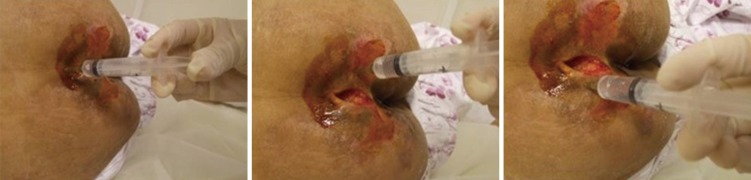
This study aimed to examine the positive effects of polydeoxyribonucleotide (PDRN) on the wound-healing process in pressure ulcers. In this randomized controlled trial, the effects of PDRN were compared over time between an experimental group (n=11) and a control group (n=12). The former was administered the same dose of PDRN intramuscularly (1 ampule, 3 mL, 5.625 mg, for 5 days) for 2 weeks and perilesionally (1 ampule, 3 mL, 5.625 mg, twice a week) for 4 weeks. The primary endpoint for determining efficacy was wound healing in the pressure ulcers, which was reflected by the wound surface area determined using VISITRAK Digital (Smith & Nephew, Largo, FL). The secondary endpoint was the pressure ulcer scale for healing score, determined using pressure ulcer scale for healing (PUSH Tool 3.0 developed by the National Pressure Ulcer Advisory Panel). After the 4-week treatment period, PDRN therapy was found to significantly reduce the wound size and PUSH score, without adverse effect during the treatment. The findings indicate that PDRN can positively modify the wound healing process in pressure ulcers, and its use could improve the clinical outcomes of patients and lower the need for additional therapies or hospital stay.
Keywords: Polydeoxyribonucleotides; Pressure Ulcers; Re-epithelialization.
Conflict of interest statement
We do not have anything to disclose.
Figures


References
-
- Defloor T. The risk of pressure sores: a conceptual scheme. J Clin Nurs. 1999;8:206–216. - PubMed
-
- Baumgarten M, Margolis DJ, Localio AR, Kagan SH, Lowe RA, Kinosian B, Holmes JH, Abbuhl SB, Kavesh W, Ruffin A. Pressure ulcers among elderly patients early in the hospital stay. J Gerontol A Biol Sci Med Sci. 2006;61:749–754. - PubMed
-
- Pressure ulcers in America: prevalence, incidence, and implications for the future. An executive summary of the National Pressure Ulcer Advisory Panel monograph. Adv Skin Wound Care. 2001;14:208–215. - PubMed
-
- Stausberg J, Kröger K, Maier I, Schneider H, Niebel W. Pressure ulcers in secondary care: incidence, prevalence, and relevance. Adv Skin Wound Care. 2005;18:140–145. - PubMed
-
- Lee MJ. Risk factors of pressure ulcers among elderly in the Geriatric Hospital. Seoul: Ewha Woman University; 2010. Dissertation.
Publication types
MeSH terms
Substances
LinkOut - more resources
Full Text Sources
Other Literature Sources
Medical