


Oxidative phosphorylation versus glycolysis: what fuel do spermatozoa use?
- PMID: 25475660
- PMCID: PMC4650467
- DOI: 10.4103/1008-682X.135123
Oxidative phosphorylation versus glycolysis: what fuel do spermatozoa use?
Abstract
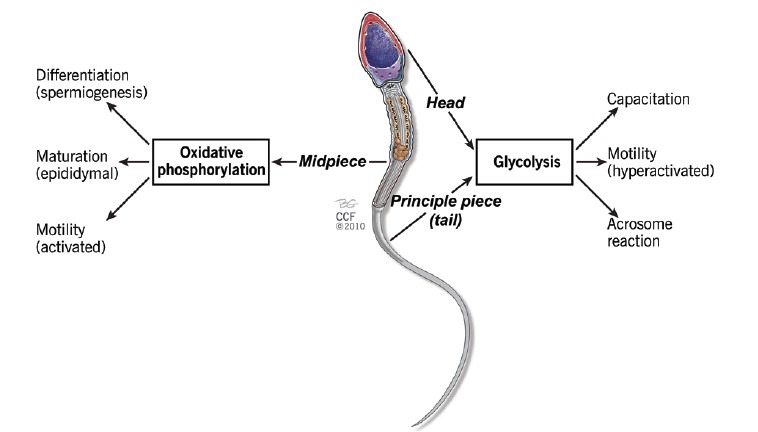
Spermatozoa are highly specialized cells. Adenosine triphosphate (ATP), which provides the energy for supporting the key functions of the spermatozoa, is formed by 2 metabolic pathways, namely glycolysis and oxidative phosphorylation (OXPHOS). It is produced in the mitochondria through OXPHOS as well as in the head and principal piece of the flagellum through glycolysis. However, there is a great discrepancy as to which method of ATP production is primarily utilized by the spermatozoa for successful fertilization. Mitochondrial respiration is considered to be a more efficient metabolic process for ATP synthesis in comparison to glycolysis. However, studies have shown that the diffusion potential of ATP from the mitochondria to the distal end of the flagellum is not sufficient to support sperm motility, suggesting that glycolysis in the tail region is the preferred pathway for energy production. It is suggested by many investigators that although glycolysis forms the major source of ATP along the flagellum, energy required for sperm motility is mainly produced during mitochondrial respiration. Nevertheless, some studies have shown that when glycolysis is inhibited, proper functioning and motility of spermatozoa remains intact although it is unclear whether such motility can be sustained for prolonged periods of time, or is sufficiently vigorous to achieve optimal fertilization. The purpose of this article is to provide an overview of mammalian sperm energy metabolism and identify the preferred metabolic pathway for ATP generation which forms the basis of energy production in human spermatozoa during fertilization.
Figures
References
-
- Mishro MM, Ramya T. Fuel/energy sources of spermatozoa. In: Parekattil JS, Agarwal A, editors. Male Infertility. New York: Springer-Verlag; 2012. pp. 209–23.
-
- Rees JM, Ford WC, Hull MG. Effect of caffeine and of pentoxifylline on the motility and metabolism of human spermatozoa. J Reprod Fertil. 1990;90:147–56. - PubMed
-
- Gnaiger E. Bioenergetics at low oxygen: dependence of respiration and phosphorylation on oxygen and adenosine diphosphate supply. Respir Physiol. 2001;128:277–97. - PubMed
Publication types
MeSH terms
Substances
LinkOut - more resources
Full Text Sources
