


Rhinoviruses significantly affect day-to-day respiratory symptoms of children with asthma
- PMID: 25476729
- PMCID: PMC7173323
- DOI: 10.1016/j.jaci.2014.10.020
Rhinoviruses significantly affect day-to-day respiratory symptoms of children with asthma
Abstract
Background: Viruses are frequently associated with acute exacerbations of asthma, but the extent to which they contribute to the level of day-to-day symptom control is less clear.
Objective: We sought to explore the relationship between viral infections, host and environmental factors, and respiratory symptoms in children.
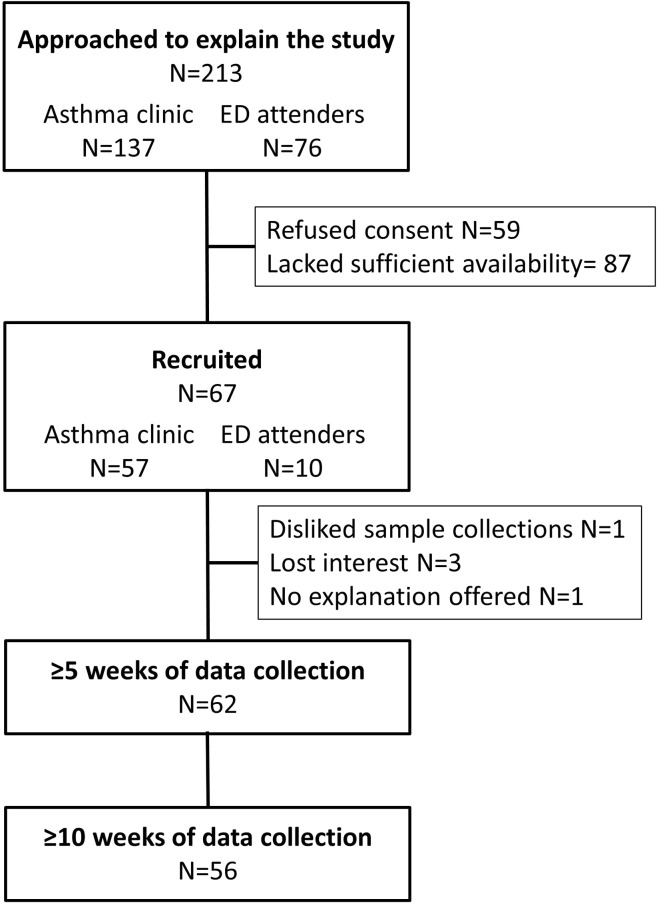
Methods: Sixty-seven asthmatic children collected samples twice weekly for an average of 10 weeks. These included nasal wash fluid and exhaled breath for PCR-based detection of viral RNA, lung function measurements, and records of medication use and asthma and respiratory symptoms in the previous 3 days. Atopy, mite allergen exposure, and vitamin D levels were also measured. Mixed-model regression analyses were performed.
Results: Human rhinoviruses (hRVs) were detected in 25.5% of 1232 nasal samples and 11.5% of breath samples. Non-hRV viruses were detected in less than 3% of samples. hRV in nasal samples was associated with asthma symptoms (cough and phlegm: odds ratio = 2.0; 95% CI = 1.4-2.86, P = .0001; wheeze and chest tightness: odds ratio = 2.34, 95% CI = 1.55-3.52, P < .0001) and with cold symptoms, as reported concurrently with sampling and 3 to 4 days later. No differences were found between the 3 hRV genotypes (hRV-A, hRV-B, and hRV-C) in symptom risk. A history of inhaled corticosteroid use, but not atopic status, mite allergen exposure, or vitamin D levels, modified the association between viruses and asthma symptoms.
Conclusion: The detection of nasal hRV was associated with a significantly increased risk of day-to-day asthma symptoms in children. Host, virus genotype, and environmental factors each had only a small or no effect on the relationship of viral infections to asthma symptoms.
Keywords: Virus; asthma; asthma control; children; mixed-model analysis; respiratory; rhinovirus.
Copyright © 2014 American Academy of Allergy, Asthma & Immunology. All rights reserved.
Figures


References
-
- Bousquet J., Mantzouranis E., Cruz A.A., Ait-Khaled N., Baena-Cagnani C.E., Bleecker E.R. Uniform definition of asthma severity, control, and exacerbations: document presented for the World Health Organization Consultation on Severe Asthma. J Allergy Clin Immunol. 2010;126:926–938. - PubMed
Publication types
MeSH terms
Substances
LinkOut - more resources
Full Text Sources
Other Literature Sources
Medical
