


Antioxidant activity and fatty acid profile of fermented milk prepared by Pediococcus pentosaceus
- PMID: 25477694
- PMCID: PMC4252412
- DOI: 10.1007/s13197-012-0891-9
Antioxidant activity and fatty acid profile of fermented milk prepared by Pediococcus pentosaceus
Abstract
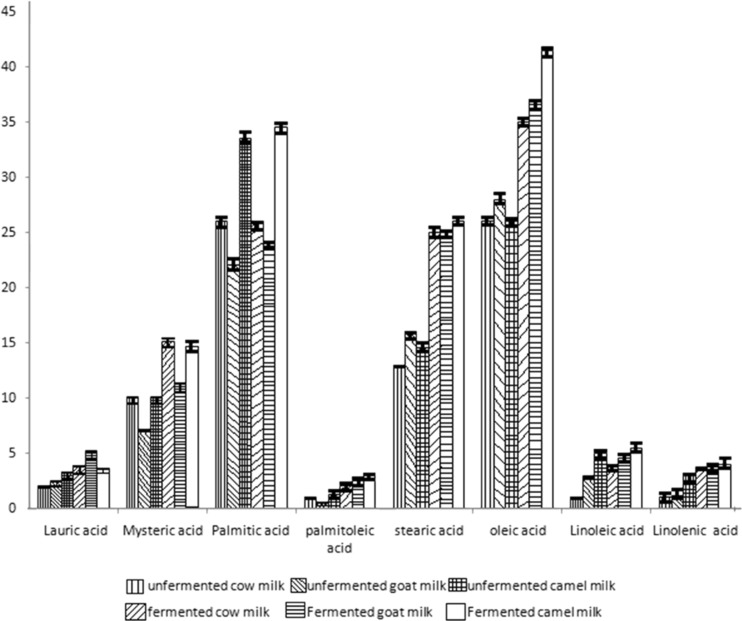
Probiotics are the class of beneficial microorganisms that have positive influence on the health when ingested in adequate amounts. Probiotic fermented milk is one of the dairy products that is prepared by using probiotic lactic acid bacteria. The study comprised preparation of fermented milk from various sources such as cow, goat and camel. Pediococcus pentosaceus which is a native laboratory isolate from cheese was utilized for the product formation. Changes in functional properties in the fermented milks obtained from three different species were evaluated. Antioxidant activity determined by DPPH assay showed activity in probiotic fermented milk obtained from all the products being highest in goat milk (93 %) followed by product from camel milk (86 %) and then product from cow milk (79 %). The composition of beneficial fatty acids such as stearic acid, oleic acid and linoleic acid were higher in fermented milk than the unfermented ones. Results suggested that probiotic bacteria are able to utilize the nutrients in goat and camel milk more efficiently compared to cow milk. Increase in antioxidant activity and fatty acid profile of fermented milks enhances the therapeutic value of the products.
Keywords: Antioxidant; Fatty acid; Fermented milk; Probiotics.
Figures
References
-
- Abdelbasset M, Djamila K. Antimicrobial activity of autochthonous lactic acid bacteria isolated from Algerian traditional fermented milk “Raïb”. Afr J Biotechnol. 2008;7:2908–2914.
-
- Agrawal R, RatiRao E, Vijayendra SVN, Varadaraj MC, Prasad MS, Nand K. Flavour profile of idli batter prepared from defined microbial starter cultures. World J Microbiol Biotechnol. 2000;16:687–690. doi: 10.1023/A:1008939807778. - DOI
-
- Brand-Williams W, Cuvelier M, Berset C. Use of a free radical method to evaluate antioxidant activity. LWT-Food Sci Technol. 1995;28:25–30. doi: 10.1016/S0023-6438(95)80008-5. - DOI
-
- De la Fuente MA, Fontecha J, Juárez M. Fatty acid composition of the triglyceride and free fatty acid fractions in different cows-, ewes-and goats-milk cheeses. Z Lebensm Unters Forsch A. 1993;196:155–158. doi: 10.1007/BF01185577. - DOI
LinkOut - more resources
Full Text Sources
Other Literature Sources