. 2014:2014:564573.
doi: 10.1155/2014/564573. Epub 2014 Nov 12.

Significance of algal polymer in designing amphotericin B nanoparticles

Affiliations

Significance of algal polymer in designing amphotericin B nanoparticles

Saurabh Bhatia et al. ScientificWorldJournal. 2014.

Abstract

Development of oral amphotericin B (AmB) loaded nanoparticles (NPs) demands a novel technique which reduces its toxicity and other associated problems. Packing of AmB in between two oppositely charged ions by polyelectrolyte complexation technique proved to be a successful strategy. We have developed a novel carrier system in form of polyelectrolyte complex of AmB by using chitosan (CS) and porphyran (POR) as two oppositely charged polymers with TPP as a crosslinking agent. Initially POR was isolated from Porphyra vietnamensis followed by the fact that its alkali induced safe reduction in molecular weight was achieved. Formulation was optimized using three-factor three-level (3(3)) central composite design. High concentration of POR in NPs was confirmed by sulfated polysaccharide (SP) assay. Degradation and dissolution studies suggested the stability of NPs over wide pH range. Hemolytic toxicity data suggested the safety of prepared formulation. In vivo and in vitro antifungal activity demonstrated the high antifungal potential of optimized formulation when compared with standard drug and marketed formulations. Throughout the study TPP addition did not cause any significant changes. Therefore, these experimental oral NPs may represent an interesting carrier system for the delivery of AmB.


Figures
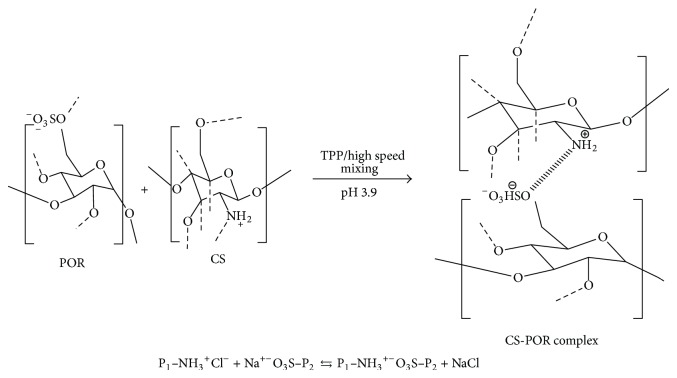
Figure 1
Figure 1
Possible interaction between CS and POR under the influence of the specified conditions.
Figure 2
Figure 2
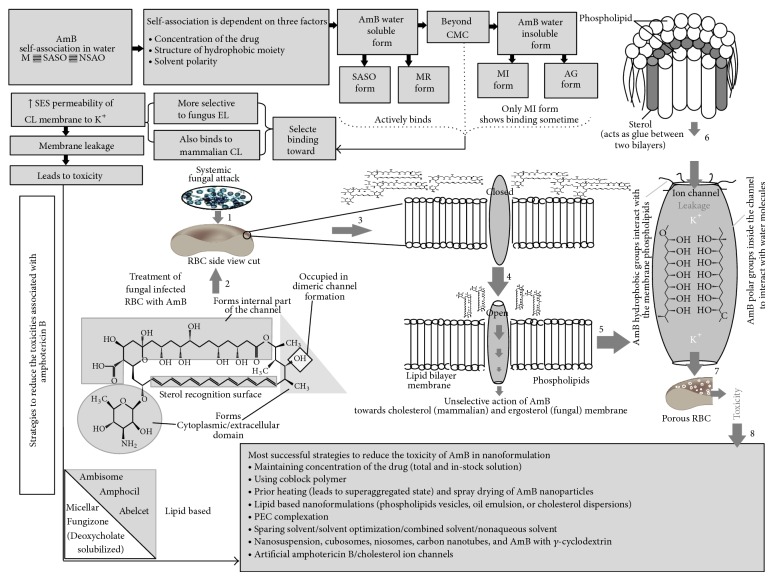
Mechanism of antifungal action of amphotericin B representing its relation with the nature of arrangement (form) in aqueous state with its associated toxicities and cures. This hypothetical figure demonstrates how association of AmB affects antifungal activity of the whole dug. AmB, oldest drug that does not induce resistance, possesses poor solubility in water (soluble in some organic solvent, e.g., DMSO/DMF) but beyond critical micellar concentration (CMC) AmB starts self-association in aqueous media. This type of association in aqueous media creates the equilibrium stage (between monomers (M), self-associated soluble oligomers (SASO), and nonsoluble aggregation of oligomers (NSAO)) which is dependent on several factors as depicted in Figure 2. Beyond CMC, the solubilized form (monomeric (MR) and self-associated oligomer) is converted into insoluble form aggregated {(AG)/miccellar (MI) form}. Therefore due to availability of several forms of single drug it attains different types of activity. The soluble form can be an active form since it actively binds to the membrane either at once or after reconstitution in micelles within the lipid bilayer but it is only possible beyond CMC. Among insoluble, the micellar form can be active in some cases. As a result the overall activity of AmB is dependent on the equilibrium stage between the different forms present in the aqueous medium. Factors influencing this stage can change the whole activity of the drug. Among these two forms, soluble form (self-associated oligomer) effectively/unselectively binds with the fungal ergosterol membrane and cholesterol membrane by increasing permeability to K+ but proved to be more toxic than aggregated form as it causes leakage to mammalian cholesterol also. This leakage is governed by formation of AmB-sterol complex in a fashion where polar groups head towards the inside of the channel and hydrophobic groups interact with the outside phospholipid membrane. This may lead to various toxicity problems. Nowadays various strategies have been adopted to reduce these toxicities while formulating AmB in nanoform [–14].
Figure 3
Figure 3
Response surface graph of CS-POR nanoparticles encapsulating AmB showing the effect of chitosan and porphyran on (a) two-dimensional particle size, (b) three-dimensional particle size, (c) two-dimensional zeta potential, (d) three-dimensional zeta potential, (e) two-dimensional DEE, (f) three-dimensional DEE, and (g) overlay plot showing the location of optimized formulation.
Figure 4
Figure 4
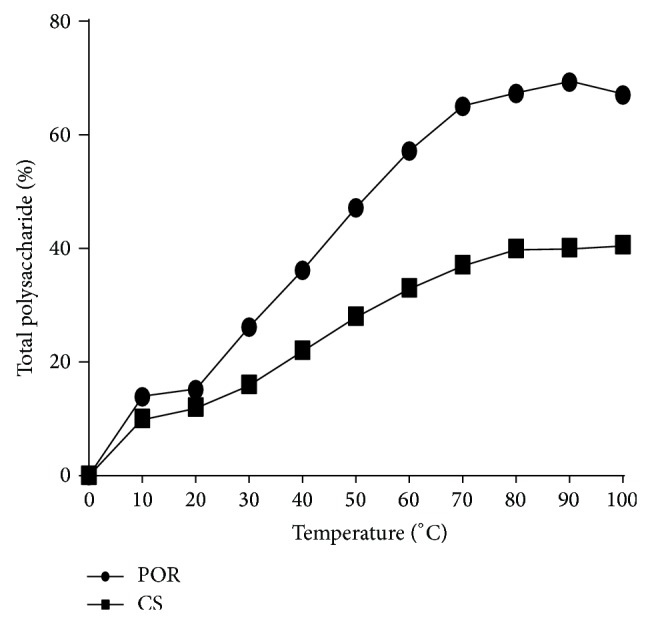
SPs assay of optimized NPs representing the concentration CS and POR at different temperature and acidic conditions by DMB method.
Figure 5
Figure 5
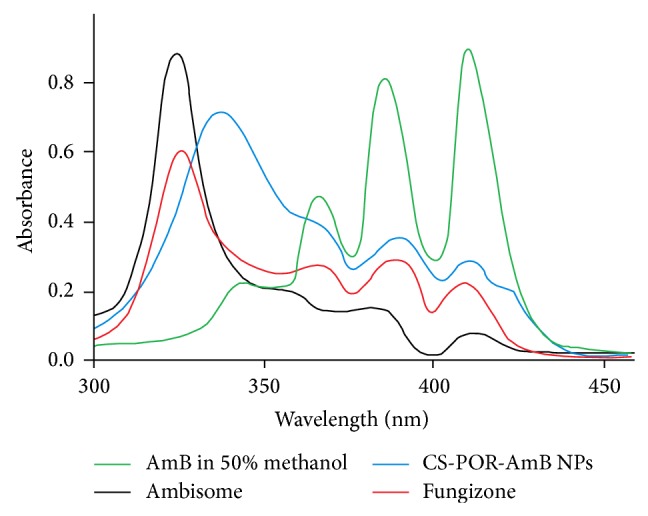
UV/VIS absorption spectra of monomeric AmB (50% methanol), Fungizone, Ambisome, and the developed AmB nanoformulations.
Figure 6
Figure 6
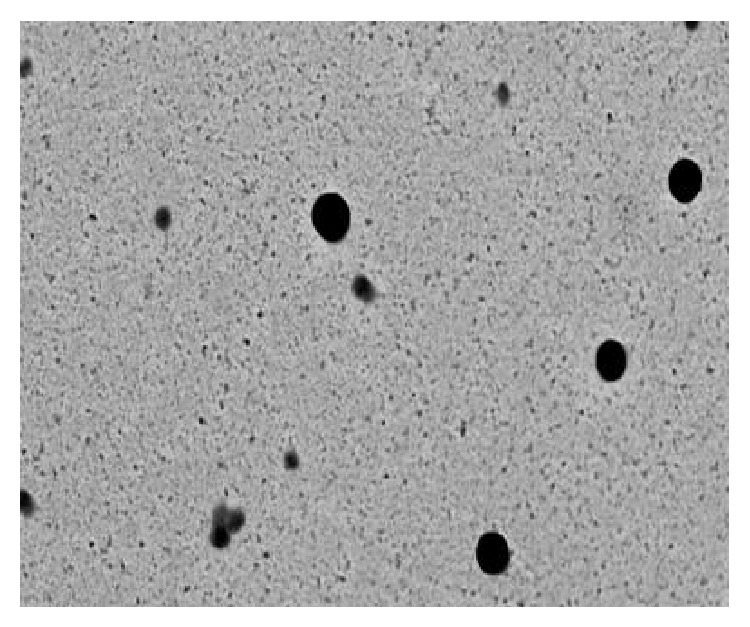
TEM image (18000x magnification) of CS-POR-AmB NPs.
Figure 7
Figure 7
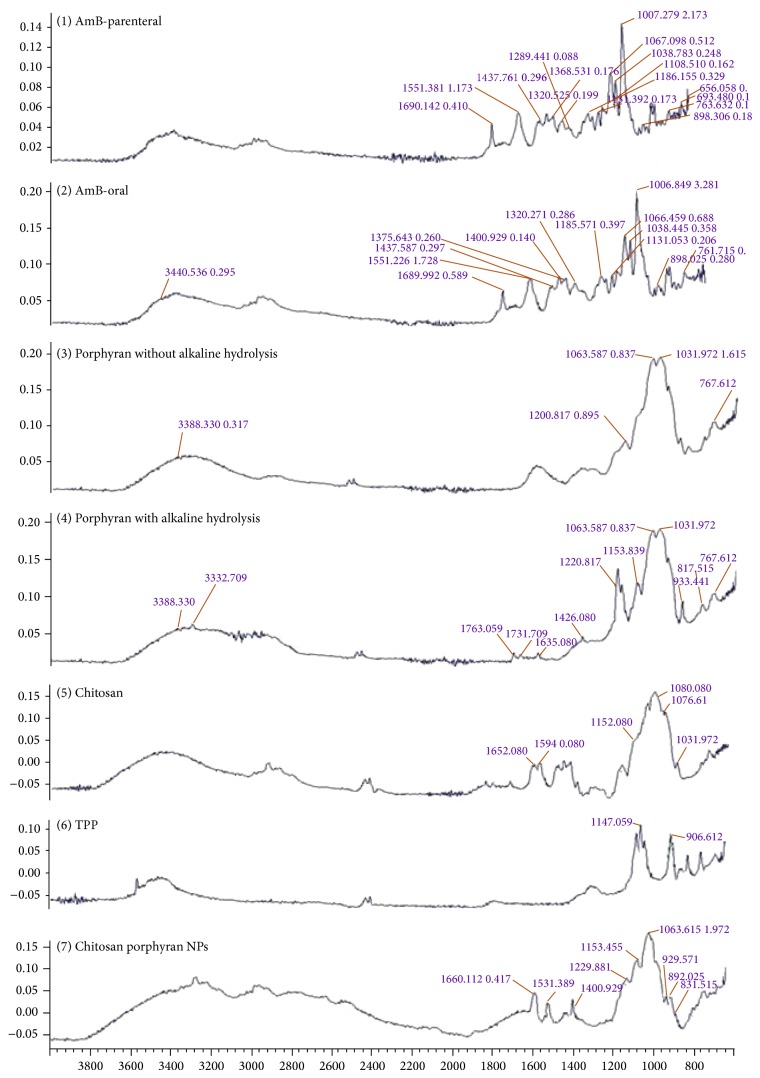
Overlay of FTIR of AmB (oral and parenteral grade), Porphyran (natural and with treatment of NaBr), Chitosan, TPP, and Chitosan-Porphyran-AmB-TPP nanoparticles.
Figure 8
Figure 8
Overlay of differential scanning thermogram of CS (chitosan), porphyran (N-POR, POR), AmB, TPP, mannitol, AmB loaded nanoparticles (AmB NPs), and blank nanoparticles (blank NPs).
Figure 9
Figure 9
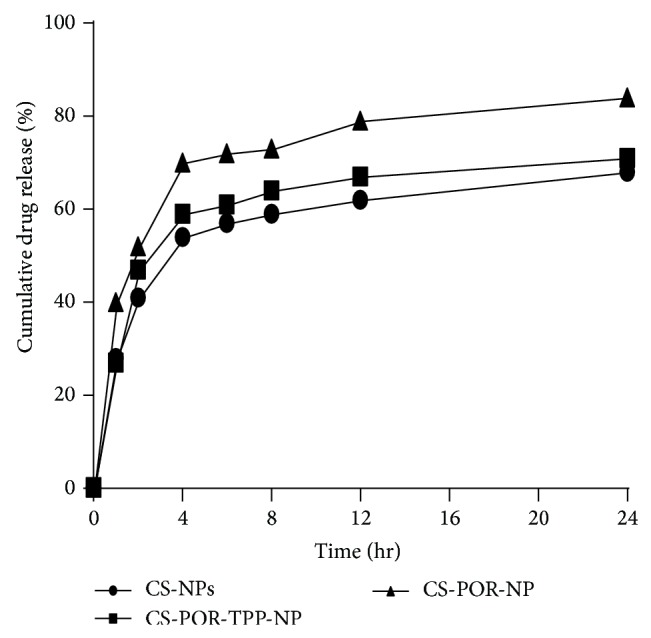
In vitro release profiles of the optimized formulations of PEC nanoparticles (CS-NPs, CS-POR-NPs, and CS-POR-TPP-NPs) in PBS buffer, pH 7.4, at 37°C.
Figure 10
Figure 10
In vitro degradation studies of (a) AmB (oral and parental) and (b) optimized formulations (CS-NPs, CS-POR-NPs, and CS-POR-TPP-NPs) in SGF at pH 1.2, (n = 3).
Figure 11
Figure 11
In vitro cytotoxicity test (hemolysis test) for AmB, Fungizone, Ambisome, CS blank, CS-AmB, and various CS-POR based NPs. Values represent mean ± SD (n = 3).
Figure 12
Figure 12
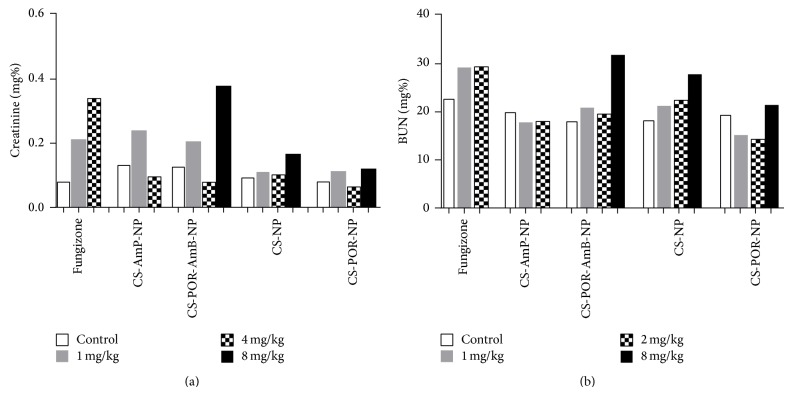
Renal toxicity of Fungizone, CS-AmB-NP, CS-POR-AmB-NP, CS-NP (blank), and CS-POR-NP (blank) nanoparticles. The concentrations of (a) BUN and (b) Creatinine in serum were determined at 1 mg/kg, 4 mg/kg, and 8 mg/kg dose intervals. From 8 mg/kg of Fungizone and CS-AmB NPs no survival of mice was observed. Values represent mean ± SD (n = 3).
Figure 13
Figure 13
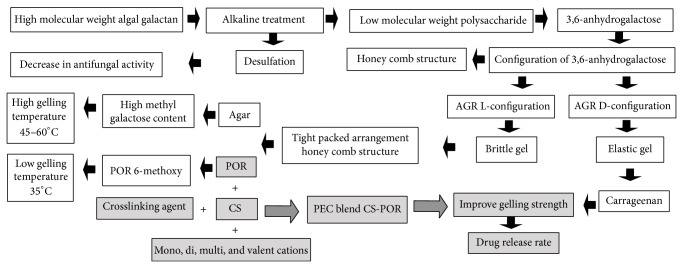
(1) Justification on probable relationship between structural features of POR (brittle gelling properties) and better drug release rate profile (improvement strategies such as CS blend) caused by improving the gel strength (by CS-POR blend), to improve the effectiveness of whole formulation against fungal strains [–17]. (2) Role of alkaline treatment in conversion of high to low mol. wt. sulphated polysaccharide (with conversion of L-galactose 6-sulfate residue to 3,6 anhydro form) which improves the gelling strength followed by the release rate profile of matrix [–17].

References

    1. Torrado J. J., Espada R., Ballesteros M. P., Torrado-Santiago S. Amphotericin B formulations and drug targeting. Journal of Pharmaceutical Sciences. 2008;97(7):2405–2425. doi: 10.1002/jps.21179. - DOI - PubMed
    1. Hamill R. J. Amphotericin B formulations: a comparative review of efficacy and toxicity. Drugs. 2013;73(9):919–934. doi: 10.1007/s40265-013-0069-4. - DOI - PubMed
    1. Moen M. D., Lyseng-Williamson K. A., Scott L. J. Liposomal amphotericin B: a review of its use as empirical therapy in febrile neutropenia and in the treatment of invasive fungal infections. Drugs. 2009;69(3):361–392. doi: 10.2165/00003495-200969030-00010. - DOI - PubMed
    1. Datta G., Bera T. The effects of clofazimine, niclosamide and amphotericin B, on electron transport of Leishmania donovani promastigotes. Indian Journal of Medical Research. 2000;112:15–20. - PubMed
    1. Espada R., Valdespina S., Alfonso C., Rivas G., Ballesteros M. P., Torrado J. J. Effect of aggregation state on the toxicity of different amphotericin B preparations. International Journal of Pharmaceutics. 2008;361(1-2):64–69. doi: 10.1016/j.ijpharm.2008.05.013. - DOI - PubMed

MeSH terms

LinkOut - more resources