. 2014 Dec 5;9(12):e114260.
doi: 10.1371/journal.pone.0114260. eCollection 2014.

A small molecule inhibitor of ETV1, YK-4-279, prevents prostate cancer growth and metastasis in a mouse xenograft model

Affiliations

A small molecule inhibitor of ETV1, YK-4-279, prevents prostate cancer growth and metastasis in a mouse xenograft model

Said Rahim et al. PLoS One. .

Abstract

Background: The erythroblastosis virus E26 transforming sequences (ETS) family of transcription factors consists of a highly conserved group of genes that play important roles in cellular proliferation, differentiation, migration and invasion. Chromosomal translocations fusing ETS factors to promoters of androgen responsive genes have been found in prostate cancers, including the most clinically aggressive forms. ERG and ETV1 are the most commonly translocated ETS proteins. Over-expression of these proteins in prostate cancer cells results in a more invasive phenotype. Inhibition of ETS activity by small molecule inhibitors may provide a novel method for the treatment of prostate cancer.

Methods and findings: We recently demonstrated that the small molecule YK-4-279 inhibits biological activity of ETV1 in fusion-positive prostate cancer cells leading to decreased motility and invasion in-vitro. Here, we present data from an in-vivo mouse xenograft model. SCID-beige mice were subcutaneously implanted with fusion-positive LNCaP-luc-M6 and fusion-negative PC-3M-luc-C6 tumors. Animals were treated with YK-4-279, and its effects on primary tumor growth and lung metastasis were evaluated. YK-4-279 treatment resulted in decreased growth of the primary tumor only in LNCaP-luc-M6 cohort. When primary tumors were grown to comparable sizes, YK-4-279 inhibited tumor metastasis to the lungs. Expression of ETV1 target genes MMP7, FKBP10 and GLYATL2 were reduced in YK-4-279 treated animals. ETS fusion-negative PC-3M-luc-C6 xenografts were unresponsive to the compound. Furthermore, YK-4-279 is a chiral molecule that exists as a racemic mixture of R and S enantiomers. We established that (S)-YK-4-279 is the active enantiomer in prostate cancer cells.

Conclusion: Our results demonstrate that YK-4-279 is a potent inhibitor of ETV1 and inhibits both the primary tumor growth and metastasis of fusion positive prostate cancer xenografts. Therefore, YK-4-279 or similar compounds may be evaluated as a potential therapeutic tool for treatment of human prostate cancer at different stages.


Conflict of interest statement

Competing Interests: The authors have read the journal's policy and the authors of this manuscript have the following competing interests: USPTO awarded for YK-4-279 to Georgetown University, inventors include. Y.K., M.B., J.T. and A.Ü. A license agreement has been executed between Georgetown University and Tokalas Inc for these patents, in which J.T. is a founding share-holder. Georgetown University has filed patent applications on the YK-4279 as well as related compounds and derivatives of those molecules. Below is a summary of the issued and pending patent applications related to these compounds. I. “Targeting of EWS-FLI as Anti-Tumor Therapy” (GU Reference # 2006-041) 1. US Provisional application (60/877,856) filed December 29, 2006. 2. PCT/US07/089118 filed December 28, 2007. 3. US Provisional application (61/177,932) filed May 13, 2009. 4. US Non-provisional 12/494,191 filed June 29, 2009 ((CIP) claiming priority to both the PCT and US provisional applications; national phase entry of PCT); issued as US Patent 8,232,310. 5. US Non-provisional 12/720,616 filed March 9, 2010 (CONT). 6. Europe 07872364.0 filed December 28, 2007 (national phase entry of PCT). 7. Canada 2,711,003 filed December 28, 2007 (national phase entry of PCT). 8. Australia 2007341977 filed December 28, 2007 (national phase entry of PCT). 9. United States Provisional 61/405,170 filed October 20, 2010 (contains additional data). 10. Europe 13186704.6 divisional of Europe 07872364.0 priority to December 28, 2007. II. “Methods and Compositions for Treating Ewings Sarcoma Family of Tumors” (GU Reference #2012-019) 1. US Provisional Patent Application 61/623,349 filed April 12, 2012. 2. Patent Cooperation Treaty Application PCT/US2013/036234 filed April 11, 2013. III. “Methods and Compositions for Treating Cancer” (GU Reference #2014-012) 1. US Provisional Patent Application 61/895,308 filed October 24, 2013. All data in the manuscript are freely available. The authors acknowledge and follow all PLOS ONE policies on sharing data and materials. This does not alter the authors' adherence to PLOS ONE policies on sharing data and materials.

Figures

Figure 1
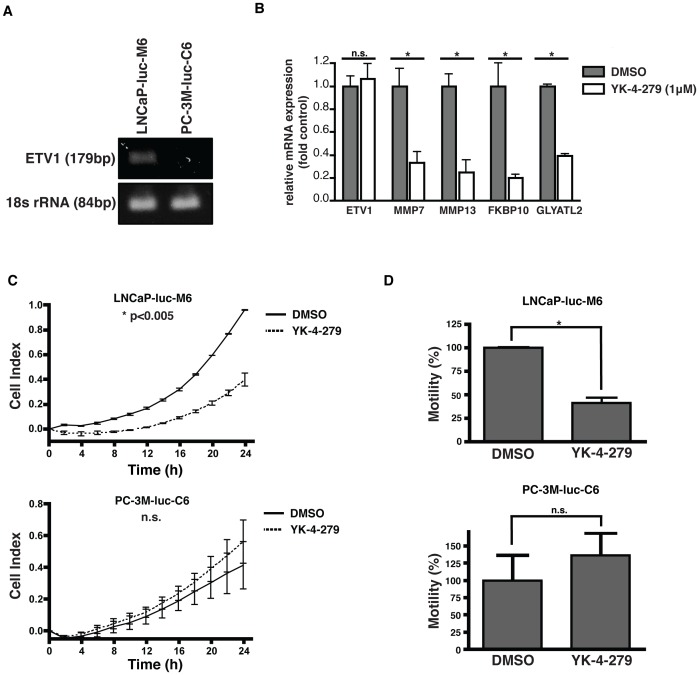
Figure 1. YK-4-279 is a small molecule inhibitor of ETV1.
a) Genomic DNA from prostate cells was analyzed for ETS rearrangement status by performing PCR using rearrangement specific primers. LNCaP-luc-M6 cells harbored ETV1 rearrangement whereas PC-3M-luc-C6 cells were fusion-negative. b) LNCaP-luc-M6 cells were treated with 1 µM YK-4-279 for 48 hours and ETV1 target gene levels were evaluated by real-time quantitative PCR. YK-4-279 treatment resulted in decreased gene expression of MMP7, MMP13, GLYATL2 and FKBP10 without significant reduction in ETV1 levels. *; p<0.01, n.s.; not-significant, unpaired student's t-test. c) LNCaP-luc-M6 and PC-3M-luc-C6 were pre-treated with 1 µM YK-4-279 for 48 hours. An electrical impedance based chemotaxis assay was used to monitor cell migration in the presence of YK-4-279 towards the lower chamber with 10% FBS gradient. YK-4-279 inhibited the migration of LNCaP-luc-M6 but not PC-3M-luc-C6 cells. *; p<0.005, n.s.; not-significant, unpaired student's t-test. d) Motilities of cells at the end of 24 hr period were calculated based on their relative cell index values. *; p<0.01, n.s.; not-significant, unpaired student's t-test.
Figure 2
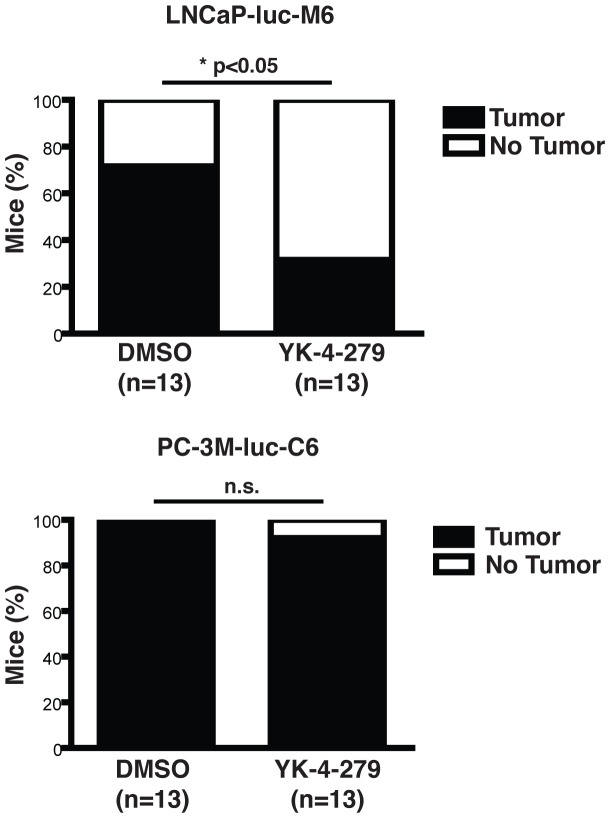
Figure 2. YK-4-279 reduced tumor uptake when administered prior to tumor formation.
Prostate xenografts were established by subcutaneously injecting cells below the dorsal flank in 8-10 weeks old SCID/beige male mice. Animals were treated with 75 mg/kg body weight YK-4-279 thrice weekly, starting the day after xenograft injections. LNCaP-luc-M6 animals treated with compound displayed decreased tumor formation (4/13) compared to vehicle control (9/13). PC-3M-luc-C6 animals did not display significant difference in tumor formation between compound treated (12/13) and vehicle control (13/13) animals. *; p<0.05, n.s.; not-significant, unpaired student's t-test.
Figure 3
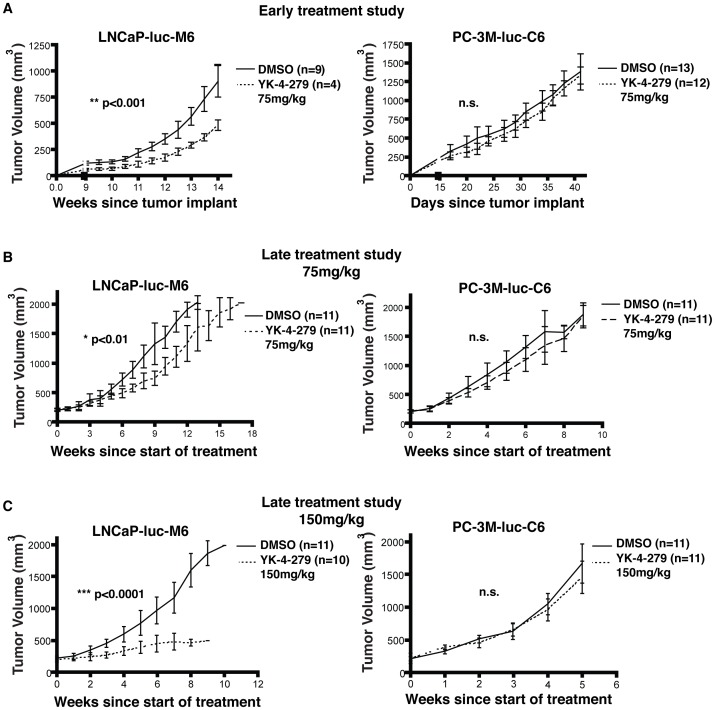
Figure 3. YK-4-279 reduces tumor growth in LNCaP-luc-M6 mice.
a) SCID/beige mice were subcutaneously injected with LNCaP-luc-M6 or PC-3M-luc-C6 cells below the dorsal flank. In the early treatment study group, animals were injected with 75 mg/kg YK-4-279 starting the day after xenograft injection. b) Another set of animals started receiving YK-4-279 treatment once the tumors were palpable (∼200 mm3). These animals were further divided in to 2 separate cohorts: one group was treated three times a week with 75 mg/kg YK-4-279 (late treatment study low dose). c) Another group was treated 5 times a week with 150 mg/kg compound (late treatment study high dose). Tumor volumes were measured weekly. YK-4-279 reduced tumor growth in LNCaP-luc-M6 animals, but not in PC-3M-luc-C6 animals. *; p<0.01, **; p<0.001, ***; p<0.0001, n.s.; not-significant.
Figure 4
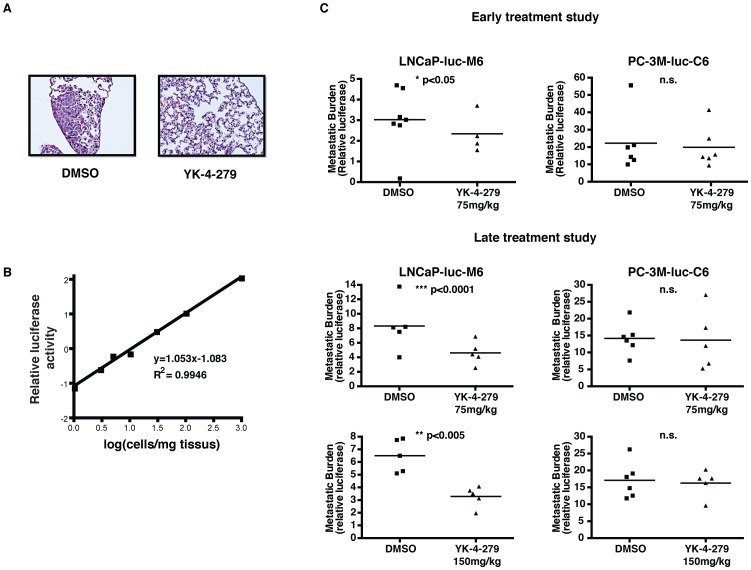
Figure 4. YK-4-279 inhibits lung metastasis in LNCaP-luc-M6 xenograft animals.
a) H&E stained lung sections showing a micro-metastatic lesion in DMSO treated LNCaP-luc-M6 animals. b) A standard curve was constructed to measure the detection limit of the luciferase assay. The assay is extremely sensitive, allowing the detection of a single prostate cancer cell per milligram lung tissue. c) Lungs were harvested from xenograft animals 15 minutes after the last compound or vehicle treatment. Protein lysates were obtained from the tissues and used to perform a luciferase assay. Results were normalized to tissue weight. Compound treated LNCaP-luc-M6 xenograft animals displayed significantly reduced lung metastasis compared to vehicle controls. PC-3M-luc-C6 lung metastasis was unaffected by compound treatment. *; p<0.05, **; p<0.005, ***; p<0.0001, n.s.; not-significant, unpaired student's t-test.
Figure 5
Figure 5. YK-4-279 inhibits ETV1 target gene expression in-vivo.
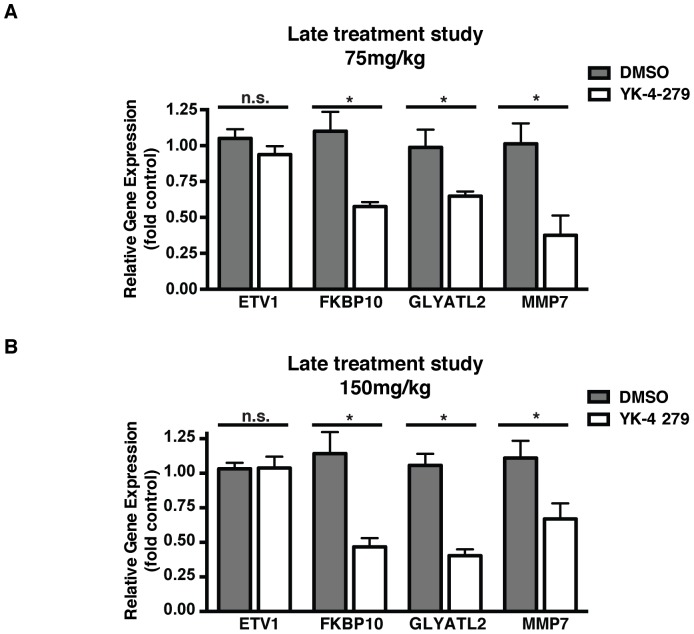
a) RNA was extracted from tumors of compound and vehicle treated LNCaP-luc-M6 animals (late treatment study low dose) 15 minutes after the last injection. Gene expression levels were determined by quantitative real-time PCR. Results were normalized to 18s rRNA expression. Experiments were performed in triplicates with 5 mice analyzed per group. YK-4-279 treatment resulted in decreased gene expression of MMP7, GLYATL2 and FKBP10 without significant reduction in ETV1 levels. *; p<0.05, n.s.; not-significant, unpaired student's t-test. b) ETV1 target gene expression levels in late treatment study high dose group. *; p<0.05, n.s.; not-significant, unpaired student's t-test.
Figure 6
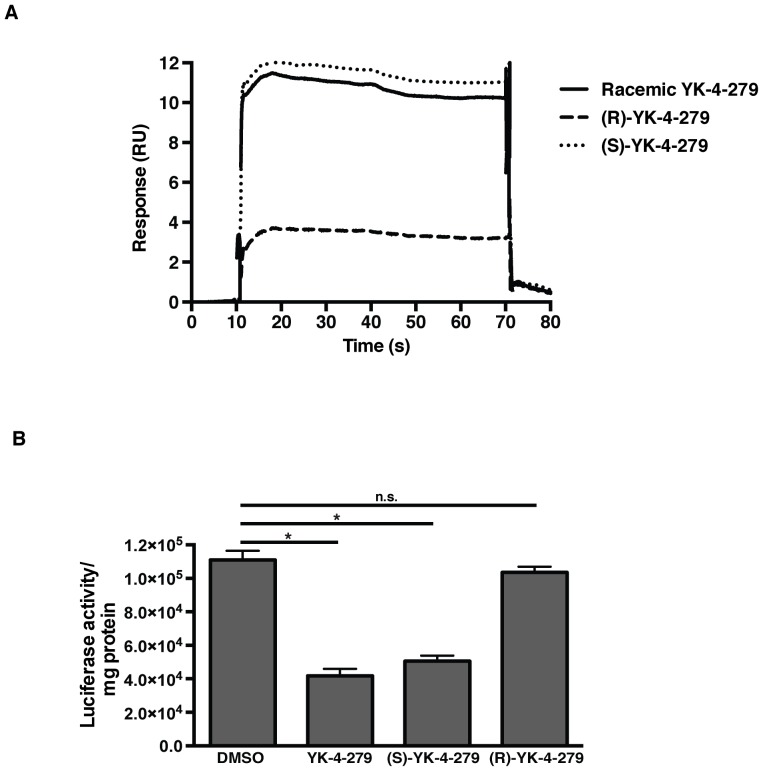
Figure 6. (S)-YK-4-279 is the active enantiomer of YK-4-279.
a) Racemic YK-4-279, (R)-YK-4-279 and (S)-YK-4-279 were injected over a Biacore chip surface containing recombinant ETV1. Racemic YK-4-279 and the S-enantiomer bound to ETV1 whereas the R-enantiomer had a lower binding affinity to ETV1. b) A luciferase assay was performed in Cos-7 cells co-transfected with ETV1 and an Id-2 reporter luciferase construct. Id-2 promoter activity was decreased upon treatment with racemic YK-4-279 and (S)-YK-4-279. *; p<0.0005, n.s.; not-significant, unpaired student's t-test.

References

    1. Ordonez JL, Osuna D, Garcia-Dominguez DJ, Amaral AT, Otero-Motta AP, et al. (2010) The clinical relevance of molecular genetics in soft tissue sarcomas. Adv Anat Pathol 17:162–181. - PubMed
    1. Tomlins SA, Rhodes DR, Perner S, Dhanasekaran SM, Mehra R, et al. (2005) Recurrent fusion of TMPRSS2 and ETS transcription factor genes in prostate cancer. Science 310:644–648. - PubMed
    1. Hollenhorst PC, McIntosh LP, Graves BJ (2011) Genomic and biochemical insights into the specificity of ETS transcription factors. Annu Rev Biochem 80:437–471. - PMC - PubMed
    1. Rahim S, Uren A (2013) Emergence of ETS transcription factors as diagnostic tools and therapeutic targets in prostate cancer. Am J Transl Res 5:254–268. - PMC - PubMed
    1. Wei GH, Badis G, Berger MF, Kivioja T, Palin K, et al. (2010) Genome-wide analysis of ETS-family DNA-binding in vitro and in vivo. EMBO J 29:2147–2160. - PMC - PubMed

Publication types

MeSH terms