


Community-based control of the brown dog tick in a region with high rates of Rocky Mountain spotted fever, 2012-2013
- PMID: 25479289
- PMCID: PMC4257530
- DOI: 10.1371/journal.pone.0112368
Community-based control of the brown dog tick in a region with high rates of Rocky Mountain spotted fever, 2012-2013
Abstract
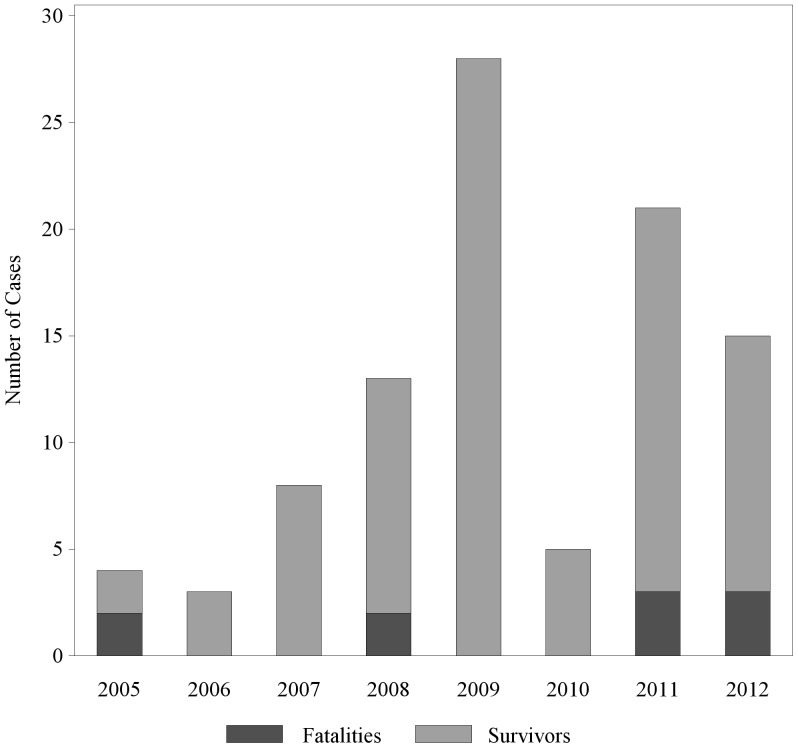
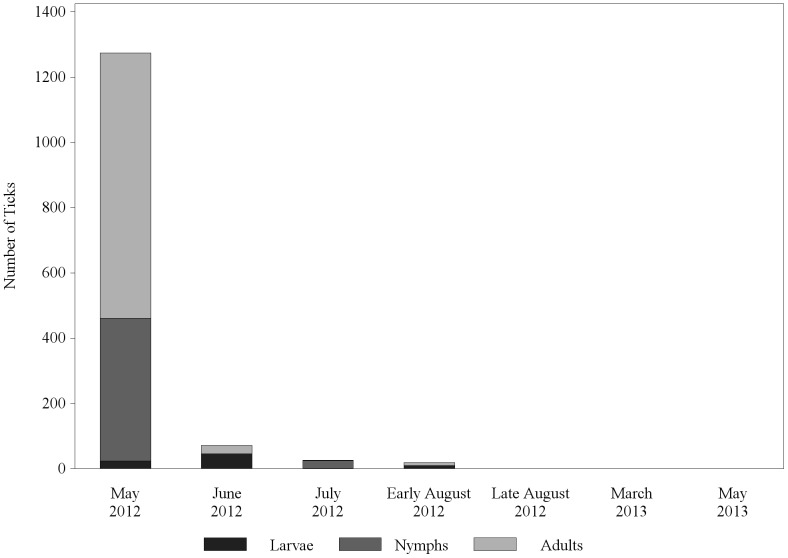
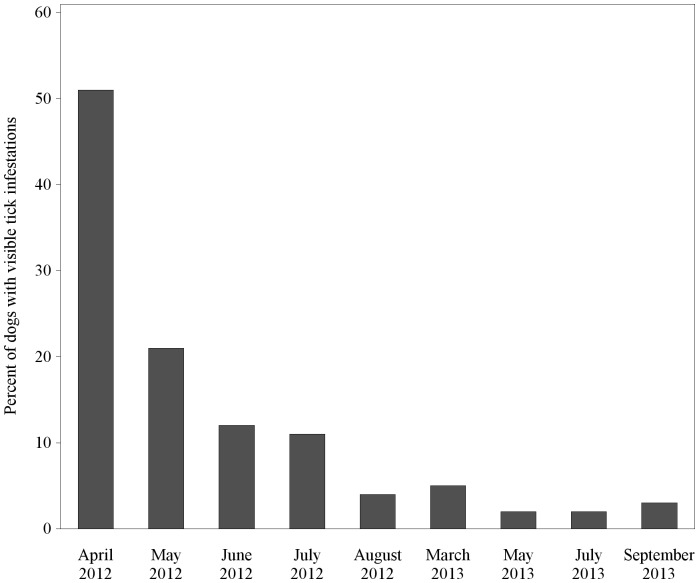
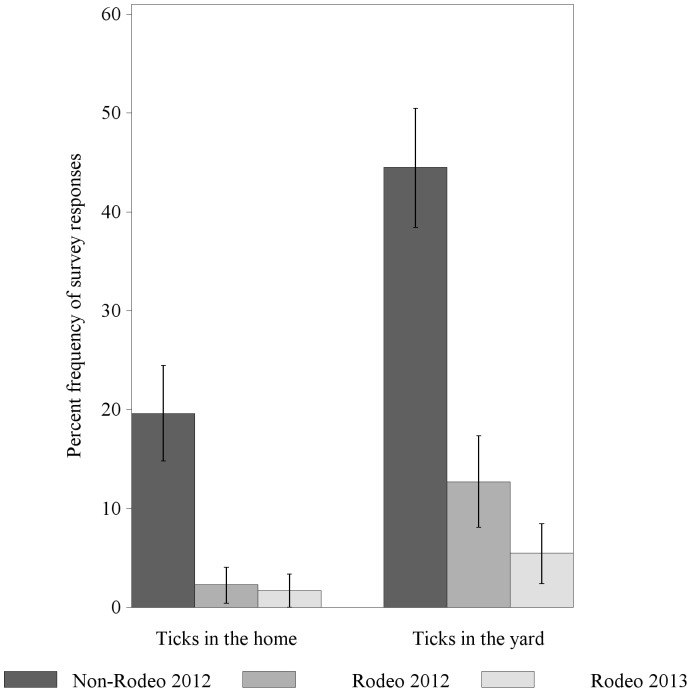
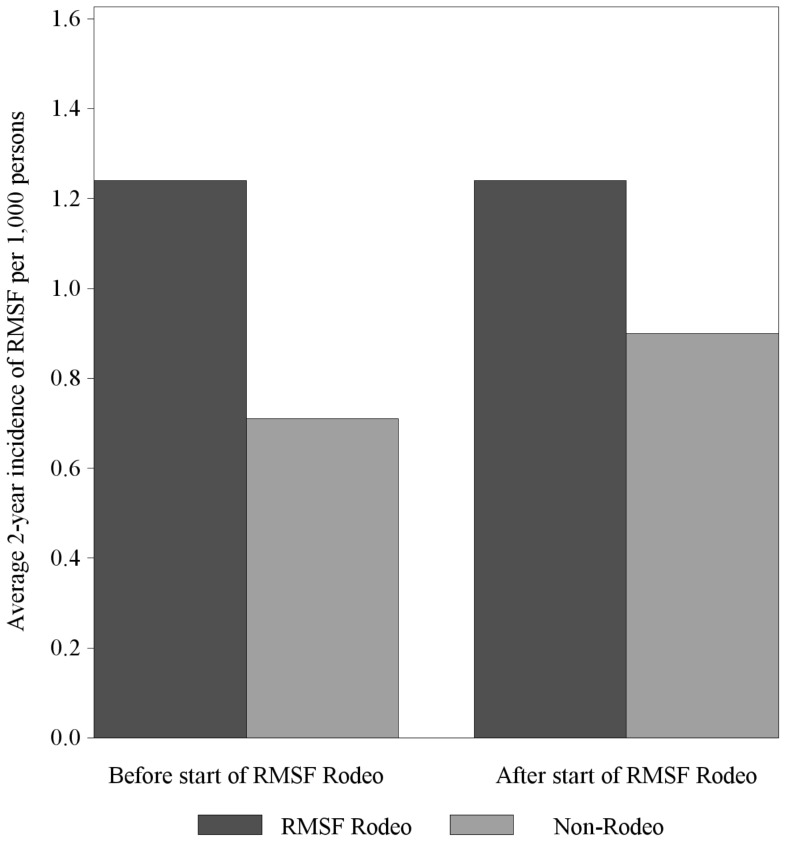
Rocky Mountain spotted fever (RMSF) transmitted by the brown dog tick (Rhipicephalus sanguineus sensu lato) has emerged as a significant public health risk on American Indian reservations in eastern Arizona. During 2003-2012, more than 250 RMSF cases and 19 deaths were documented among Arizona's American Indian population. The high case fatality rate makes community-level interventions aimed at rapid and sustained reduction of ticks urgent. Beginning in 2012, a two year pilot integrated tick prevention campaign called the RMSF Rodeo was launched in a ∼ 600-home tribal community with high rates of RMSF. During year one, long-acting tick collars were placed on all dogs in the community, environmental acaricides were applied to yards monthly, and animal care practices such as spay and neuter and proper tethering procedures were encouraged. Tick levels, indicated by visible inspection of dogs, tick traps and homeowner reports were used to monitor tick presence and evaluate the efficacy of interventions throughout the project. By the end of year one, <1% of dogs in the RMSF Rodeo community had visible tick infestations five months after the project was started, compared to 64% of dogs in Non-Rodeo communities, and environmental tick levels were reduced below detectable levels. The second year of the project focused on use of the long-acting collar alone and achieved sustained tick control with fewer than 3% of dogs in the RMSF Rodeo community with visible tick infestations by the end of the second year. Homeowner reports of tick activity in the domestic and peridomestic setting showed similar decreases in tick activity compared to the non-project communities. Expansion of this successful project to other areas with Rhipicephalus-transmitted RMSF has the potential to reduce brown dog tick infestations and save human lives.
Conflict of interest statement
Figures
References
-
- Hattwick MA, Retailliau H, O'Brien RJ, Slutzker M, Fontaine RE, et al. (1978) Fatal rocky mountain spotted fever. JAMA 240:1499–1503. - PubMed
-
- Centers for Disease Control and Prevention (2014) Summary of notifiable diseases – United States, 2012. MMWR Surveill Summ 61:102.
-
- Burgdorfer W (1975) A review of Rocky Mountain spotted fever (tick-borne typhus), its agent, and its tick vectors in the United States. J Med Entomol 12:269–278. - PubMed
-
- Arizona Department of Health Services (2012) Rocky Mountain spotted fever (RMSF) Arizona statistics. Available: http://www.azdhs.gov/phs/oids/vector/rmsf/stats.htm. Accessed 24 October 2014.
Publication types
MeSH terms
LinkOut - more resources
Full Text Sources
Other Literature Sources
