


Collectivistic orientation, acculturative stress, cultural self-efficacy, and depression: a longitudinal study among Chinese internal migrants
- PMID: 25480108
- PMCID: PMC4297733
- DOI: 10.1007/s10597-014-9785-9
Collectivistic orientation, acculturative stress, cultural self-efficacy, and depression: a longitudinal study among Chinese internal migrants
Abstract
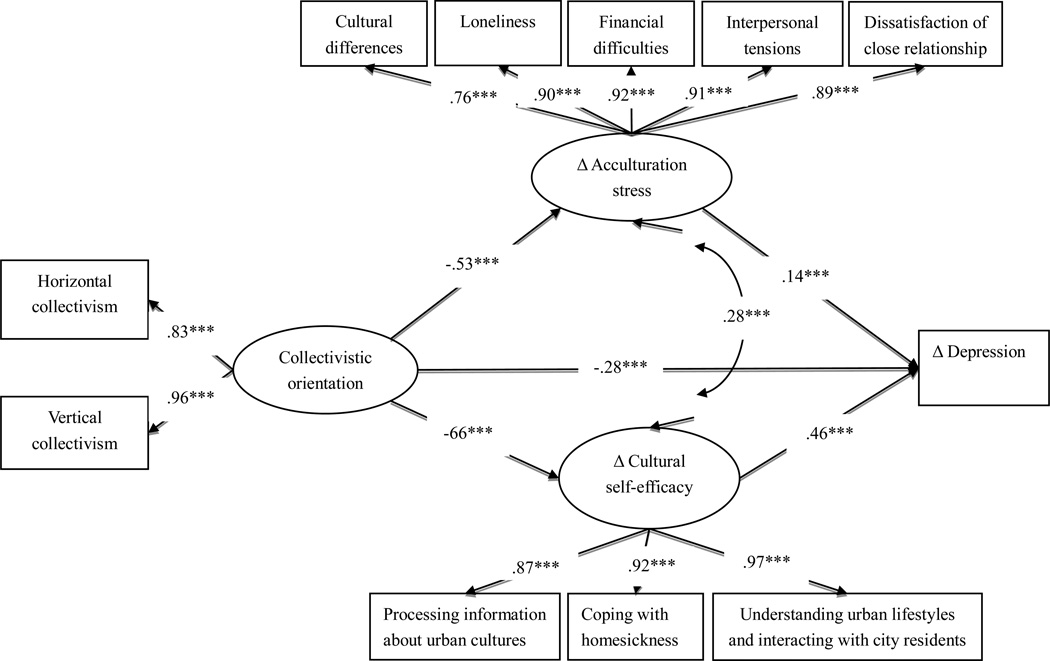
The current study examined the longitudinal relationship of collectivistic orientation and depression and the mediating effects of acculturative stress and cultural self-efficacy between collectivistic orientation and depression. We expect that collectivistic orientation would decrease acculturative stress and increase cultural self-efficacy, and in turn, improve depression. Using data from 641 Chinese internal migrants during a 1-year period, the results supported the hypothesis that collectivistic orientation predicted decreased depression. Moreover, collectivistic orientation alleviated depression through reducing acculturative stress. Although cultural self-efficacy was also a significant mediator, collectivistic orientation relieved depression through decreasing cultural self-efficacy. Implications for future research directions and counseling are discussed.
Figures
References
-
- Anderson LP. Acculturative stress: A theory of relevance to Black Americans. Clinical psychology review. 1991;11:685–702.
-
- Bandura A. Perceived self-efficacy in cognitive development and functioning. Educational psychologist. 1993;28:117–148.
-
- Bandura A. Self-efficacy: The exercise of control. New York: Freeman; 1997.
-
- Berry JW. Immigration, acculturation, and adaptation. Applied Psychology. 1997;46:5–34.
-
- Berry JW. Stress perspectives on acculturation. In: Sam DL, Berry JW, editors. The Cambridge handbook of acculturation psychology. Cambridge, United Kingdom: Cambridge University Press; 2006. pp. 43–57.
Publication types
MeSH terms
Grants and funding
LinkOut - more resources
Full Text Sources
Other Literature Sources
Medical
