


Mutations in LZTR1 add to the complex heterogeneity of schwannomatosis
- PMID: 25480913
- PMCID: PMC4336087
- DOI: 10.1212/WNL.0000000000001129
Mutations in LZTR1 add to the complex heterogeneity of schwannomatosis
Abstract
Objectives: We aimed to determine the proportion of individuals in our schwannomatosis cohort whose disease is associated with an LZTR1 mutation.
Methods: We used exome sequencing, Sanger sequencing, and copy number analysis to screen 65 unrelated individuals with schwannomatosis who were negative for a germline NF2 or SMARCB1 mutation. We also screened samples from 39 patients with a unilateral vestibular schwannoma (UVS), plus at least one other schwannoma, but who did not have an identifiable germline or mosaic NF2 mutation.
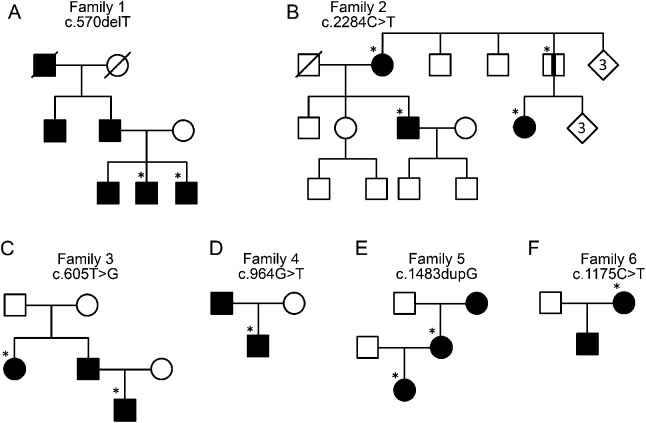
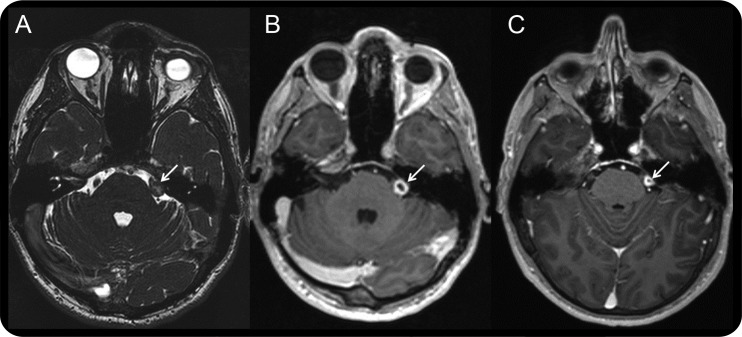
Results: We identified germline LZTR1 mutations in 6 of 16 patients (37.5%) with schwannomatosis who had at least one affected relative, 11 of 49 (22%) sporadic patients, and 2 of 39 patients with UVS in our cohort. Three germline mutation-positive patients in total had developed a UVS. Mosaicism was excluded in 3 patients without germline mutation in NF2, SMARCB1, or LZTR1 by mutation screening in 2 tumors from each.
Conclusions: Our data confirm the relationship between mutations in LZTR1 and schwannomatosis. They indicate that germline mutations in LZTR1 confer an increased risk of vestibular schwannoma, providing further overlap with NF2, and that further causative genes for schwannomatosis remain to be identified.
© 2014 American Academy of Neurology.
Figures

References
-
- Leverkus M, Kluwe L, Roll EM, et al. Multiple unilateral schwannomas: segmental neurofibromatosis type 2 or schwannomatosis? Br J Dermatol 2003;148:804–809. - PubMed
-
- Evans DG, Huson SM, Donnai D, et al. A clinical study of type 2 neurofibromatosis. Q J Med 1992;84:603–618. - PubMed
-
- Smith MJ, Kulkarni A, Rustad C, et al. Vestibular schwannomas occur in schwannomatosis and should not be considered an exclusion criterion for clinical diagnosis. Am J Med Genet A 2012;158A:215–219. - PubMed
-
- Christiaans I, Kenter SB, Brink HC, et al. Germline SMARCB1 mutation and somatic NF2 mutations in familial multiple meningiomas. J Med Genet 2010;48:93–97. - PubMed
Publication types
MeSH terms
Substances
Supplementary concepts
Grants and funding
LinkOut - more resources
Full Text Sources
Other Literature Sources
Medical
Molecular Biology Databases
Miscellaneous
