. 2015 Jan 1;6(1):288-304.
doi: 10.18632/oncotarget.2672.

MED1 mediates androgen receptor splice variant induced gene expression in the absence of ligand

Affiliations

MED1 mediates androgen receptor splice variant induced gene expression in the absence of ligand

Gang Liu et al. Oncotarget. .

Abstract

The appearance of constitutively active androgen receptor splice variants (AR-Vs) has been proposed as one of the causes of castration-resistant prostate cancer (CRPC). However, the underlying mechanism of AR-Vs in CRPC transcriptional regulation has not been defined. A distinct transcriptome enriched with cell cycle genes, e.g. UBE2C, has been associated with AR-Vs, which indicates the possibility of an altered transcriptional mechanism when compared to full-length wild-type AR (ARfl). Importantly, a recent study reported the critical role of p-MED1 in enhancing UBE2C expression through a locus looping pattern, which only occurs in CRPC but not in androgen-dependent prostate cancer (ADPC). To investigate the potential correlation between AR-V and MED1, in the present study we performed protein co-immunoprecipitation, chromatin immunoprecipitation, and cell proliferation assays and found that MED1 is necessary for ARv567es induced UBE2C up-regulation and subsequent prostate cancer cell growth. Furthermore, p-MED1 is bound to ARv567es independent of full-length AR; p-MED1 has higher recruitment to UBE2C promoter and enhancer regions in the presence of ARv567es. Our data indicate that p-MED1 serves as a key mediator in ARv567es induced gene expression and suggests a mechanism by which AR-Vs promote the development and progression of CRPC.


Conflict of interest statement

Conflict of interest

The authors declare no conflict of interest.

Figures
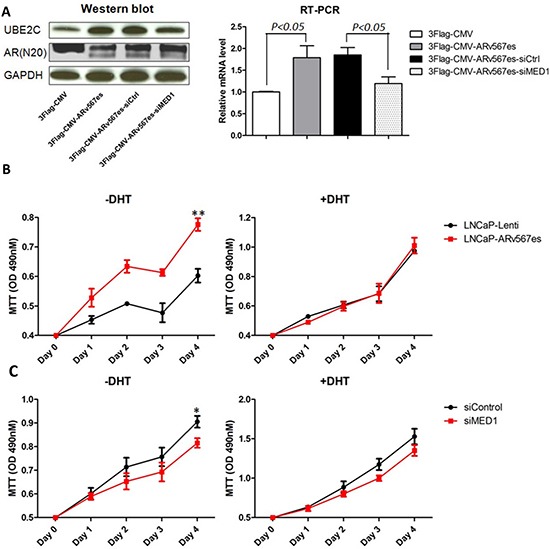
Figure 1
Figure 1. ARv567es increased UBE2C expression and improved prostate cancer cell proliferation, which was blocked by MED1 silencing
(A) Western blot and qRT-PCR showed significantly increased UBE2C expression in transiently transfected LNCaP cells with 3Flag-CMV-ARv567es expression vector. Up-regulation of UBE2C by ARv567es could be attenuated by MED1 siRNA at mRNA and protein level. (B) ARv567es stable expressing cell line, LNCaP-ARv567es showed significant higher proliferation rate (**p < 0.01) compared with Lenti virus empty vector control cell line in the absence, but not presence of DHT. (C) ARv567es induced LNCaP cell proliferation could be blocked by MED1 silencing (*p < 0.05) when DHT was not present, but not significant with DHT.
Figure 2
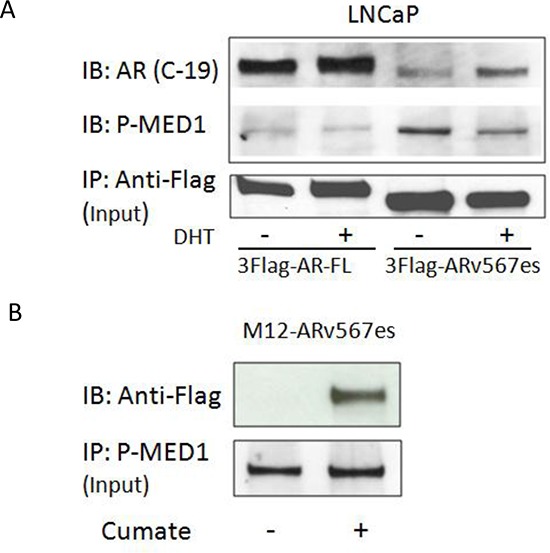
Figure 2. ARv567es could bind p-MED1 independent of full length AR
(A) In androgen-dependent LNCaP cells transiently transfected with Flag-tagged ARv567es, pulling-down of Flag could co-precipitate both ARfl and p-MED1. With the same input volumes of 100ug, ARv567es showed more abundant p-MED1 pull-down than that of full-length AR (ARfl). (B) Reversed pull-down with p-MED1 antibody could co-precipitate Flag-tagged ARv567es in the cumate-inducible M12-ARv567es prostate cancer cell line.
Figure 3
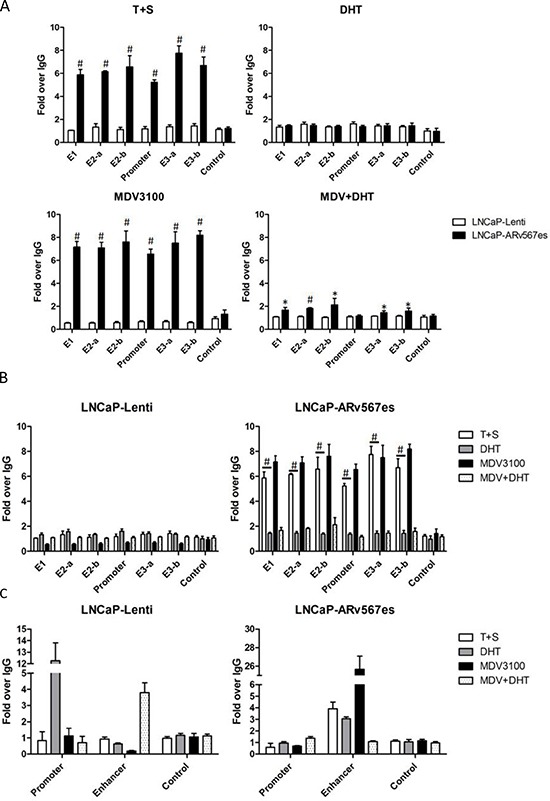
Figure 3. ARv567es recruited p-MED1 to UBE2C enhancer and promoter regions independent of androgen
(A) p-MED1 binding to UBE2C promoter and enhancers increased in LNCaP-ARv567es cells compared with LNCaP-Lenti cells, in the conditions of androgen deprivation (T+S) and full-length AR inhibition (MDV, MDV+DHT); ARfl activation by DHT abated the extra recruitment induced by ARv567es. (B) The reversed effect of DHT and MDV on the recruitment of p-MED1 to UBE2C promoter and enhancers in LNCaP-ARv567es cells and LNCaP-Lenti cells. (C) ARv567es also showed increased binding of p-MED1 to PSA enhancers but not in the promoter region especially when androgen receptor was inhibited (MDV3100). *p < 0.05 and #p < 0.01.
Figure 4
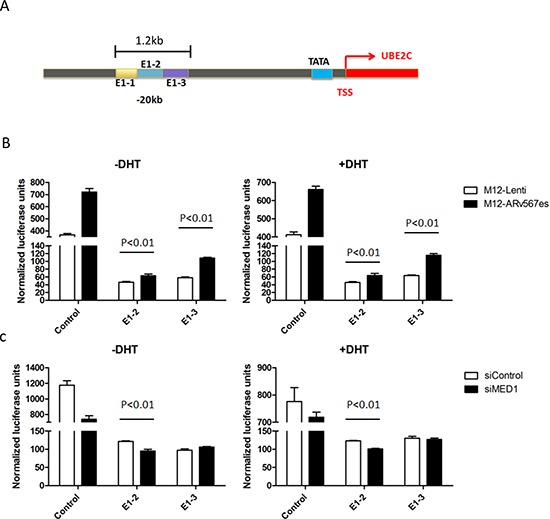
Figure 4. ARv567es Increased UBE2C enhancer transcriptional activities
(A) The diagrammatic view of the UBE2C Enhancer-1 region (20 kb upstream of the UBE2C transcriptional start site) used in the Luciferase reporter assay. (B) Even though lower than the E4TATA control, the luciferase activities of UBE2C E1-2 and E1-3 region were significantly higher ( p < 0.01) in M12-ARv567es cell compared with LNCaP-Lenti cells. (C) MED1 silencing attenuated the transcriptional activation of ARv567es on UBE2C enhancer specially showing significance on E1-2 ( p < 0.01).
Figure 5
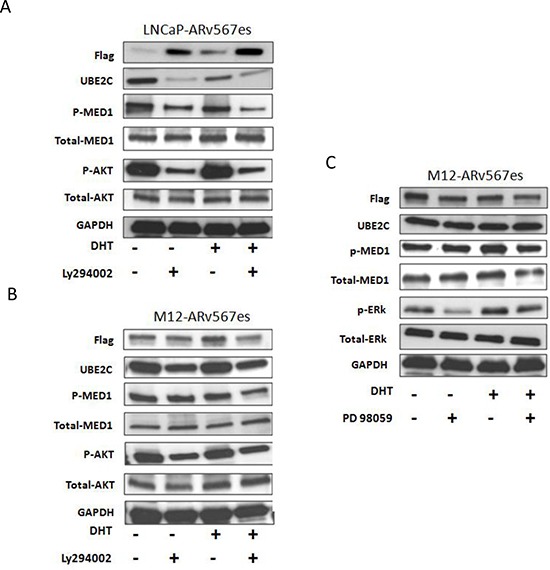
Figure 5. ARv567es/P-MED1 complex cross talks with PI3K-AKT pathway, but not with MAPK pathway
Inhibition of PI3K kinase by LY294002 led to decreased MED1 phosphorylation and UBE2C expression both in LNCaP-ARv567es cells (A) and M12-ARv567es cells (B). MAPK inhibitor PD98059 had no effect either on MED1 phosphorylation or UBE2C expression in M12-ARv567es cells (C).
Figure 6
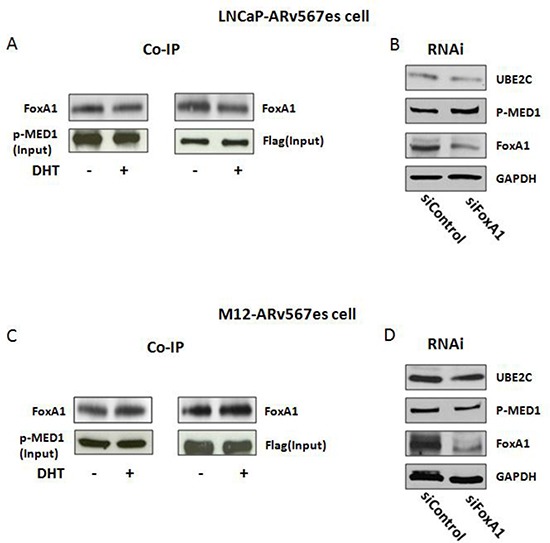
Figure 6. FoxA1 was involved in the ARv567es/p-MED1 transcriptional regulation
(A, C) Co-IP showed the binding of FoxA1 to p-MED1 and ARv567es in M12-ARv567es and LNCaP–ARv567es cell lines. (B, D) Silencing of FoxA1 decreased UBE2C expression in both cell lines.
Figure 7
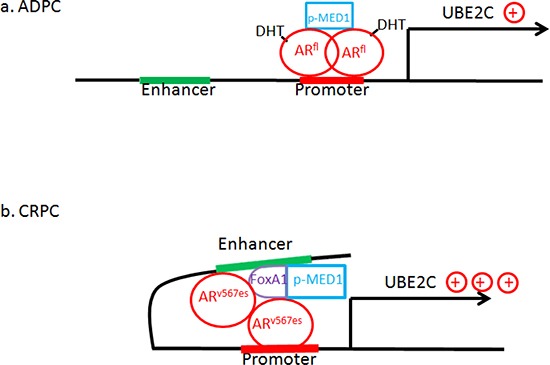
Figure 7. “The p-MED1 switch hypothesis”: Model of ARfl/ARv567es/p-MED1 transcriptional regulation on UBE2C in prostate cancer
(a) In ADPC cells with the presence of DHT, p-MED1 goes to ARfl but no chromatin looping forms and there is a low level of activation on UBE2C transcription; (b) In CRPC cells with DHT depleted, AR splice variants appear which have higher affinity to p-MED1, and recruit more p-MED1 to the UBE2C promoter and enhancers with the assistance of FoxA1, resulting in looping formation and vigorously activating UBE2C expression and leading to cell survival and increased cell proliferation.

References

    1. Marques RB, Dits NF, Erkens-Schulze S, van Weerden WM, Jenster G. Bypass mechanisms of the androgen receptor pathway in therapy-resistant prostate cancer cell models. PloS one. 2010;5:e13500. - PMC - PubMed
    1. Harris WP, Mostaghel EA, Nelson PS, Montgomery B. Androgen deprivation therapy: progress in understanding mechanisms of resistance and optimizing androgen depletion. Nature clinical practice Urology. 2009;6:76–85. - PMC - PubMed
    1. Attar RM, Takimoto CH, Gottardis MM. Castration-resistant prostate cancer: locking up the molecular escape routes. Clinical cancer research: an official journal of the American Association for Cancer Research. 2009;15:3251–3255. - PubMed
    1. Montgomery RB, Mostaghel EA, Vessella R, Hess DL, Kalhorn TF, Higano CS, True LD, Nelson PS. Maintenance of intratumoral androgens in metastatic prostate cancer: a mechanism for castration-resistant tumor growth. Cancer research. 2008;68:4447–4454. - PMC - PubMed
    1. Locke JA, Guns ES, Lubik AA, Adomat HH, Hendy SC, Wood CA, Ettinger SL, Gleave ME, Nelson CC. Androgen levels increase by intratumoral de novo steroidogenesis during progression of castration-resistant prostate cancer. Cancer research. 2008;68:6407–6415. - PubMed

Publication types

MeSH terms

LinkOut - more resources