


Leptin signaling molecular actions and drug target in hepatocellular carcinoma
- PMID: 25484575
- PMCID: PMC4238752
- DOI: 10.2147/DDDT.S69004
Leptin signaling molecular actions and drug target in hepatocellular carcinoma
Abstract
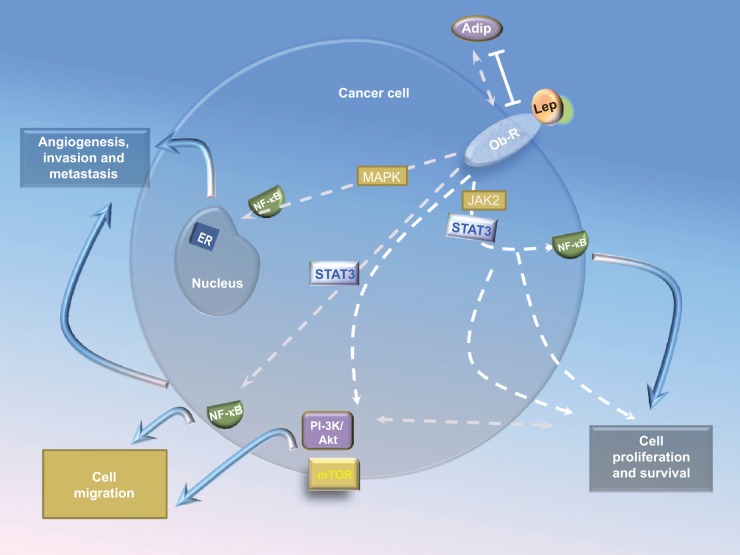
Previous reports indicate that over 13 different tumors, including hepatocellular carcinoma (HCC), are related to obesity. Obesity-associated inflammatory, metabolic, and endocrine mediators, as well as the functioning of the gut microbiota, are suspected to contribute to tumorigenesis. In obese people, proinflammatory cytokines/chemokines including tumor necrosis factor-alpha, interleukin (IL)-1 and IL-6, insulin and insulin-like growth factors, adipokines, plasminogen activator inhibitor-1, adiponectin, and leptin are found to play crucial roles in the initiation and development of cancer. The cytokines induced by leptin in adipose tissue or tumor cells have been intensely studied. Leptin-induced signaling pathways are critical for biological functions such as adiposity, energy balance, endocrine function, immune reaction, and angiogenesis as well as oncogenesis. Leptin is an activator of cell proliferation and anti-apoptosis in several cell types, and an inducer of cancer stem cells; its critical roles in tumorigenesis are based on its oncogenic, mitogenic, proinflammatory, and pro-angiogenic actions. This review provides an update of the pathological effects of leptin signaling with special emphasis on potential molecular mechanisms and therapeutic targeting, which could potentially be used in future clinical settings. In addition, leptin-induced angiogenic ability and molecular mechanisms in HCC are discussed. The stringent binding affinity of leptin and its receptor Ob-R, as well as the highly upregulated expression of both leptin and Ob-R in cancer cells compared to normal cells, makes leptin an ideal drug target for the prevention and treatment of HCC, especially in obese patients.
Keywords: drug target; hepatocellular carcinoma; leptin; leptin antagonist; leptin signaling; tumor angiogenesis.
Figures
References
-
- WHO World Health Organization Fact Sheet for World Wide Prevalence of Obesity. 2006. [Accessed November 3, 2014]. Available from: http://www.who.int/mediacentre/factsheets/fs311/en/
-
- James WP. International association for the study of obesity and China. Obes Rev. 2008;9(suppl 1):2–3. - PubMed
-
- Baskin ML, Ard J, Franklin F, Allison DB. Prevalence of obesity in the United States. Obes Rev. 2005;6:5–7. - PubMed
Publication types
MeSH terms
Substances
LinkOut - more resources
Full Text Sources
Other Literature Sources
Medical
Miscellaneous
