


Juxta-articular joint-capsule mineralization in CD73 deficient mice: similarities to patients with NT5E mutations
- PMID: 25486201
- PMCID: PMC4614381
- DOI: 10.4161/15384101.2014.943567
Juxta-articular joint-capsule mineralization in CD73 deficient mice: similarities to patients with NT5E mutations
Abstract
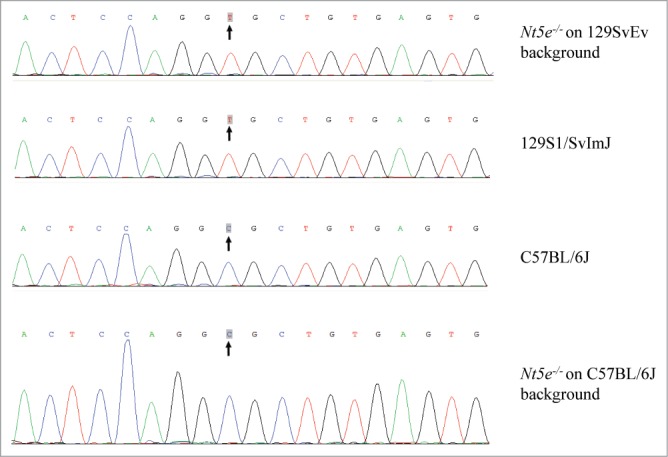
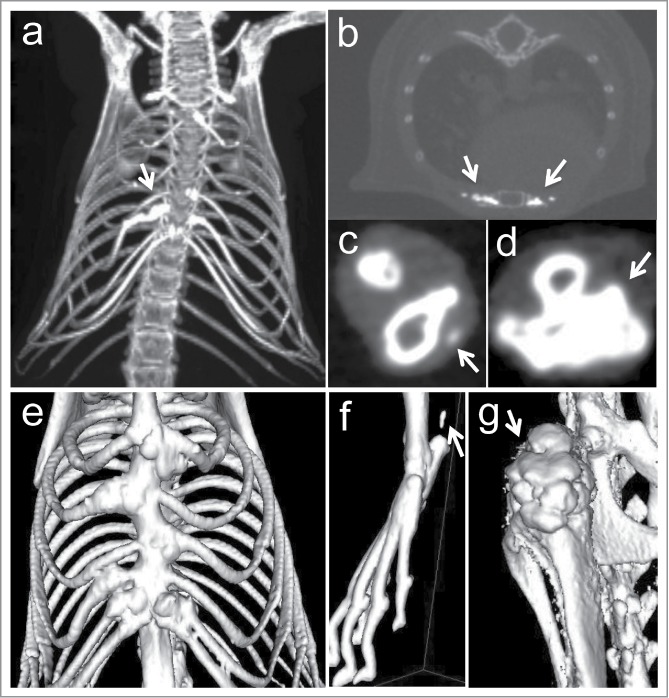
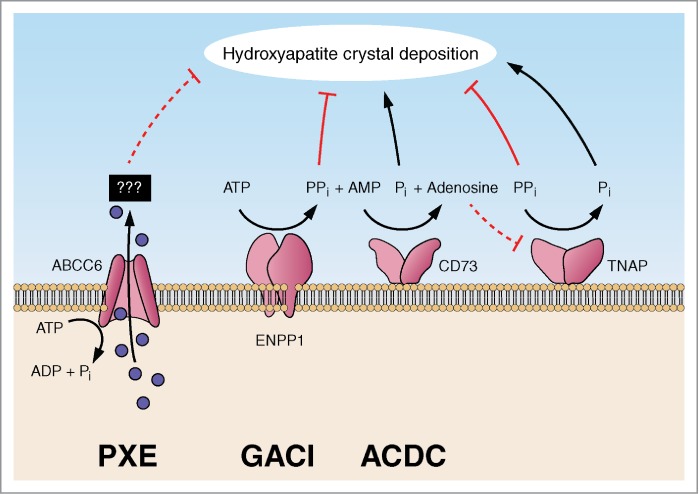
Arterial calcification due to CD73 deficiency (ACDC), an autosomal recessive disorder, manifests with extensive mineralization of the lower-extremity arteries as well as of hand and foot joint-capsules. This disease is caused by mutations in the NT5E gene which encodes CD73, a membrane-bound ecto-5'-nucleotidase hydrolyzing 5'-AMP into adenosine and Pi. To gain insight into the pathophysiologic details of ACDC, we have characterized a Nt5e(-/-) knock out mouse (Nt5e(tm1Jgsc)) deficient in CD73. These mice, when maintained on appropriate strain background, demonstrated stiffening of the joints and micro CT revealed distinct changes in the thoracic skeletal structure with evidence of mineralization at the costochondral junctions. Mineralization was also noted in the juxta-articular spaces of the lower extremities as well as of ligaments and capsules adjacent to the bony structures. No evidence of vascular mineralization was noted either by CT or by microdissection of arteries in the thoracic area or in lower extremities. The Nt5e(-/-) mutant mice demonstrated significantly increased Pi levels in the serum and significantly reduced PPi concentration in the heparinized plasma, resulting in markedly increased Pi/PPi ratio, thus creating a pro-mineralization environment. In conclusion, the Nt5e(-/-) targeted mutant mice recapitulate some, but not all, features of ACDC and serve as a model system to study pharmacologic interventions for ectopic mineralization. Collectively, this mouse model deficient in CD73, with other targeted mutant mice with vascular mineralization, attests to the presence of a complex pro-mineralization/anti-mineralization network that under physiologic homeostatic conditions prevents ectopic tissue mineralization.
Keywords: ACDC, arterial calcification due to CD73 deficiency; CT, computed tomography; ENT1, equilibrative nucleoside transporter; Ectopic mineralization; GACI, generalized arterial calcification of infancy; PPi, inorganic pyrophosphate; PXE, pseudoxanthoma elasticum; Pi, inorganic phosphate; TNAP, tissue nonspecific alkaline phosphatase; animal models; mineralization networks.
Figures
References
-
- Linden J. Molecular approach to adenosine receptors: receptor-mediated mechanisms of tissue protection. Annu Rev PharmacolToxicol 2001; 41:775–87; PMID: 11264476; http://dx.doi.org/10.1146/annurev.pharmtox.41.1.775 - DOI - PubMed
-
- Fredholm BB. Adenosine-a physiological or pathophysiological agent? J MolMed 2014; 92:201–6; PMID: 24362516; http://dx.doi.org/10.1007/s00109-013-1101-6 - DOI - PubMed
-
- Nitschke Y, Weissen-Plenz G, Terkeltaub R, Rutsch F. Npp1 promotes atherosclerosis in ApoE knockout mice. J Cell MolMed 2011; 15:2273–83; PMID: 21477221; http://dx.doi.org/10.1111/j.1582-4934.2011.01327.x - DOI - PMC - PubMed
-
- Castrop H, Huang Y, Hashimoto S, Mizel D, Hansen P, Theilig F, Bachmann S, Deng C, Briggs J, Schnermann J. Impairment of tubuloglomerular feedback regulation of GFR in ecto-5′-nucleotidase/CD73-deficient mice. J ClinInvest 2004; 114:634–42; PMID: 15343381; http://dx.doi.org/10.1172/JCI21851 - DOI - PMC - PubMed
Publication types
MeSH terms
Substances
Supplementary concepts
Grants and funding
LinkOut - more resources
Full Text Sources
Other Literature Sources
Medical
Molecular Biology Databases
Research Materials
Miscellaneous
