. 2015 Jan;21(1):6-15.
doi: 10.1016/j.molmed.2014.11.001. Epub 2014 Nov 15.

Pediatric small intestine bacterial overgrowth in low-income countries

Affiliations

Pediatric small intestine bacterial overgrowth in low-income countries

Jeffrey R Donowitz et al. Trends Mol Med. 2015 Jan.

Abstract

Small intestine bacterial overgrowth (SIBO) occurs when colonic quantities of commensal bacteria are present in the small bowel. SIBO is associated with conditions of disrupted gastrointestinal (GI) motility leading to stasis of luminal contents. Recent data show that SIBO is also found in children living in unsanitary conditions who do not have access to clean water. SIBO leads to impaired micronutrient absorption and increased GI permeability, both of which may contribute to growth stunting in children. SIBO also disrupts mucosal immunity and has been implicated in oral vaccination underperformance and the development of celiac disease. SIBO in the setting of the impoverished human habitats may be an under-recognized cause of pediatric morbidity and mortality in the developing world.

Keywords: celiac disease; commensal bacteria; environmental enteropathy; malnutrition; oral vaccine failure; small intestine bacterial overgrowth.


Figures

Figure 1
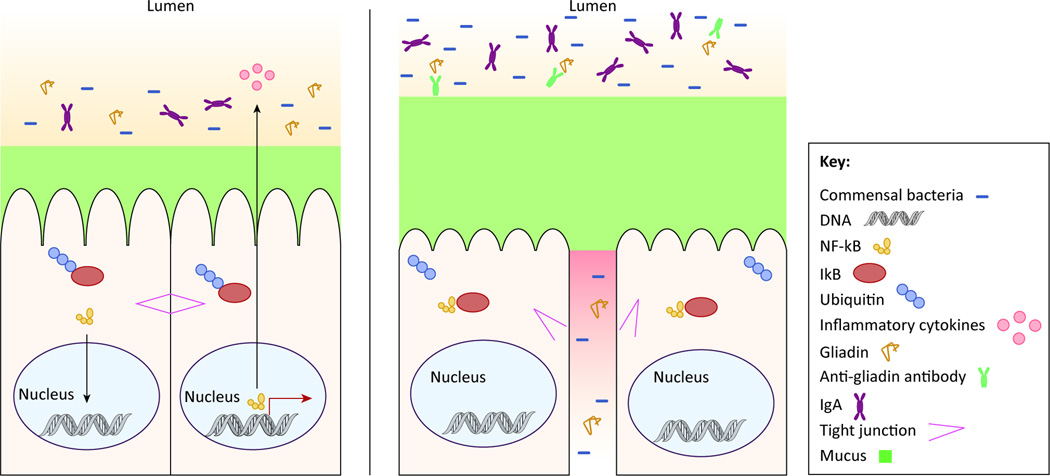
Figure 1. Proposed immune response to overgrowth of commensal flora in the small intestine
The left panel shows a normal upper intestinal environment representing bacterial colonization of 102, while the right panel shows an increase in commensal colonization to >105, indicative of small intestine bacterial overgrowth (SIBO). Commensals have the ability to downregulate NF-kB via inhibition of IkB-α ubiquitination, just one of the ways in which they dampen the local immune response. It is possible that this dampened immune system allows enhanced virulence of pathogenic species. Furthermore, commensals increase Paneth cell mucin production which, in SIBO, can lead to diarrhea. SIBO stimulates an increase of IgA which may contribute to oral vaccination failure. SIBO has also been associated with presence of luminal anti-gliadin antibodies which are considered a precursor of celiac disease. Overgrowth has been shown to disrupt epithelial tight junctions leading to translocation of both gliadin and commensal flora. Increased GI permeability has been associated with systemic inflammation and growth stunting both of which have been shown to be independent risk factors for loss of cognitive function.
Figure 2
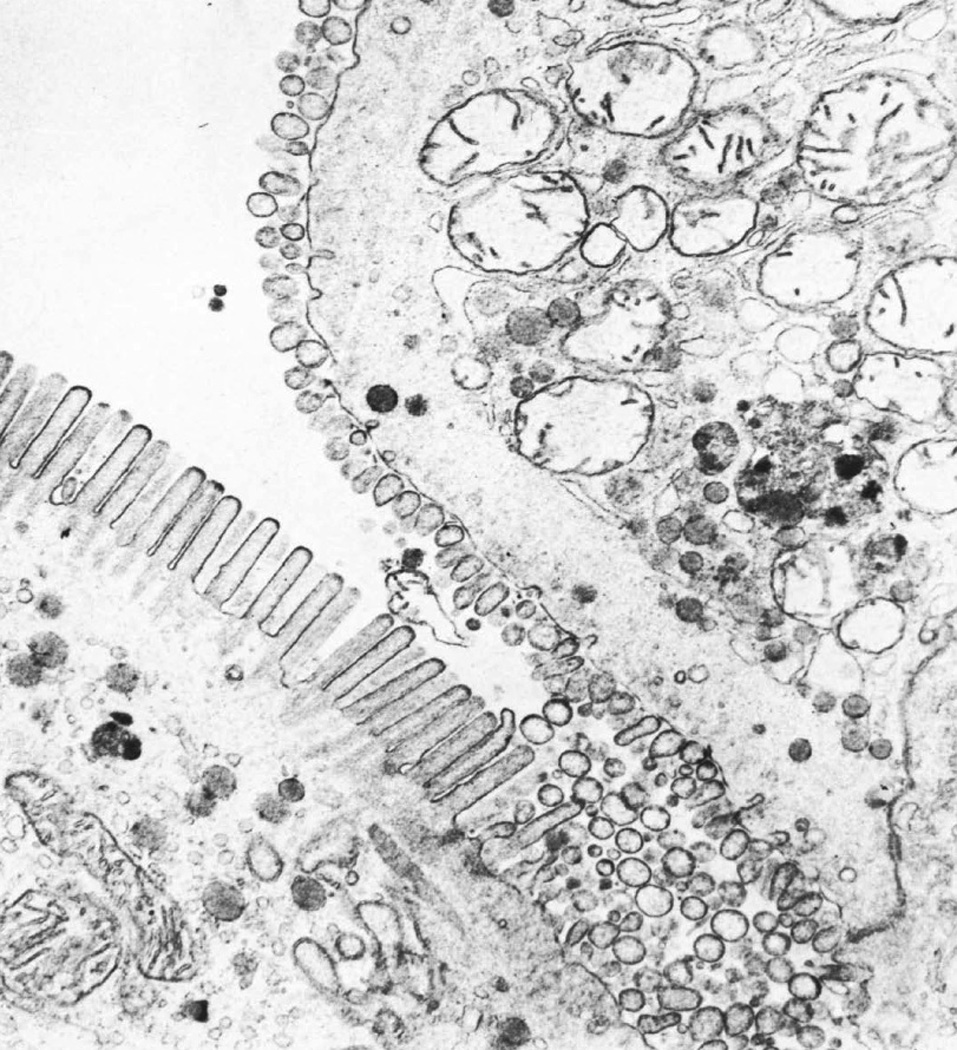
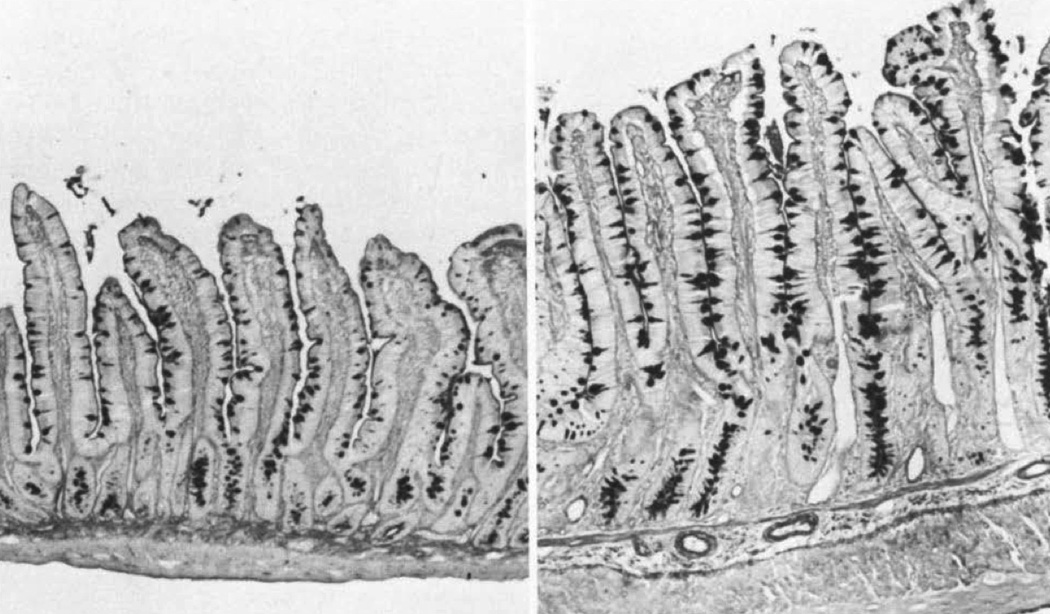
Figure 2. Biopsies of normal mucosa and mucosa in a subject with SIBO
(A) Biopsies from normal jejunal control (left panel) and test subject with blind loop anatomy (right panel). Villi in small intestine bacterial overgrowth syndrome become forked at the luminal edge. The muscular layer is thickened. Anaerobic stimulation leads to increased goblet cells and increased mucus production. (B) Electron micrograph of a columnar cell in the mid-villus of a blind loop. The lower cell on the left demonstrates unaltered villi while the right cell, closer to the lumen, demonstrates swollen mitochondria and microvilli that are blunted, swollen, and budding. Figure reproduced with permission from [46].
Figure 2
Figure 2. Biopsies of normal mucosa and mucosa in a subject with SIBO
(A) Biopsies from normal jejunal control (left panel) and test subject with blind loop anatomy (right panel). Villi in small intestine bacterial overgrowth syndrome become forked at the luminal edge. The muscular layer is thickened. Anaerobic stimulation leads to increased goblet cells and increased mucus production. (B) Electron micrograph of a columnar cell in the mid-villus of a blind loop. The lower cell on the left demonstrates unaltered villi while the right cell, closer to the lumen, demonstrates swollen mitochondria and microvilli that are blunted, swollen, and budding. Figure reproduced with permission from [46].
Figure 3
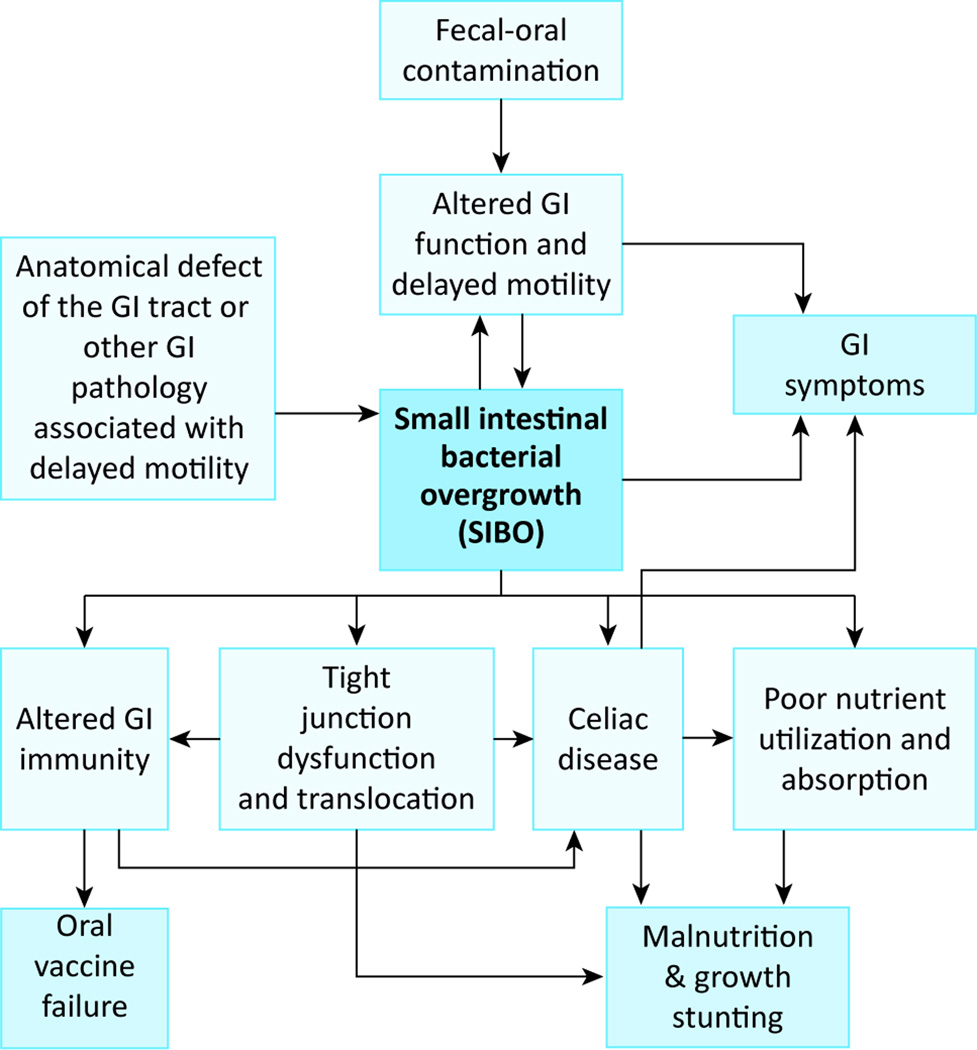
Figure 3. Hypothesis of small intestine bacterial overgrowth and possible deleterious outcomes relevant to children in the developing world
In the absence of anatomical defects or other gastrointestinal (GI) pathology leading to delayed GI transit, repeated ingestion of enteric fecal-oral pathogens leads to aberrant intestinal motor function which in turn leads to SIBO. SIBO causes altered GI immune function, increased intestinal permeability, and nutrient malabsorption. These outcomes, in turn, may lead to oral vaccine failure, celiac disease, and malnutrition which are major causes of morbidity and mortality in children living in impoverished conditions.

References

    1. O'Mahony S, Shanahan F. Enteric microbiota and small intestinal bacterial overgrowth. In: Feldman M, Friedman LS, Brandt LJ, editors. Feldman: Sleisenger and fordtran's gastrointestinal and liver disease. 2010.
    1. Wang M, Ahrné S, Jeppsson B, Molin G. Comparison of bacterial diversity along the human intestinal tract by direct cloning and sequencing of 16S rRNA genes. FEMS Microbiol Ecol. 2005;54(2):219–231. - PubMed
    1. Mello CS, Tahan S, Melli LCF, do Carmo Rodrigues, Mirian Silva, de Mello, Ricardo Martin Pereira, Scaletsky ICA, de Morais MB. Methane production and small intestinal bacterial overgrowth in children living in a slum. World Journal of Gastroenterology: WJG. 2012;18(41):5932. - PMC - PubMed
    1. dos Reis JC, de Morais MB, Oliva CAG, Fagundes-Neto U. Breath hydrogen test in the diagnosis of environmental enteropathy in children living in an urban slum. Dig Dis Sci. 2007;52(5):1253–1258. - PubMed
    1. Pereira SP, Bolin TD, Duncombe VM, Linklater JM. A pattern of breath hydrogen excretion suggesting small bowel bacterial overgrowth in burmese village children. J Pediatr Gastroenterol Nutr. 1991;13(1):32–38. - PubMed