


A randomized comparative effectiveness trial of novel endoscopic techniques and approaches for Barrett's esophagus screening in the community
- PMID: 25488897
- PMCID: PMC4387566
- DOI: 10.1038/ajg.2014.362
A randomized comparative effectiveness trial of novel endoscopic techniques and approaches for Barrett's esophagus screening in the community
Abstract
Objectives: The objective of this study was to compare participation rates and clinical effectiveness of sedated esophagogastroduodenoscopy (sEGD) and unsedated transnasal endoscopy (uTNE) for esophageal assessment and Barrett's esophagus (BE) screening in a population-based cohort.
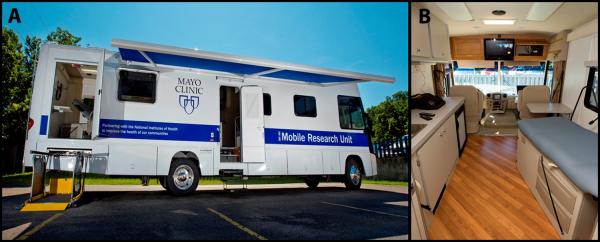
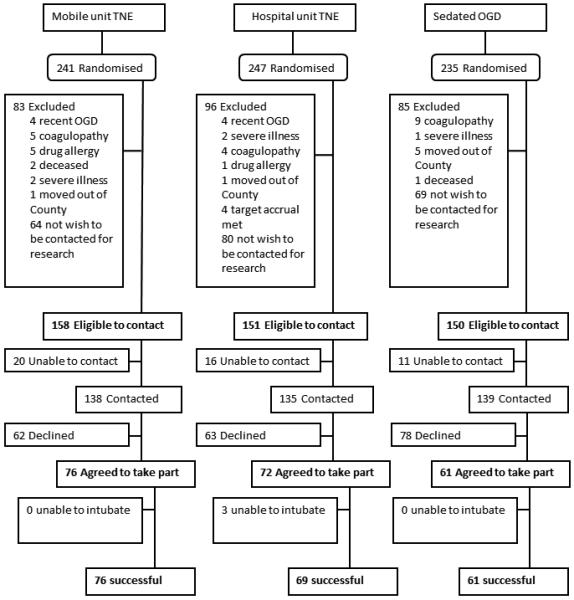
Methods: This was a prospective, randomized, controlled trial in a community population. Subjects ≥50 years of age who previously completed validated gastrointestinal symptom questionnaires were randomized (stratified by age, sex, and reflux symptoms) to one of three screening techniques (either sEGD or uTNE in a mobile research van (muTNE) or uTNE in a hospital outpatient endoscopy suite (huTNE)) and invited to participate.
Results: Of the 459 subjects, 209 (46%) agreed to participate (muTNE n=76, huTNE n=72, and sEGD n=61). Participation rates were numerically higher in the unsedated arms of muTNE (47.5%) and huTNE (45.7%) compared with the sEGD arm (40.7%), but were not statistically different (P=0.27). Complete evaluation of the esophagus was similar using muTNE (99%), huTNE (96%), and sEGD (100%) techniques (P=0.08). Mean recovery times (min) were longer for sEGD (67.3) compared with muTNE (15.5) and huTNE (18.5) (P<0.001). Approximately 80% of uTNE subjects were willing to undergo the procedure again in future. Respectively, 29% and 7.8% of participating subjects had esophagitis and BE.
Conclusions: Mobile van and clinic uTNE screening had comparable clinical effectiveness with similar participation rates and safety profile to sEGD. Evaluation time with uTNE was significantly shorter. Prevalence of BE and esophagitis in community subjects ≥50 years of age was substantial. Mobile and outpatient unsedated techniques may provide an effective alternative strategy to sEGD for esophageal assessment and BE screening.
Figures
Comment in
-
Unsedated Transnasal Endoscopy (uTNE): Not Quite Ready to Replace Sedated Esophagogastroduodenoscopy (sEGD).Am J Gastroenterol. 2015 Jun;110(6):936-7. doi: 10.1038/ajg.2015.121. Am J Gastroenterol. 2015. PMID: 26052774 No abstract available.
-
Response to Syed et al.Am J Gastroenterol. 2015 Jun;110(6):937-8. doi: 10.1038/ajg.2015.122. Am J Gastroenterol. 2015. PMID: 26052776 No abstract available.
References
-
- Das A, Singh V, Fleischer DE, et al. A Comparison of Endoscopic Treatment and Surgery in Early Esophageal Cancer: An Analysis of Surveillance Epidemiology and End Results Data. Am J Gastroenterol. 2008;103:1340–1345. - PubMed
-
- Desai TK, Krishnan K, Samala N, et al. The incidence of oesophageal adenocarcinoma in non-dysplastic Barrett's oesophagus: a meta-analysis. Gut. 2012;61:970–6. - PubMed
Publication types
MeSH terms
Grants and funding
LinkOut - more resources
Full Text Sources
Other Literature Sources
Medical
