. 2014 Dec 9;9(12):e114323.
doi: 10.1371/journal.pone.0114323. eCollection 2014.

CD73 is dispensable for the regulation of inflationary CD8+ T-cells after murine cytomegalovirus infection and adenovirus immunisation

Affiliations

CD73 is dispensable for the regulation of inflationary CD8+ T-cells after murine cytomegalovirus infection and adenovirus immunisation

Stuart Sims et al. PLoS One. .

Erratum in

Abstract

The ecto-5'-nucleotidase (CD73) is expressed by T-cell subsets, myeloid derived suppressive cells and endothelial cells. It works in conjunction with CD39 to regulate the formation and degradation of adenosine in vivo. Adenosine has previously been shown to suppress the proliferation and cytokine secretion of T-cells and recent evidence suggests that inhibition of CD73 has the potential to enhance T-cell directed therapies. Here we utilised a CD73 knockout mouse model to assess the suppressive ability of CD73 on CD8+ T-cell classical memory and memory "inflation", induced by murine cytomegalovirus (MCMV) infection and adenovirus immunisation. We show that CD73 is dispensable for normal CD8+ T-cell differentiation and function in both models. Thus CD73 as a suppressor of CD8+ T-cells is unlikely to play a deterministic role in the generation and functional characteristics of antiviral memory in these settings.


Conflict of interest statement

Competing Interests: The authors have declared that no competing interests exist.

Figures

Figure 1
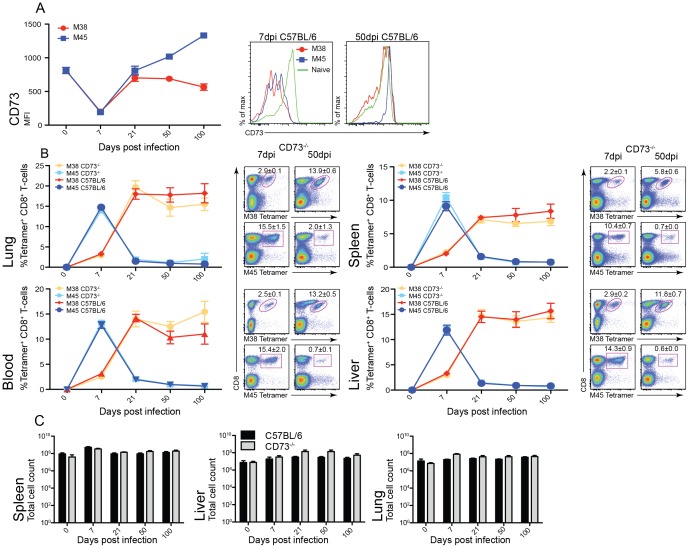
Figure 1. CD73 has no effect on memory inflation.
C57BL/6 and CD73−/− mice were infected intravenously (i.v.) with 1×10⁶ pfu MCMV and expansion of M38- (red/orange) and M45- (blue/light blue) specific CD8+ T-cells measured (n = 6, ±SEM). (A) Time course showing the expression levels CD73 on viral specific CD8+ T-cells in C57BL/6 mice from the spleen, day 0 staining is on total CD8+ T-cells. Histograms show representative CD73 staining on M38- (red) and M45- (blue) specific CD8+ T-cells at 7 and 50 days post infection in comparison to total CD8+ T-cells from naive mice (green). (B) Longitudinal analysis of the percentage of M38- and M45-specific CD8+ T-cells in the spleen, liver, lung and blood in naïve and at 7, 21, 50 and 100 days post infection mice. Representative flow cytometry plots of M38 and M45 tetramer staining in the spleen, liver, lung and blood at 7 and 50 days post infection in CD73−/− mice. (C) Total number of lymphocytes from the spleen, liver and lung calculated.
Figure 2
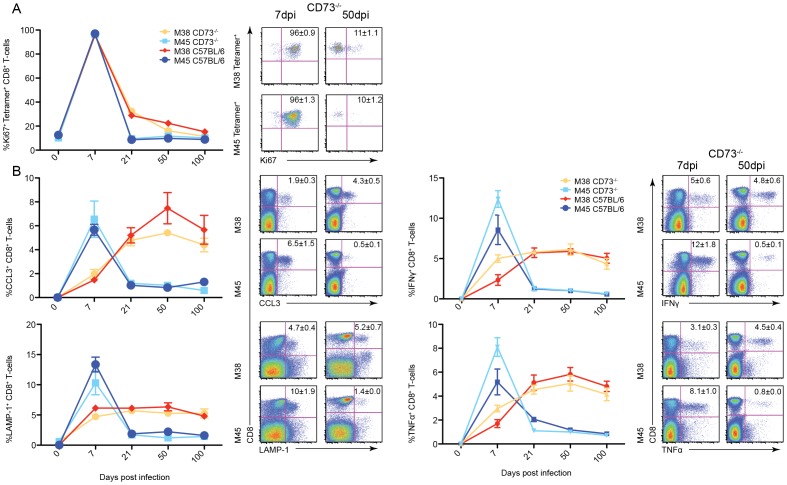
Figure 2. Following the proliferative and functional state of specific CD8+ T-cells in CD73−/− mice after MCMV infection.
Time courses showing the percentage of M38- (red/orange) and M45-specific CD8+ T-cells (blue/light blue), in the spleen on 0, 7, 21, 50 and 100 days post infection (n = 6, mean±SEM) and the shown stain (A) ICS staining for the proliferation marker Ki67. (B) Percentage CD8+ T-cells from the spleen producing effector molecules after stimulation with either the M38 or M45 peptide.
Figure 3
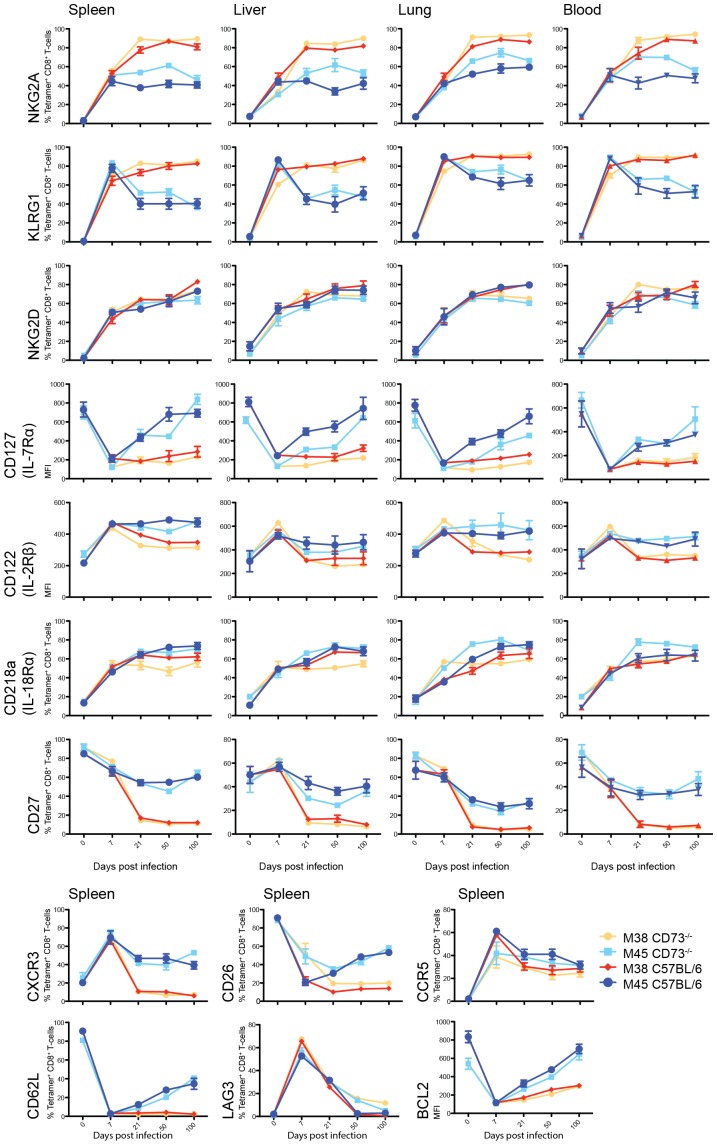
Figure 3. Phenotype of specific CD8+ T-cells in CD73−/− mice after MCMV infection.
Time course showing the percentage of cells expressing or MFI of the indicated markers on M38- (red/orange) and M45-specific CD8+ T-cells (blue/light blue), in the spleen, liver, lung and blood in comparison with naive CD8+ T-cells (n = 6, mean±SEM).
Figure 4
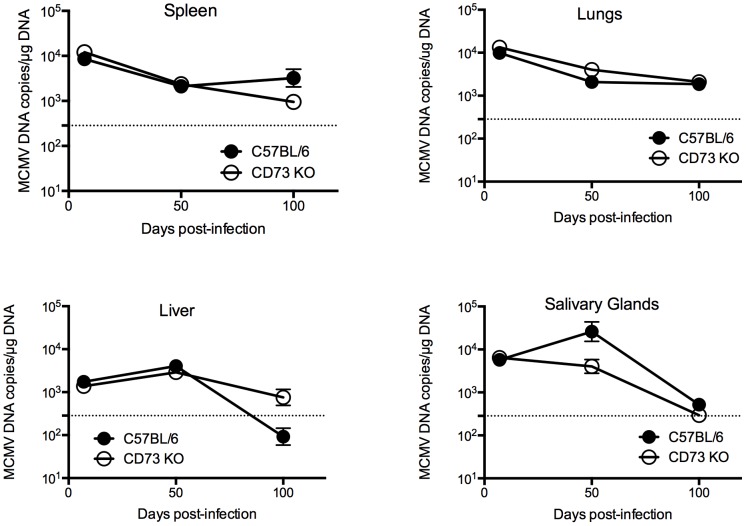
Figure 4. MCMV load in CD73−/− mice.
Time course showing MCMV viral loads in CD73−/− and C57BL/6 mice 7, 21, 50 and 100 dpi. Viral load analysis performed by qRT-PCR (n = 3, mean±SEM).
Figure 5
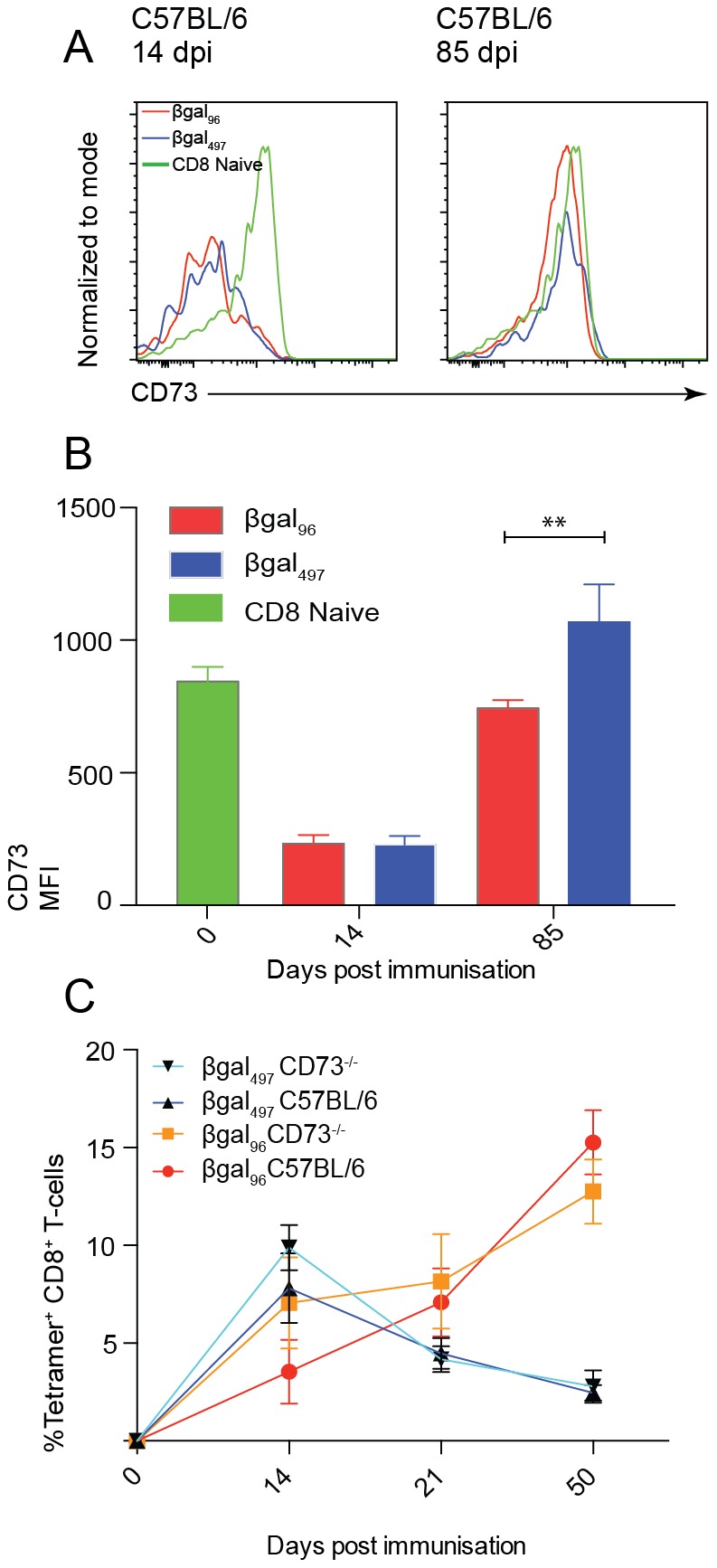
Figure 5. CD73−/− does not affect memory inflation of CD8+ T-cells induced by Adeno-LacZ.
CD73−/− and C57BL/6 mice were immunised intravenously (i.v) with 1×10⁹ pfu Ad-LacZ. (A) Histograms show representative CD73 staining on βgal96- (red) and βgal497- (blue) CD8+ T-cells at 14 and 85 days post immunisation in comparison to total CD8+ T-cells from naive mice. (B) CD73 staining on βgal96 and βgal497 CD8+ T-cells at 14 and 85 days post immunisation in comparison to total CD8+ T-cells from naive mice (n = 5, mean±SEM). (C) Time course showing specific CD8+ T-cells for βgal96- red/orange and βgal497- dark blue/light blue for C57BL/6 and CD73-/- mice respectively. Blood from 0, 14, 21, and 50 days post immunisation were stained with tetramers and analyzed by flow cytometry. Mean percentages of live tetramer-positive CD8+ lymphocytes are indicated (n = 5, mean±SEM).

References

    1. Simon CO, Holtappels R, Tervo H-M, Böhm V, Däubner T, et al. (2006) CD8 T cells control cytomegalovirus latency by epitope-specific sensing of transcriptional reactivation. J Virol 80:10436–10456 10.1128/JVI.01248-06 - DOI - PMC - PubMed
    1. Karrer U, Sierro S, Wagner M, Oxenius A, Hengel H, et al. (2003) Memory inflation: continuous accumulation of antiviral CD8+ T cells over time. J Immunol 170:2022–2029. - PubMed
    1. Snyder CM, Cho KS, Bonnett EL, van Dommelen S, Shellam GR, et al. (2008) Memory inflation during chronic viral infection is maintained by continuous production of short-lived, functional T cells. Immunity 29:650–659 10.1016/j.immuni.2008.07.017 - DOI - PMC - PubMed
    1. Tsuda Y, Caposio P, Parkins CJ, Botto S, Messaoudi I, et al. (2011) A replicating cytomegalovirus-based vaccine encoding a single Ebola virus nucleoprotein CTL epitope confers protection against Ebola virus. PLoS Negl Trop Dis 5:e1275 10.1371/journal.pntd.0001275 - DOI - PMC - PubMed
    1. Hansen SG, Ford JC, Lewis MS, Ventura AB, Hughes CM, et al. (2011) Profound early control of highly pathogenic SIV by an effector memory T-cell vaccine. Nature 473:523–527 10.1038/nature10003 - DOI - PMC - PubMed

Publication types

MeSH terms

Substances