The tumor suppressor WW domain-containing oxidoreductase modulates cell metabolism
- PMID: 25491415
- PMCID: PMC4935230
- DOI: 10.1177/1535370214561956
The tumor suppressor WW domain-containing oxidoreductase modulates cell metabolism
Abstract
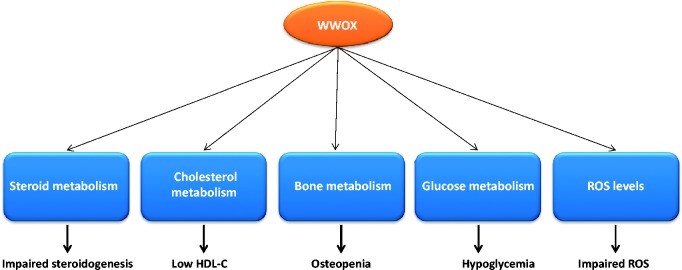
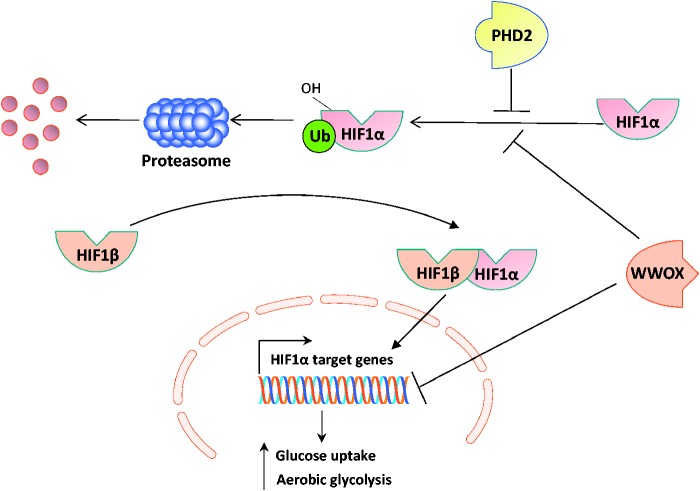
The WW domain-containing oxidoreductase (WWOX) encodes a tumor suppressor that is frequently altered in cancer. WWOX binds several proteins and thus is postulated to be involved in a variety of cellular processes. Interestingly, Wwox-knockout mice develop normally in utero but succumb to hypoglycemia and other metabolic defects early in life resulting in their death by 3-4 weeks of age. Cumulative evidence has linked WWOX with cellular metabolism including steroid metabolism, high-density lipoprotein cholesterol (HDL-C) metabolism, bone metabolism and, more recently, glucose metabolism. In this review, we discuss these evolving functions for WWOX and how its deletion affects cellular metabolism and neoplastic progression.
Keywords: WW domain-containing oxidoreductase; aerobic glycolysis; hypoxia-inducible transcription factor 1; metabolism; tumor suppressor.
© 2014 by the Society for Experimental Biology and Medicine.
Figures
References
-
- Hanahan D, Weinberg RA. The hallmarks of cancer. Cell 2000; 100: 57–70. - PubMed
-
- Hanahan D, Weinberg RA. Hallmarks of cancer: the next generation. Cell 2011; 144: 646–74. - PubMed
-
- Bednarek AK, Keck-Waggoner CL, Daniel RL, Laflin KJ, Bergsagel PL, Kiguchi K, Brenner AJ, Aldaz CM. WWOX, the FRA16D gene, behaves as a suppressor of tumor growth. Cancer Res 2001; 61: 8068–73. - PubMed
-
- Salah Z, Alian A, Aqeilan RI. WW domain-containing proteins: retrospectives and the future. Front Biosci 2012; 17: 331–48. - PubMed
-
- Aqeilan RI, Croce CM. WWOX in biological control and tumorigenesis. J Cell Physiol 2007; 212: 307–10. - PubMed
Publication types
MeSH terms
Substances
Grants and funding
LinkOut - more resources
Full Text Sources
Other Literature Sources
Molecular Biology Databases