


Systematic Classification of Disease Severity for Evaluation of Expanded Carrier Screening Panels
- PMID: 25494330
- PMCID: PMC4262393
- DOI: 10.1371/journal.pone.0114391
Systematic Classification of Disease Severity for Evaluation of Expanded Carrier Screening Panels
Abstract
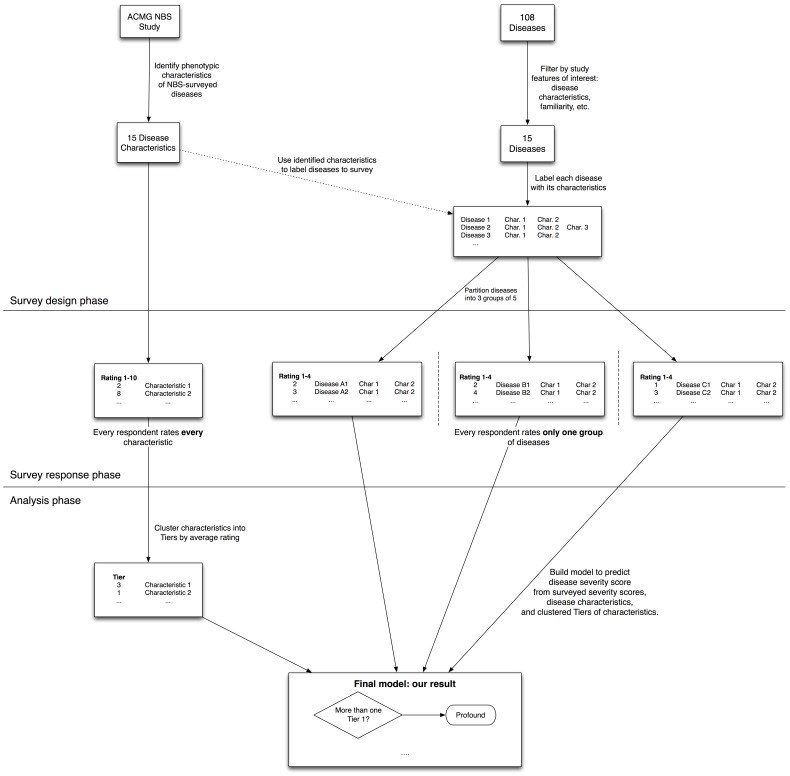
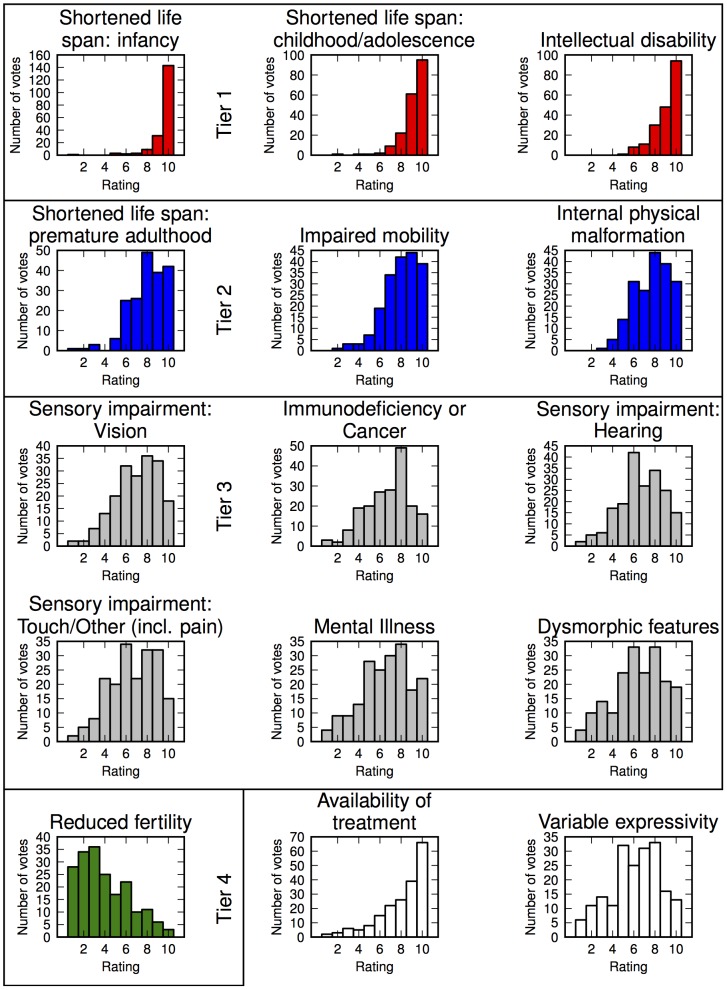
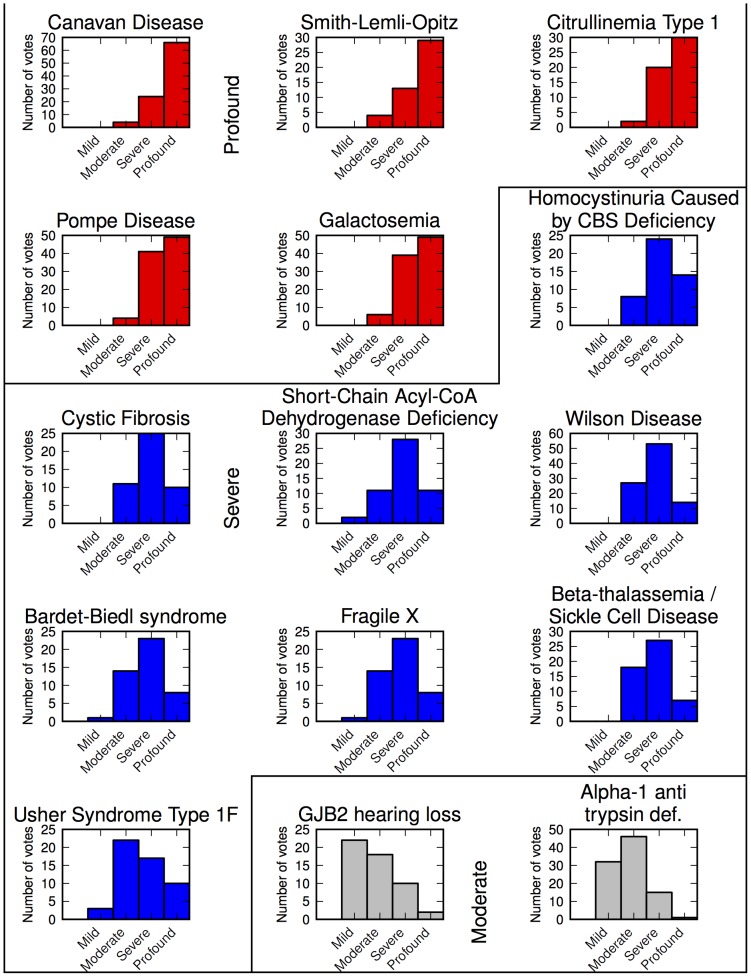
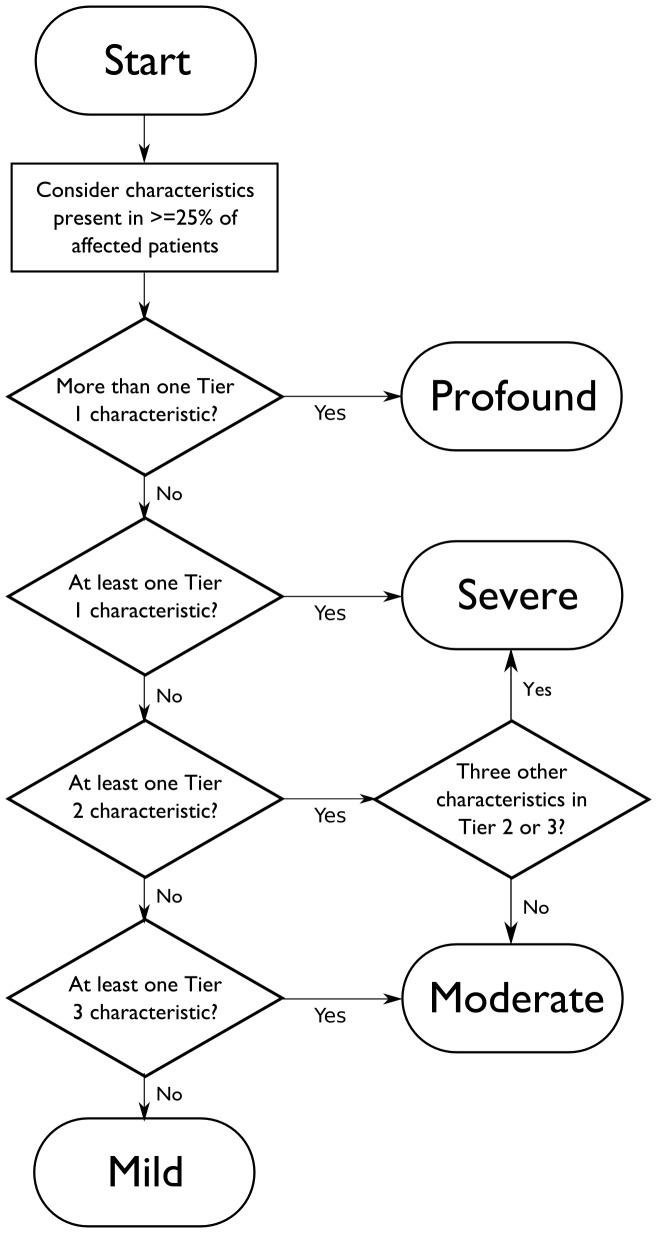
Professional guidelines dictate that disease severity is a key criterion for carrier screening. Expanded carrier screening, which tests for hundreds to thousands of mutations simultaneously, requires an objective, systematic means of describing a given disease's severity to build screening panels. We hypothesized that diseases with characteristics deemed to be of highest impact would likewise be rated as most severe, and diseases with characteristics of lower impact would be rated as less severe. We describe a pilot test of this hypothesis in which we surveyed 192 health care professionals to determine the impact of specific disease phenotypic characteristics on perceived severity, and asked the same group to rate the severity of selected inherited diseases. The results support the hypothesis: we identified four "Tiers" of disease characteristics (1-4). Based on these responses, we developed an algorithm that, based on the combination of characteristics normally seen in an affected individual, classifies the disease as Profound, Severe, Moderate, or Mild. This algorithm allows simple classification of disease severity that is replicable and not labor intensive.
Conflict of interest statement
Figures
References
-
- Amos J, Feldman GL, Grody WW, Monaghan K, Palomaki GE, et al. (2006) Technical and standards and guidelines for CFTR mutation testing. 2006 edition. Available: https://www.acmg.net/Pages/ACMG_Activities/stds-2002/cf.htm. Accessed 2013 Oct 2
Publication types
MeSH terms
LinkOut - more resources
Full Text Sources
Other Literature Sources
