


Mobile-based asthma action plans for adolescents
- PMID: 25494553
- PMCID: PMC5292936
- DOI: 10.3109/02770903.2014.995307
Mobile-based asthma action plans for adolescents
Abstract
Purpose: To examine feasibility and utilization of a mobile asthma action plan (AAP) among adolescents.
Methods: Adolescents (aged 12-17 years) with persistent asthma had their personalized AAP downloaded to a smartphone application. Teens were prompted by the mobile application to record either daily symptoms or peak flow measurements and to record medications. Once data were entered, the application provided immediate feedback based on the teen's AAP instructions. Asthma Control Test (ACT(®)) and child asthma self-efficacy scores were examined pre- and post-intervention.
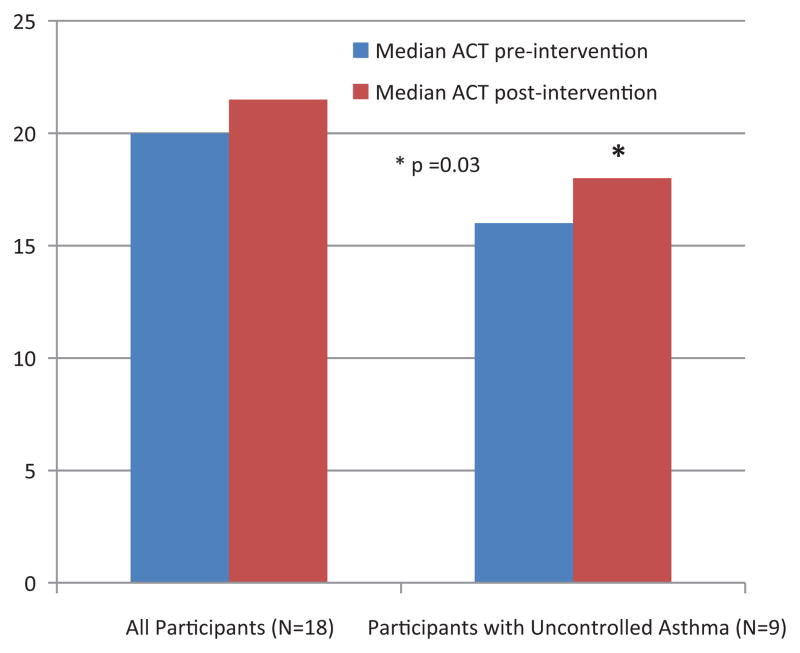
Results: Adolescents utilized the mobile AAP a median 4.3 days/week. Participant satisfaction was high with 93% stating that they were better able to control asthma by utilizing the mobile AAP. For participants with uncontrolled asthma at baseline, median (interquartile range) ACT scores improved significantly from 16 (5) to 18 (8) [p = 0.03]. Median asthma attack prevention self-efficacy scores improved from 34 (3.5) to 36 (5.3) [p = 0.04].
Conclusions: Results suggest that personalized mobile-based AAPs are a feasible method to communicate AAP instructions to teens.
Keywords: Adolescent; asthma; asthma action plan; high risk; teen.
Conflict of interest statement
Declaration of interest The authors report no conflict of interest. The authors alone are responsible for the content and writing of this article.
Figures
References
-
- MacDonald P. Understanding and treating asthma in adolescents. Paediatr Nurs. 2003;15:34–36. - PubMed
-
- Banzett RB, Dempsey JA, O’Donnell DE, Wamboldt MZ. Symptom perception and respiratory sensation in asthma. Am J Respir Crit Care Med. 2000;162:1178–1182. - PubMed
-
- Calmes D, Leake BD, Carlisle DM. Adverse asthma outcomes among children hospitalized with asthma in California. Pediatrics. 1998;101:845–850. - PubMed
-
- McQuaid EL, Kopel SJ, Klein RB, Fritz GK. Medication adherence in pediatric asthma: reasoning, responsibility, and behavior. J Pediatr Psychol. 2003;28:323–333. - PubMed
-
- National Asthma Education and Prevention Program. Expert Panel Report III: guidelines for the diagnosis and management of asthma. Bethesda, MD: National Heart, Lung, and Blood Institute; 2007. (NIH publication no. 08-4051)
Publication types
MeSH terms
Grants and funding
LinkOut - more resources
Full Text Sources
Other Literature Sources
Medical
Miscellaneous
