Review
. 2014;15(7):743-56.
doi: 10.2174/1389200216666141208151524.

Protein engineering: a new frontier for biological therapeutics

Affiliations
Review

Protein engineering: a new frontier for biological therapeutics

Peter H Tobin et al. Curr Drug Metab. 2014.

Abstract

Protein engineering holds the potential to transform the metabolic drug landscape through the development of smart, stimulusresponsive drug systems. Protein therapeutics are a rapidly expanding segment of Food and Drug Administration approved drugs that will improve clinical outcomes over the long run. Engineering of protein therapeutics is still in its infancy, but recent general advances in protein engineering capabilities are being leveraged to yield improved control over both pharmacokinetics and pharmacodynamics. Stimulus- responsive protein therapeutics are drugs which have been designed to be metabolized under targeted conditions. Protein engineering is being utilized to develop tailored smart therapeutics with biochemical logic. This review focuses on applications of targeted drug neutralization, stimulus-responsive engineered protein prodrugs, and emerging multicomponent smart drug systems (e.g., antibody-drug conjugates, responsive engineered zymogens, prospective biochemical logic smart drug systems, drug buffers, and network medicine applications).


Figures
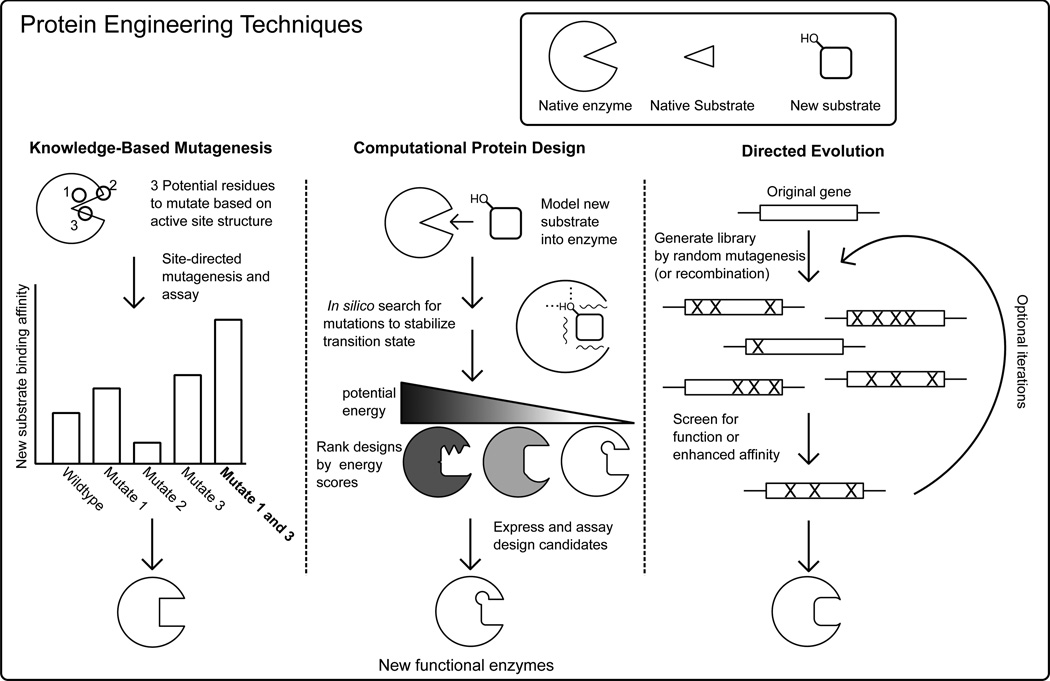
Fig. (1)
Fig. (1)
Simplified schematic of using protein engineering to redesign an enzyme’s substrate specificity highlighting knowledge-based mutagenesis, computational protein design, and directed evolution.
Fig. (2)
Fig. (2)
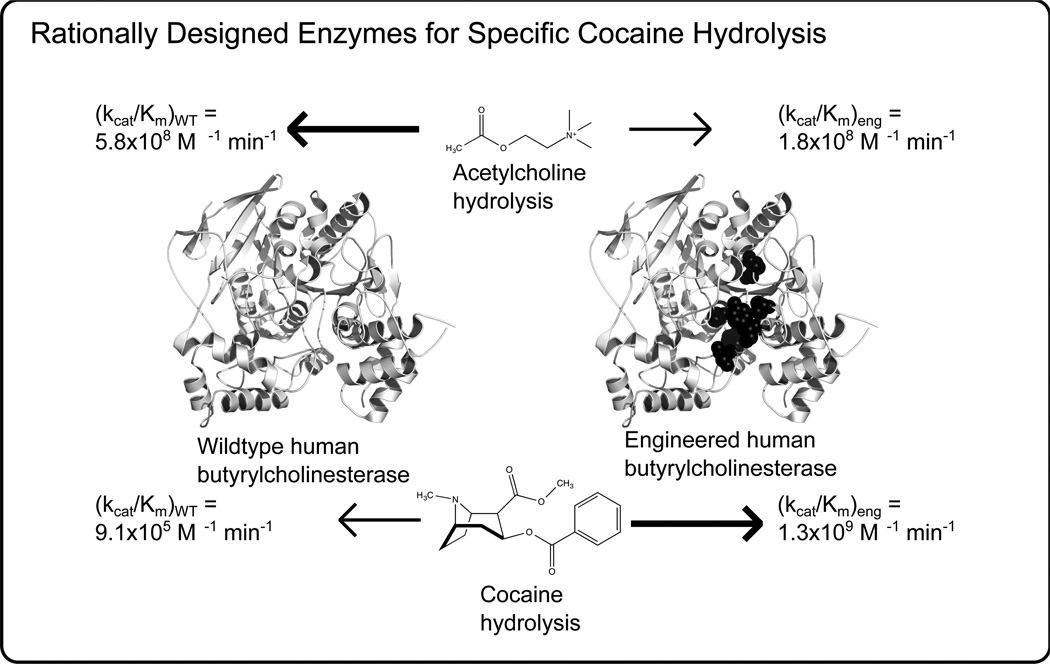
Human butyrylcholinesterase (represented by PDB code 1P0I) has been transformed into an effective cocaine hydrolysis enzyme by protein engineering. The best variant had a kcat/KM for (−)-Cocaine 1390 times larger than the wild type enzyme and also less reactive to its natural substrate acetylcholine [42]. The engineered enzyme contains six mutations in the active site, the locations of which are highlighted as black spheres, which accommodate the bulkier substrate and form more favorable hydrogen bonding interactions.
Fig. (3)
Fig. (3)
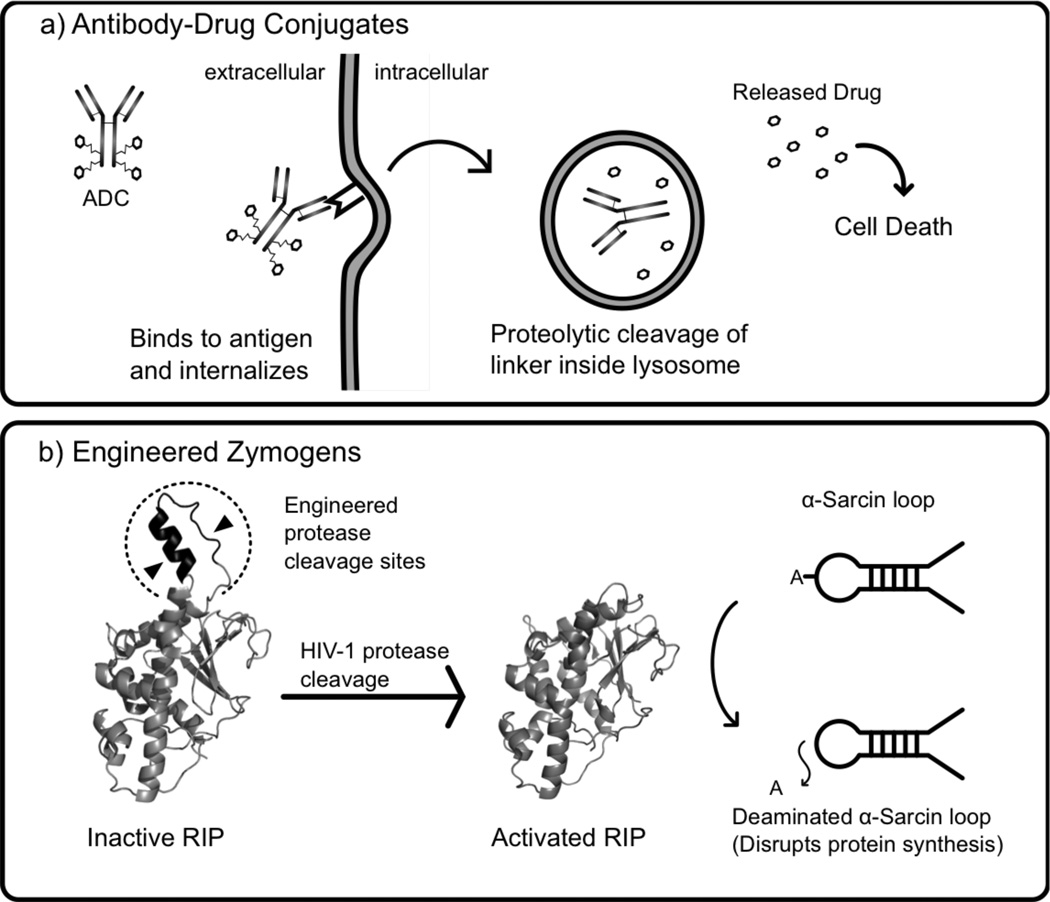
Illustrations of select classes of protein therapeutics engineered for targeted drug activation. A) Antibody-drug conjugates (ADCs) are composed of a monoclonal antibody securely linked to several molecules of a cytotoxic drug. The antibody selectively binds to a receptor on a cancer cell and is internalized via receptor mediated endocytosis. Once delivered to a lysosome, the linker is proteolytically cut and the drug is released leading to cell death [45, 137]. B) Engineered zymogens are proteins which have been engineered to be in an inactive state until activated by a specific signal, such as proteolytic cleavage. Law et al. engineered a zymogen variant of maize ribosome-inactivating protein (RIP) (represented by PDB code 2PQG) which is activated by HIV-1 protease for anti-HIV therapy [56]. Once activated, maize RIP (PDB code 2PQI) removes an adenine from the α-sarcin site on the large (28S) ribosomal subunit, disrupting protein synthesis [138].
Fig. (4)
Fig. (4)
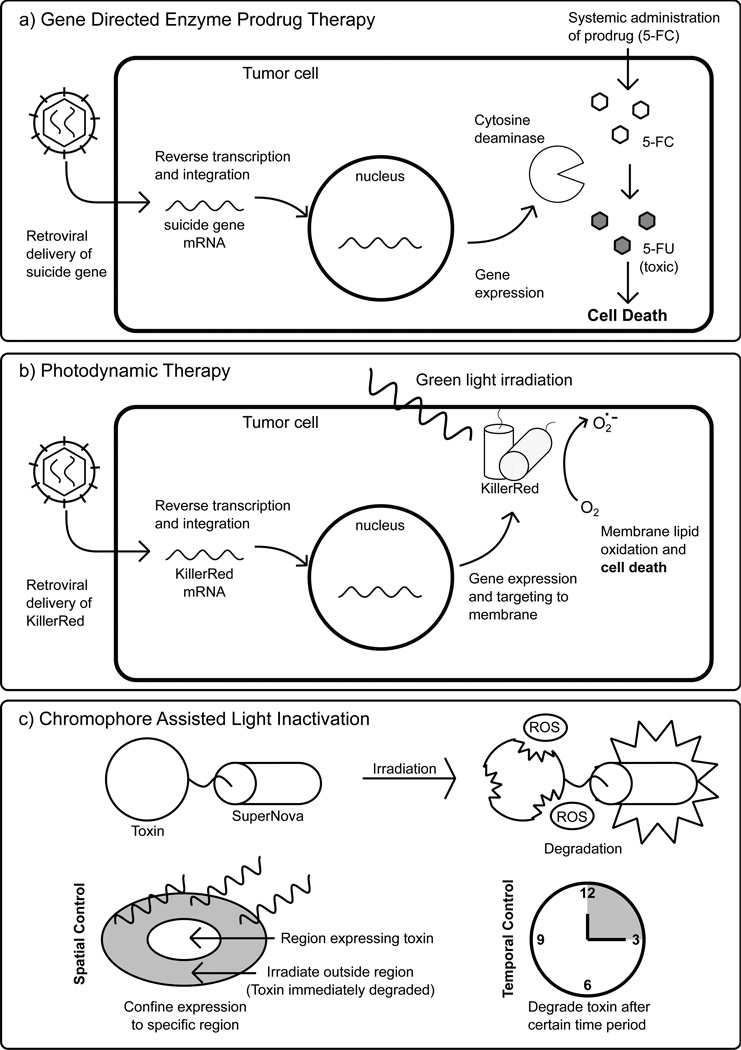
A) In Gene Directed Enzyme Prodrug Therapy (GDEPT), a viral vector is used to deliver the gene for a prodrug activating enzyme to specific cells, such as cancer cells. Then, a non-bioactive prodrug is administered systemically, but only activated locally in the cancer cells where the gene is expressed [64]. In this example, the enzyme represented is cytosine deaminase which catalyzes the conversion of non-toxic 5-Fluorocytosine (5-FC) to cytotoxic 5-Fluorouracil (5-FU). B) In this application of photodynamic therapy, a protein photosensitizer, KillerRed, is delivered into tumor cells by a viral vector and targeted to the cell membrane. Irradiation of KillerRed leads to production of ROS, which can oxidize the cell membrane and result in cell death. C) A potential use of Chromophore Assisted Light Inactivation (CALI) in which the photosensitizer SuperNova is fused to a protein toxin. Due to the light responsive nature of CALI, the toxin’s activity can be limited to a confined location and duration.
Fig. (5)
Fig. (5)
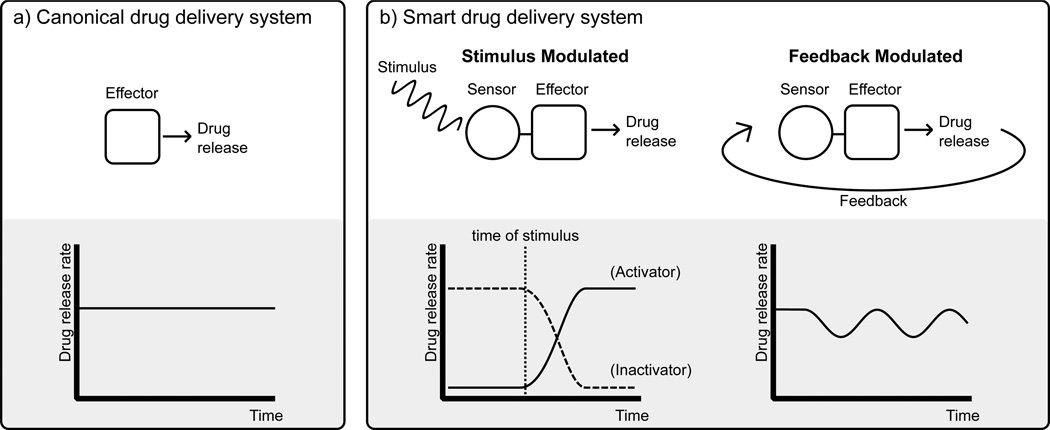
Drug delivery system strategies. A) Current drug delivery methods typically involve releasing a drug at a relatively constant rate. B) Smart drug delivery systems have both a sensing and effector component. This can allow drug release to either be activated (or inhibited) in response to a specific stimulus (e.g., pH, light, or specific biomarkers) or regulated in a feedback-dependent manner to provide a consistent free drug concentration.
Fig. (6)
Fig. (6)
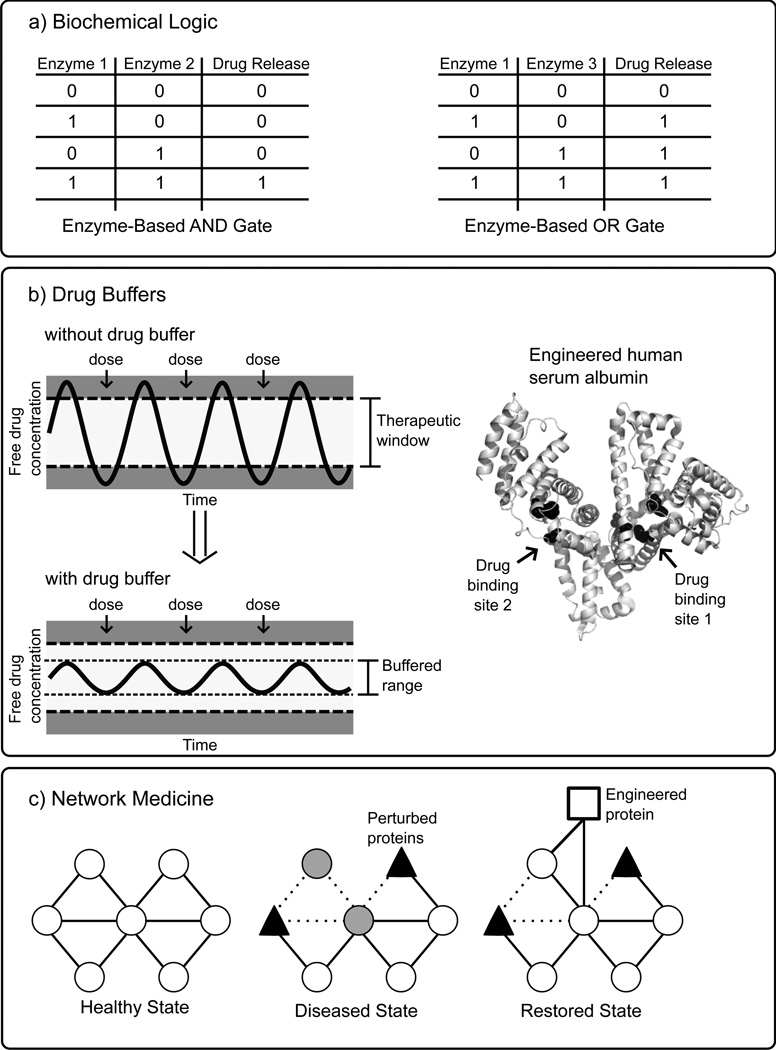
Illustrations of protein engineering enabled smart response drug systems. A) Stimulus-responsive delayed release drug systems have been proposed which utilize combinations of enzymes which can integrate multiple inputs according to biochemical (typically Boolean) logic to release an appropriate amount of one or several drugs under specified conditions [106]. B) A drug buffer is an engineered multivalent ligand-binding protein therapeutic which has been designed to bind or release a narrow therapeutic window drug in such a manner that the free drug concentration is maintained within a safe and effective range. For illustrative purposes, human serum albumin (PDB code 1O9X) is shown with potential engineered drug binding sites at Sudlow’s site 1 and site 2 (black spheres) [116]. C) Network medicine is new therapeutic approach which aims to restore health by targeting and correcting aberrant signaling networks associated with cancer and other diseases. In this highly simplified schematic, a disease state is the result of perturbed proteins which disrupt the organization of the healthy signaling network. The introduction of an engineered signaling protein “re-wires” the network around the perturbed proteins, restoring health.

References

    1. Burns M. Management of narrow therapeutic index drugs. Journal of thrombosis and thrombolysis. 1999;7(2):137–143. - PubMed
    1. Blix HS, Viktil KK, Moger TA, Reikvam A. Drugs with narrow therapeutic index as indicators in the risk management of hospitalised patients. Pharmacy Practice (18863655) 2010;8(1) - PMC - PubMed
    1. Litvak-Greenfeld D, Benhar I. Risks and untoward toxicities of antibody-based immunoconjugates. Advanced drug delivery reviews. 2012;64(15):1782–1799. - PubMed
    1. Wanakule P, Roy K. Disease-Responsive Drug Delivery: The Next Generation of Smart Delivery Devices. Curr Drug Metab. 2012;13(1):42–49. - PubMed
    1. Kiss G, Celebi-Olcum N, Moretti R, Baker D, Houk KN. Computational Enzyme Design. Angew Chem Int Edit. 2013;52(22):5700–5725. - PubMed