


Severe vitamin D deficiency is associated with frequent exacerbations and hospitalization in COPD patients
- PMID: 25496239
- PMCID: PMC4269938
- DOI: 10.1186/s12931-014-0131-0
Severe vitamin D deficiency is associated with frequent exacerbations and hospitalization in COPD patients
Abstract
Background: Acute exacerbations of COPD (AECOPD) are common and strongly influence disease severity and relative healthcare costs. Vitamin D deficiency is frequent among COPD patients and its contributory role in disease exacerbations is widely debated. Our aim was to assess the relationship of serum vitamin D levels with COPD severity and AECOPD.
Methods: Serum vitamin D (25-hydroxyvitamin D) levels were measured in 97 COPD patients and related to lung function, comorbidities, FEV1 decline, AECOPD and hospital admission during the previous year.
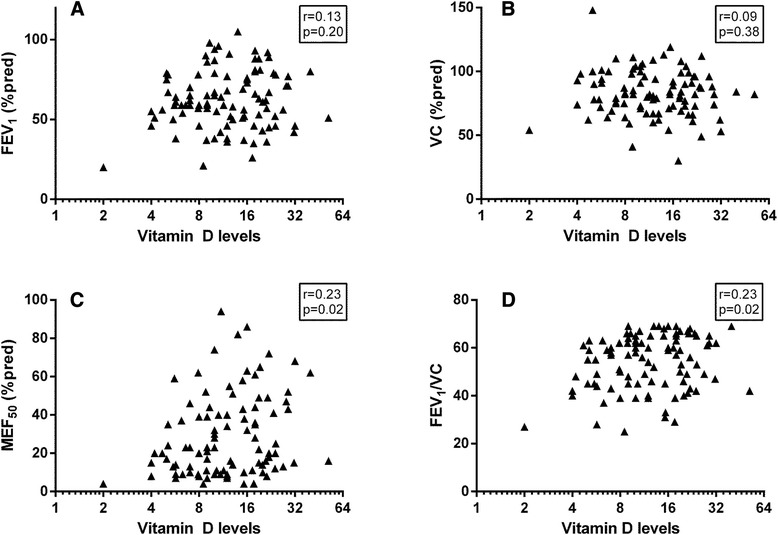
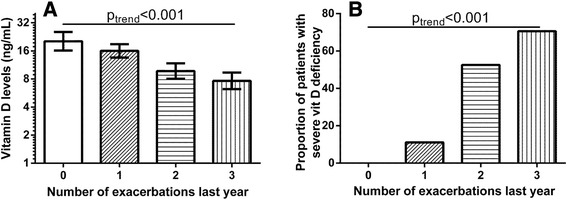
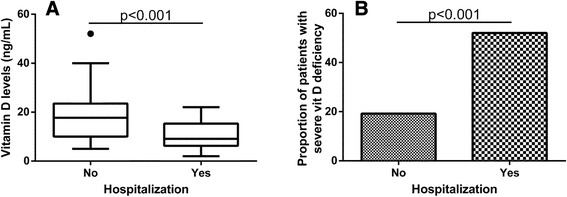
Results: Most patients (96%) had vitamin D deficiency, which was severe in 35 (36%). No significant relationship was found between vitamin D and FEV1 or annual FEV1 decline. No difference between patients with and without severe vitamin D deficiency was found in age, gender, BMI, smoking history, lung function, and comorbidities, apart from osteoporosis (60.9% in severe deficiency vs 22.7%, p = 0.001). In multiple logistic regression models, severe deficiency was independently associated with AECOPD [adjusted odds ratios (aOR) of 30.5 (95% CI 5.55, 168), p < 0.001] and hospitalization [aOR 3.83 (95% CI 1.29, 11.4), p = 0.02]. The odds ratio of being a frequent exacerbator if having severe vitamin D deficiency was 18.1 (95% CI 4.98, 65.8) (p < 0.001), while that of hospitalization was 4.57 (95% CI 1.83, 11.4) (p = 0.001).
Conclusions: In COPD patients severe vitamin D deficiency was related to more frequent disease exacerbations and hospitalization during the year previous to the measurement of vitamin D. This association was independent of patients' characteristics and comorbidities.
Figures
References
-
- Global Initiative for Chronic Obstructive Lung Disease. Global strategy for the diagnosis, management and prevention of COPD. [http://www.goldcopd.org/guidelines-global-strategy-for-diagnosis-managem...] - PubMed
-
- Zadshir A, Tareen N, Pan D, Norris K, Martins D. The prevalence of hypovitaminosis D among US adults: data from the NHANES III. Ethn Dis. 2005;15:S5–S97. - PubMed
Publication types
MeSH terms
Substances
LinkOut - more resources
Full Text Sources
Other Literature Sources
Medical
