


Floral biology and ovule and seed ontogeny of Nymphaea thermarum, a water lily at the brink of extinction with potential as a model system for basal angiosperms
- PMID: 25497514
- PMCID: PMC4551091
- DOI: 10.1093/aob/mcu235
Floral biology and ovule and seed ontogeny of Nymphaea thermarum, a water lily at the brink of extinction with potential as a model system for basal angiosperms
Abstract
Background and aims: Nymphaea thermarum is a member of the Nymphaeales, of one of the most ancient lineages of flowering plants. This species was only recently described and then declared extinct in the wild, so little is known about its reproductive biology. In general, the complete ontogeny of ovules and seeds is not well documented among species of Nymphaea and has never been studied in the subgenus Brachyceras, the clade to which N. thermarum belongs.
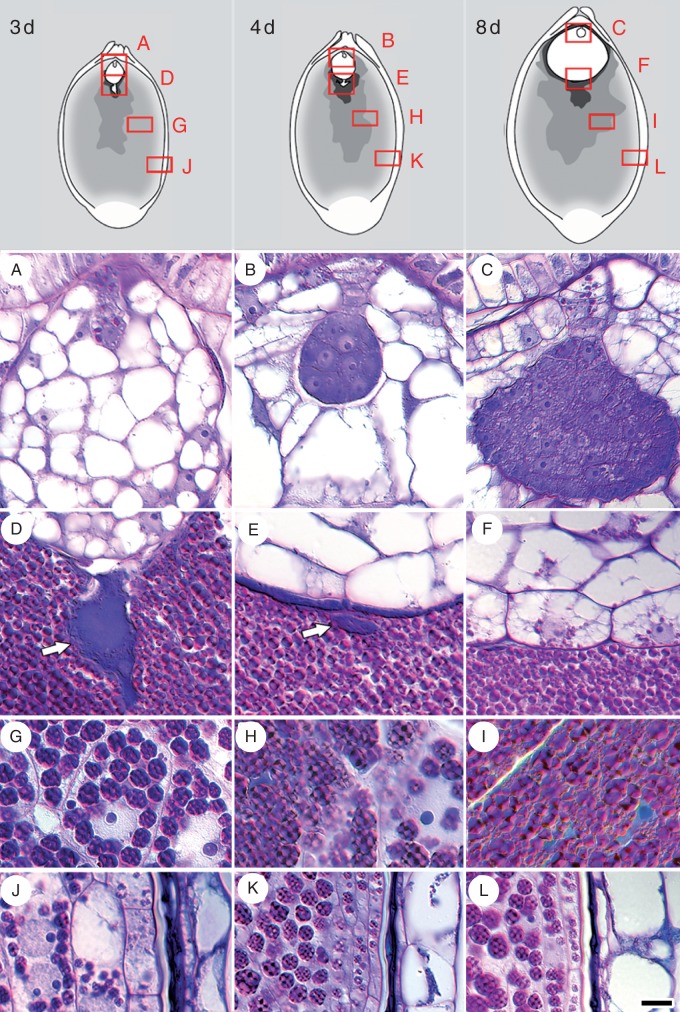
Methods: Flowers and fruits were processed for brightfield, epifluorescence and confocal microscopy. Flower morphology, with emphasis on the timing of male and female functions, was correlated with key developmental stages of the ovule and the female gametophyte. Development of the seed tissues and dynamics of polysaccharide reserves in the endosperm, perisperm and embryo were examined.
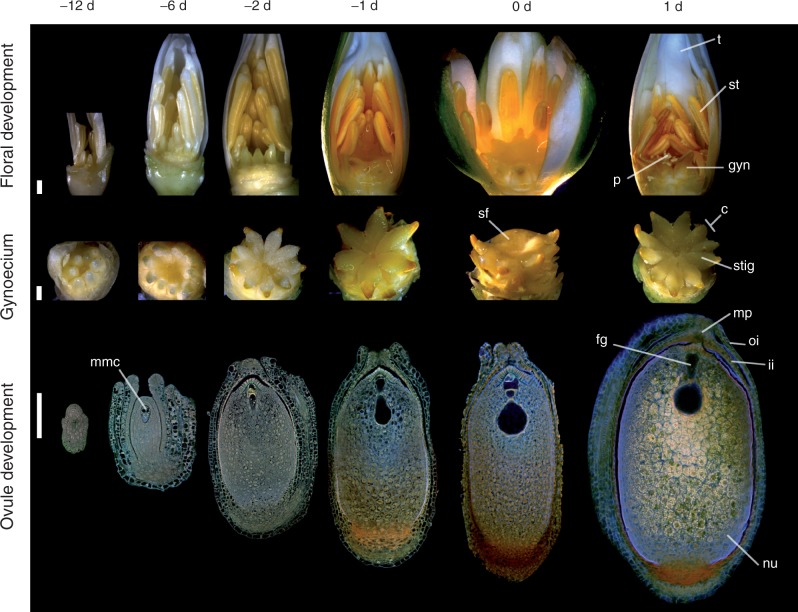
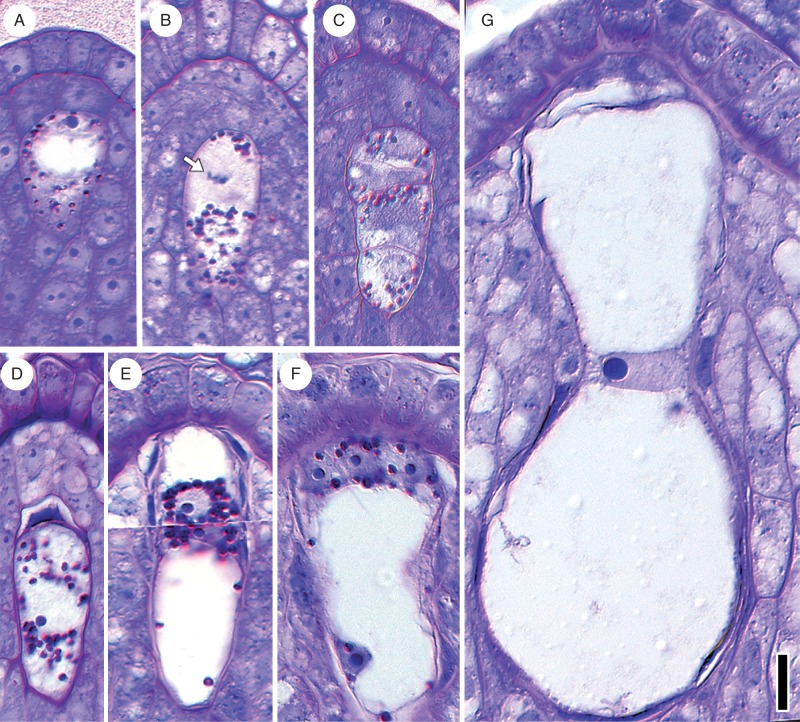
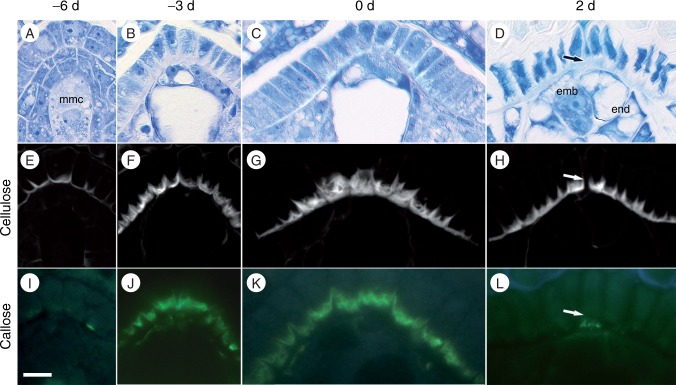
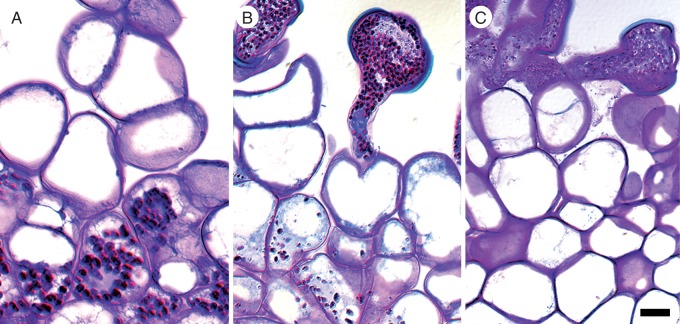
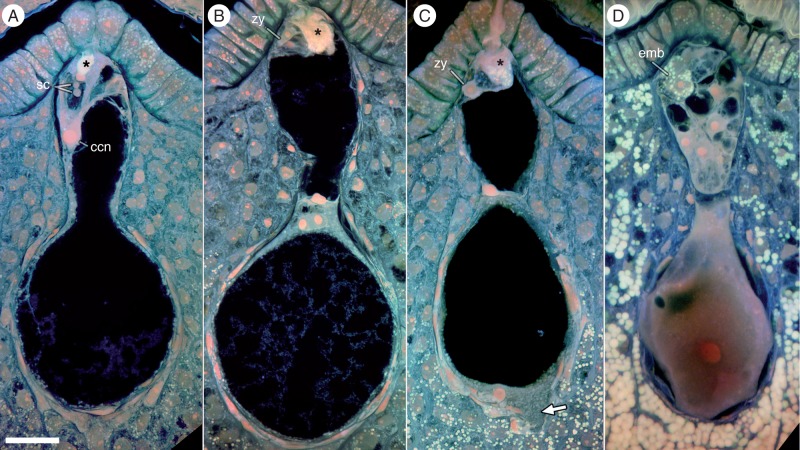
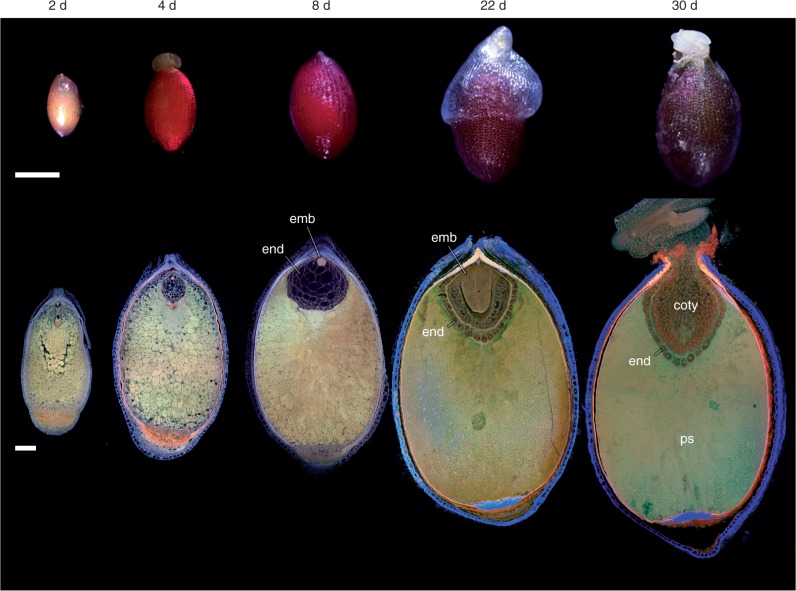
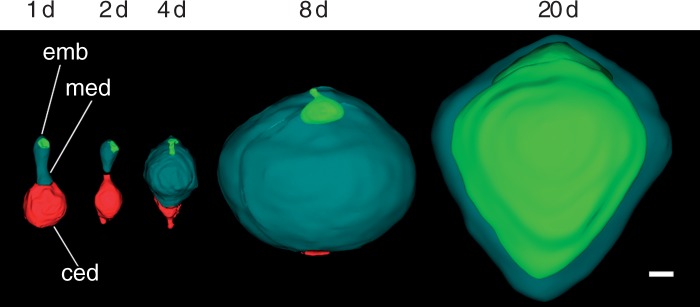
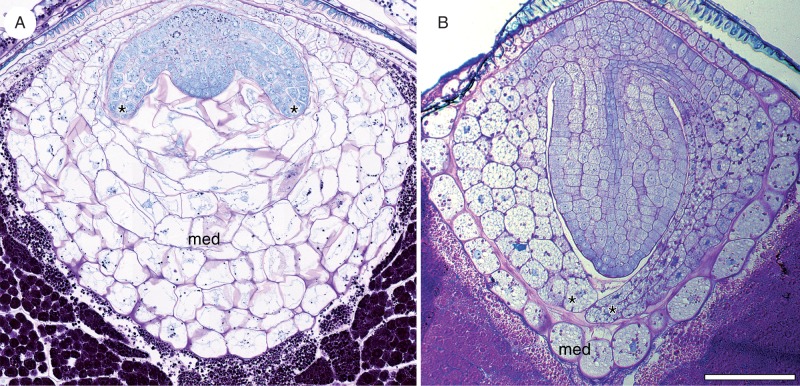
Key results: Pollen release in N. thermarum starts before the flower opens. Cell walls of the micropylar nucellus show layering of callose and cellulose in a manner reminiscent of transfer cell wall patterning. Endosperm development is ab initio cellular, with micropylar and chalazal domains that embark on distinct developmental trajectories. The surrounding maternal perisperm occupies the majority of seed volume and accumulates starch centrifugally. In mature seeds, a minute but fully developed embryo is surrounded by a single, persistent layer of endosperm.
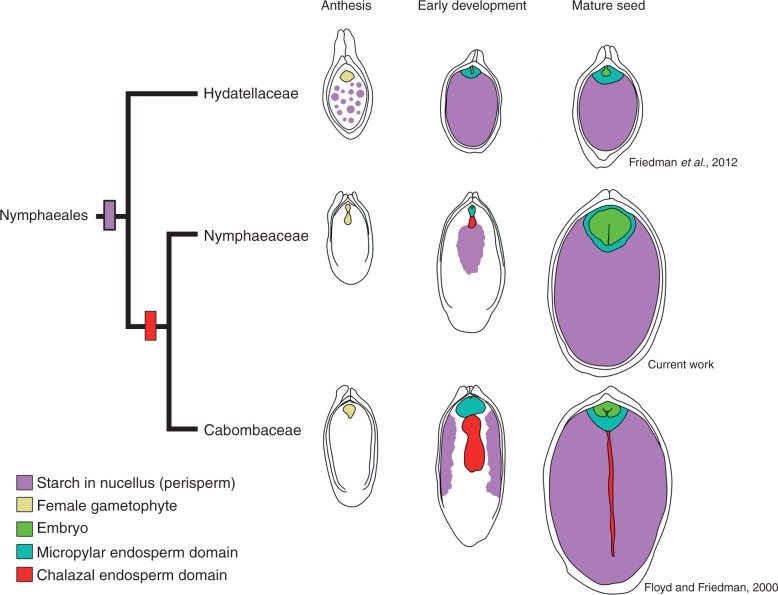
Conclusions: Early male and female function indicate that N. thermarum is predisposed towards self-pollination, a phenomenon that is likely to have evolved multiple times within Nymphaea. While formation of distinct micropylar and chalazal developmental domains in the endosperm, along with a copious perisperm, characterize the seeds of most members of the Nymphaeales, seed ontogenies vary between and among the constituent families. Floral biology, life history traits and small genome size make N. thermarum uniquely promising as an early-diverging angiosperm model system for genetic and molecular studies.
Keywords: Early-diverging angiosperm; Nymphaea thermarum; Nymphaeales; embryo; endosperm; evo-devo; female gametophyte; flower biology; megagametogenesis; megasporogenesis; perisperm; protogyny; seed development; stigma.
© The Author 2014. Published by Oxford University Press on behalf of the Annals of Botany Company. All rights reserved. For Permissions, please email: journals.permissions@oup.com.
Figures
Similar articles
-
Seed development in Trimenia (Trimeniaceae) and its bearing on the evolution of embryo-nourishing strategies in early flowering plant lineages.Am J Bot. 2013 May;100(5):906-15. doi: 10.3732/ajb.1200632. Epub 2013 Apr 25. Am J Bot. 2013. PMID: 23624925
-
Transcriptomes across fertilization and seed development in the water lily Nymphaea thermarum (Nymphaeales): evidence for epigenetic patterning during reproduction.Plant Reprod. 2022 Sep;35(3):161-178. doi: 10.1007/s00497-022-00438-3. Epub 2022 Feb 19. Plant Reprod. 2022. PMID: 35184212
-
Embryology in Trithuria submersa (Hydatellaceae) and relationships between embryo, endosperm, and perisperm in early-diverging flowering plants.Am J Bot. 2012 Jun;99(6):1083-95. doi: 10.3732/ajb.1200066. Epub 2012 Jun 5. Am J Bot. 2012. PMID: 22688427
-
Seed tissue and nutrient partitioning, a case for the nucellus.Plant Reprod. 2018 Sep;31(3):309-317. doi: 10.1007/s00497-018-0338-1. Epub 2018 Jun 5. Plant Reprod. 2018. PMID: 29869727 Free PMC article. Review.
-
Angiosperm ovules: diversity, development, evolution.Ann Bot. 2011 Jun;107(9):1465-89. doi: 10.1093/aob/mcr120. Epub 2011 May 23. Ann Bot. 2011. PMID: 21606056 Free PMC article. Review.
Cited by
-
Endosperm Evolution by Duplicated and Neofunctionalized Type I MADS-Box Transcription Factors.Mol Biol Evol. 2022 Jan 7;39(1):msab355. doi: 10.1093/molbev/msab355. Mol Biol Evol. 2022. PMID: 34897514 Free PMC article.
-
Seed coat thickness in the evolution of angiosperms.Cell Mol Life Sci. 2018 Jul;75(14):2509-2518. doi: 10.1007/s00018-018-2816-x. Epub 2018 May 5. Cell Mol Life Sci. 2018. PMID: 29730767 Free PMC article. Review.
-
Water lily (Nymphaea thermarum) genome reveals variable genomic signatures of ancient vascular cambium losses.Proc Natl Acad Sci U S A. 2020 Apr 14;117(15):8649-8656. doi: 10.1073/pnas.1922873117. Epub 2020 Mar 31. Proc Natl Acad Sci U S A. 2020. PMID: 32234787 Free PMC article.
-
Concluding Embryogenesis After Diaspora: Seed Germination in Illicium Parviflorum.Integr Comp Biol. 2023 Dec 29;63(6):1352-1363. doi: 10.1093/icb/icad078. Integr Comp Biol. 2023. PMID: 37349968 Free PMC article.
-
Variation in the Floral Scent Chemistry of Nymphaea 'Eldorado', a Valuable Water Lily, with Different Flowering Stages and Flower Parts.Plants (Basel). 2024 Mar 24;13(7):939. doi: 10.3390/plants13070939. Plants (Basel). 2024. PMID: 38611469 Free PMC article.
References
-
- Baker HG, Baker I. 1979. Starch in angiosperm pollen grains and its evolutionary significance. American Journal of Botany 66: 591–600.
-
- Barrell P, Grossniklaus U. 2005. Confocal microscopy of whole ovules for analysis of reproductive development: the elongate1 mutant affects meiosis II. Plant Journal 43: 309–320. - PubMed
-
- Baskin CC, Baskin JM. 2007. Nymphaeaceae: a basal angiosperm family (ANITA grade) with a fully developed embryo. Seed Science Research 17: 293–296.
-
- Batygina TB, Kravtsova TI, Shamrov II. 1980. The comparative embryology of some representatives of the orders Nymphaeales and Nelumbonales. Botanicheskii Zhurnal 65: 1071–1086.
Publication types
MeSH terms
LinkOut - more resources
Full Text Sources
Other Literature Sources
