


Use of home telemonitoring to support multidisciplinary care of heart failure patients in Finland: randomized controlled trial
- PMID: 25498992
- PMCID: PMC4275484
- DOI: 10.2196/jmir.3651
Use of home telemonitoring to support multidisciplinary care of heart failure patients in Finland: randomized controlled trial
Abstract
Background: Heart failure (HF) patients suffer from frequent and repeated hospitalizations, causing a substantial economic burden on society. Hospitalizations can be reduced considerably by better compliance with self-care. Home telemonitoring has the potential to boost patients' compliance with self-care, although the results are still contradictory.
Objective: A randomized controlled trial was conducted in order to study whether the multidisciplinary care of heart failure patients promoted with telemonitoring leads to decreased HF-related hospitalization.
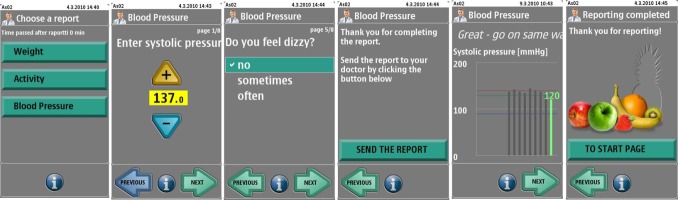
Methods: HF patients were eligible whose left ventricular ejection fraction was lower than 35%, NYHA functional class ≥2, and who needed regular follow-up. Patients in the telemonitoring group (n=47) measured their body weight, blood pressure, and pulse and answered symptom-related questions on a weekly basis, reporting their values to the heart failure nurse using a mobile phone app. The heart failure nurse followed the status of patients weekly and if necessary contacted the patient. The primary outcome was the number of HF-related hospital days. Control patients (n=47) received multidisciplinary treatment according to standard practices. Patients' clinical status, use of health care resources, adherence, and user experience from the patients' and the health care professionals' perspective were studied.
Results: Adherence, calculated as a proportion of weekly submitted self-measurements, was close to 90%. No difference was found in the number of HF-related hospital days (incidence rate ratio [IRR]=0.812, P=.351), which was the primary outcome. The intervention group used more health care resources: they paid an increased number of visits to the nurse (IRR=1.73, P<.001), spent more time at the nurse reception (mean difference of 48.7 minutes, P<.001), and there was a greater number of telephone contacts between the nurse and intervention patients (IRR=3.82, P<.001 for nurse-induced contacts and IRR=1.63, P=.049 for patient-induced contacts). There were no statistically significant differences in patients' clinical health status or in their self-care behavior. The technology received excellent feedback from the patient and professional side with a high adherence rate throughout the study.
Conclusions: Home telemonitoring did not reduce the number of patients' HF-related hospital days and did not improve the patients' clinical condition. Patients in the telemonitoring group contacted the Cardiology Outpatient Clinic more frequently, and on this way increased the use of health care resources.
Trial registration: Clinicaltrials.gov NCT01759368; http://clinicaltrials.gov/show/NCT01759368 (Archived by WebCite at http://www.webcitation.org/6UFxiCk8Z).
Keywords: EHFSBS; clinical outcomes; health care resources; heart failure; hospitalization; telemonitoring; user experience.
Conflict of interest statement
Conflicts of Interest: None declared.
Figures


References
-
- McMurray JJV, Stewart S. The burden of heart failure. Eur Heart J Suppl. 2002;4(suppleD):307–333.
-
- Lang CC, Mancini DM. Non-cardiac comorbidities in chronic heart failure. Heart. 2007 Jun;93(6):665–71. doi: 10.1136/hrt.2005.068296. http://europepmc.org/abstract/MED/16488925 - DOI - PMC - PubMed
-
- Chen J, Normand SL, Wang Y, Krumholz HM. National and regional trends in heart failure hospitalization and mortality rates for Medicare beneficiaries, 1998-2008. JAMA. 2011 Oct 19;306(15):1669–78. doi: 10.1001/jama.2011.1474. http://europepmc.org/abstract/MED/22009099 - DOI - PMC - PubMed
-
- Krumholz HM, Merrill AR, Schone EM, Schreiner GC, Chen J, Bradley EH, Wang Y, Wang Y, Lin Z, Straube BM, Rapp MT, Normand SL, Drye EE. Patterns of hospital performance in acute myocardial infarction and heart failure 30-day mortality and readmission. Circ Cardiovasc Qual Outcomes. 2009 Sep;2(5):407–13. doi: 10.1161/CIRCOUTCOMES.109.883256. http://circoutcomes.ahajournals.org/cgi/pmidlookup?view=long&pmid=20031870 - DOI - PubMed
-
- Desai AS, Stevenson LW. Rehospitalization for heart failure: predict or prevent? Circulation. 2012 Jul 24;126(4):501–6. doi: 10.1161/CIRCULATIONAHA.112.125435. http://circ.ahajournals.org/cgi/pmidlookup?view=long&pmid=22825412 - DOI - PubMed
Publication types
MeSH terms
Associated data
LinkOut - more resources
Full Text Sources
Other Literature Sources
Medical
Research Materials
Miscellaneous
