


Decreased serum level of miR-146a as sign of chronic inflammation in type 2 diabetic patients
- PMID: 25500583
- PMCID: PMC4264887
- DOI: 10.1371/journal.pone.0115209
Decreased serum level of miR-146a as sign of chronic inflammation in type 2 diabetic patients
Abstract
Background: There is increasing evidence that chronic inflammation is an important determinant in insulin resistance and in the pathogenesis of type 2 diabetes (T2D). MicroRNAs constitute a newly discovered system of cell regulation and in particular two microRNAs (miR-146a and miR-155) have been described as regulators and biomarkers of inflammation.
Aim: To determine a putative association between the levels of miR-146a and miR-155 in serum of T2D patients, clinical parameters and serological indicators of inflammation.
Methods: We performed quantitative Real Time PCR (qPCR) of microRNAs from serum (56 Ecuadorian T2D ambulatory patients and 40 non-diabetic controls). In addition, we evaluated T2D-related serum cytokines.chemokines and growth factors using a commercially available multi-analyte cytometric bead array system. We correlated outcomes to clinical parameters, including BMI, HbA1c and lipid state.
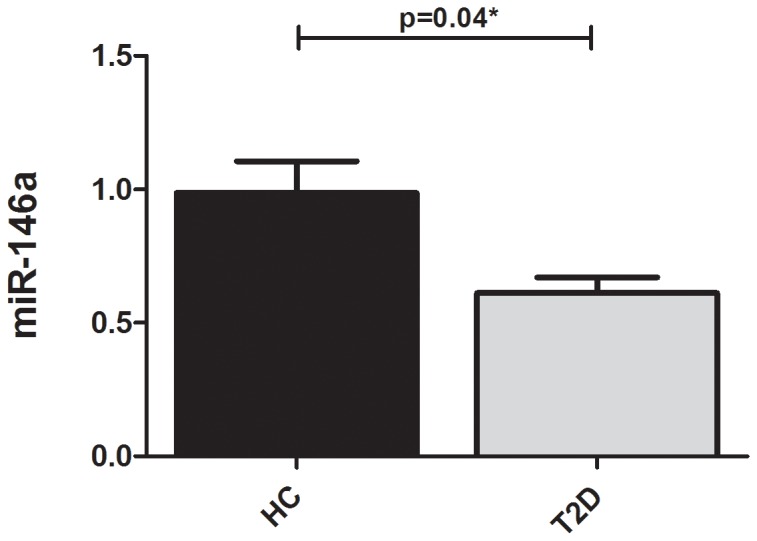
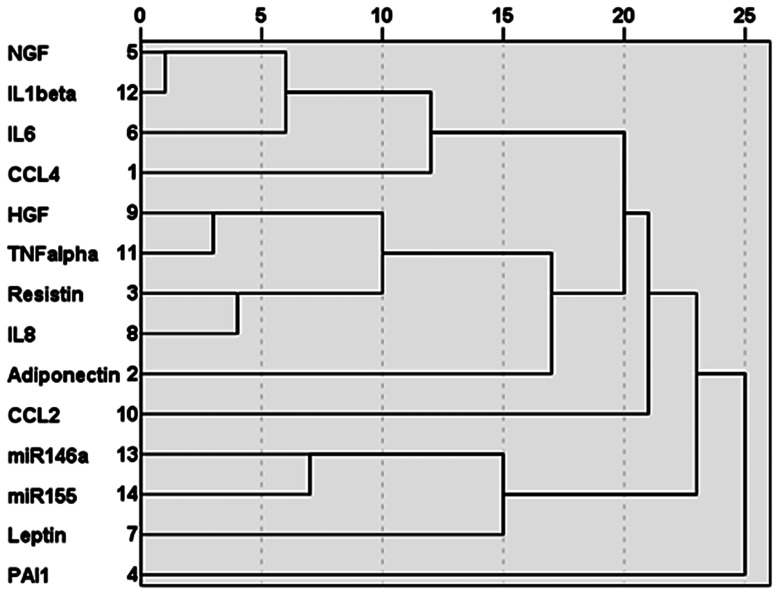
Results: The Ecuadorian non-diabetic controls appeared as overweight (BMI>25: patients 85%, controls 82.5%) and as dyslipidemic (hypercholesterolemia: patients 60.7%, controls 67.5%) as the patients. The serum levels of miR-146a were significantly reduced in T2D patients as compared to these non-diabetic, but obese/dyslipidemic control group (mean patients 0.61, mean controls set at 1; p = 0.042), those of miR-155 were normal.The serum levels of both microRNAs correlated to each other (r = 0.478; p<0.001) and to leptin levels. The microRNAs did not correlate to BMI, glycemia and dyslipidemia.From the tested cytokines, chemokines and growth factors, we found IL-8 and HGF significantly raised in T2D patients versus non-diabetic controls (p = 0.011 and 0.023 respectively).
Conclusions: This study shows decreased serum anti-inflammatory miR-146a, increased pro-inflammatory IL-8 and increased HGF (a vascular/insular repair factor) as discriminating markers of failure of glucose control occurring on the background of obesity and dyslipidemia.
Conflict of interest statement
Figures
References
-
- Hotamisligil GS, Shargill NS, Spiegelman BM (1993) Adipose expression of tumor necrosis factor-alpha: direct role in obesity-linked insulin resistance. Science 259(5091):87–91. - PubMed
-
- Hotamisligil GS, Peraldi P, Budavari A, Ellis R, White MF, et al. (1996) IRS-1-mediated inhibition of insulin receptor tyrosine kinase activity in TNF-alpha- and obesity-induced insulin resistance. Science 271(5249):665–668. - PubMed
-
- Peraldi P, Hotamisligil GS, Buurman WA, White MF, Spiegelman BM (1996) Tumor necrosis factor (TNF)-alpha inhibits insulin signaling through stimulation of the p55 TNF receptor and activation of sphingomyelinase. The Journal of biological chemistry 1996 271(22):13018–13022. - PubMed
Publication types
MeSH terms
Substances
LinkOut - more resources
Full Text Sources
Other Literature Sources
Medical
