


Priority setting partnership to identify the top 10 research priorities for the management of Parkinson's disease
- PMID: 25500772
- PMCID: PMC4281559
- DOI: 10.1136/bmjopen-2014-006434
Priority setting partnership to identify the top 10 research priorities for the management of Parkinson's disease
Abstract
Objectives: This priority setting partnership was commissioned by Parkinson's UK to encourage people with direct and personal experience of the condition to work together to identify and prioritise the top 10 evidential uncertainties that impact on everyday clinical practice for the management of Parkinson's disease (PD).
Setting: The UK.
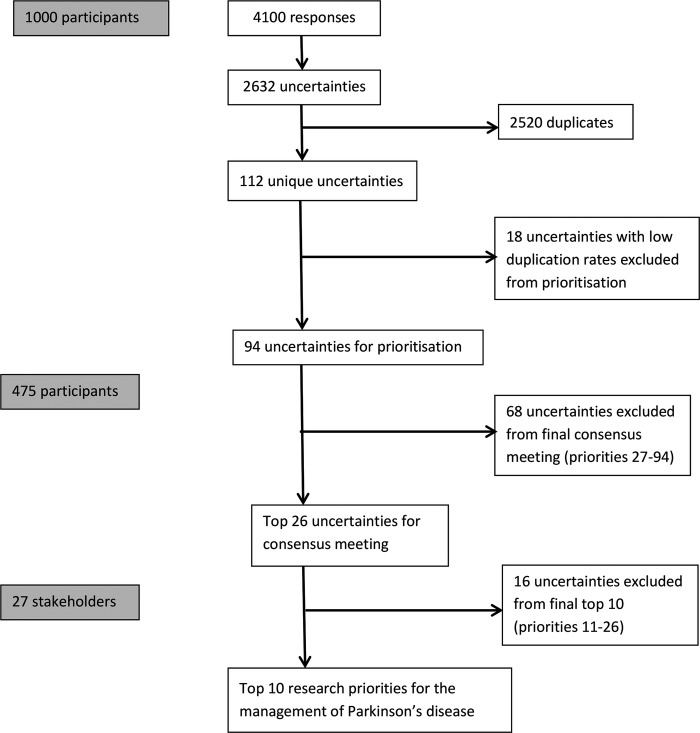
Participants: Anyone with experience of PD including: people with Parkinson's (PwP), carers, family and friends, healthcare and social care professionals. Non-clinical researchers and employees of pharmaceutical or medical devices companies were excluded. 1000 participants (60% PwP) provided ideas on research uncertainties, 475 (72% PwP) initially prioritised them and 27 (37% PwP) stakeholders agreed a final top 10.
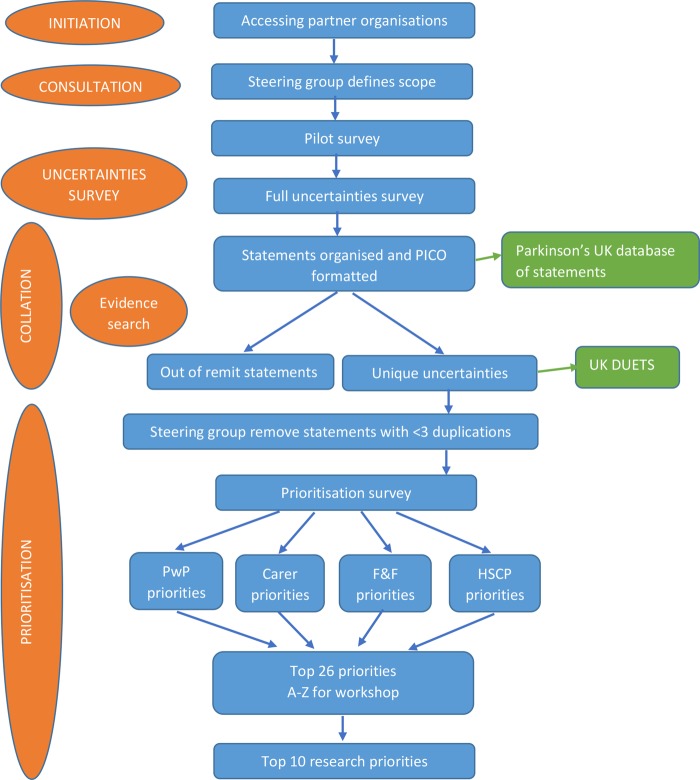
Methods: Using a modified nominal group technique, participants were surveyed to identify what issues for the management of PD needed research. Unique research questions unanswered by current evidence were identified and participants were asked to identify their top 10 research priorities from this list. The top 26 uncertainties were presented to a consensus meeting with key stakeholders to agree the top 10 research priorities.
Results: 1000 participants provided 4100 responses, which contained 94 unique unanswered research questions that were initially prioritised by 475 participants. A consensus meeting with 27 stakeholders agreed the top 10 research priorities. The overarching research aspiration was an effective cure for PD. The top 10 research priorities for PD management included the need to address motor symptoms (balance and falls, and fine motor control), non-motor symptoms (sleep and urinary dysfunction), mental health issues (stress and anxiety, dementia and mild cognitive impairments), side effects of medications (dyskinesia) and the need to develop interventions specific to the phenotypes of PD and better monitoring methods.
Conclusions: These research priorities identify crucial gaps in the existing evidence to address everyday practicalities in the management of the complexities of PD.
Keywords: Disease management; Priority setting partnership; Research priorities.
Published by the BMJ Publishing Group Limited. For permission to use (where not already granted under a licence) please go to http://group.bmj.com/group/rights-licensing/permissions.
Figures
References
Publication types
MeSH terms
LinkOut - more resources
Full Text Sources
Other Literature Sources
Medical
