


Association of pyoderma gangrenosum, acne, and suppurative hidradenitis (PASH) shares genetic and cytokine profiles with other autoinflammatory diseases
- PMID: 25501066
- PMCID: PMC4602806
- DOI: 10.1097/MD.0000000000000187
Association of pyoderma gangrenosum, acne, and suppurative hidradenitis (PASH) shares genetic and cytokine profiles with other autoinflammatory diseases
Erratum in
- Medicine (Baltimore). 2015 Apr;94(15):1
-
Association of Pyoderma Gangrenosum, Acne, and Suppurative Hidradenitis (PASH) Shares Genetic and Cytokine Profiles With Other Autoinflammatory Diseases: Erratum.Medicine (Baltimore). 2015 Feb;94(8):1. doi: 10.1097/01.md.0000462395.68470.98. Medicine (Baltimore). 2015. PMID: 25803365 Free PMC article.
Abstract
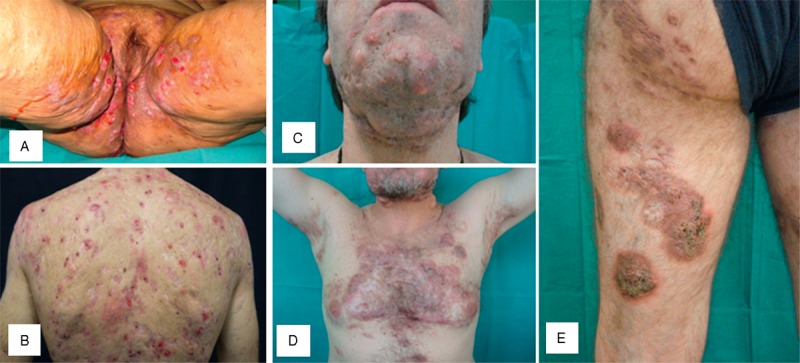
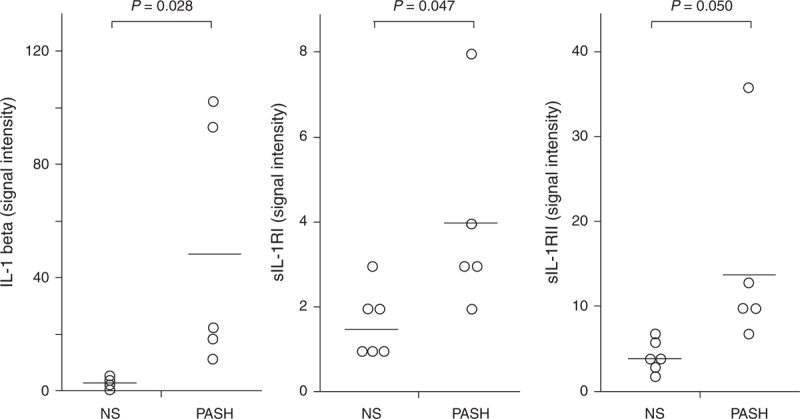
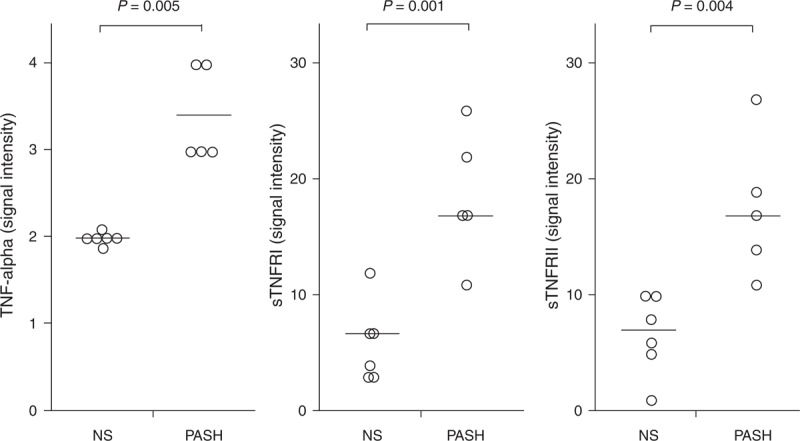
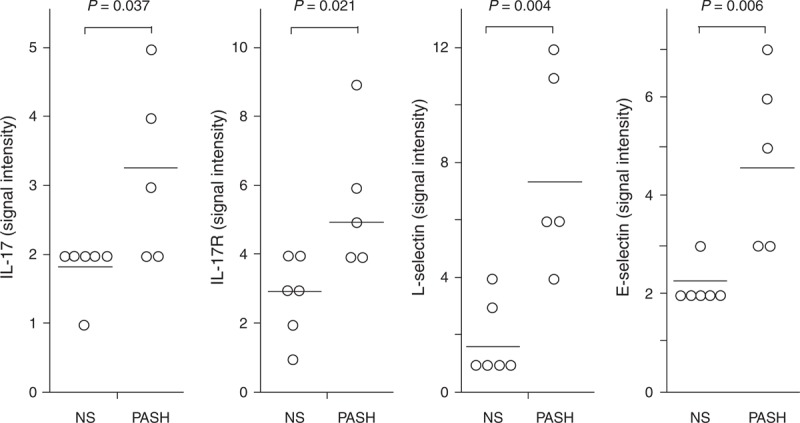
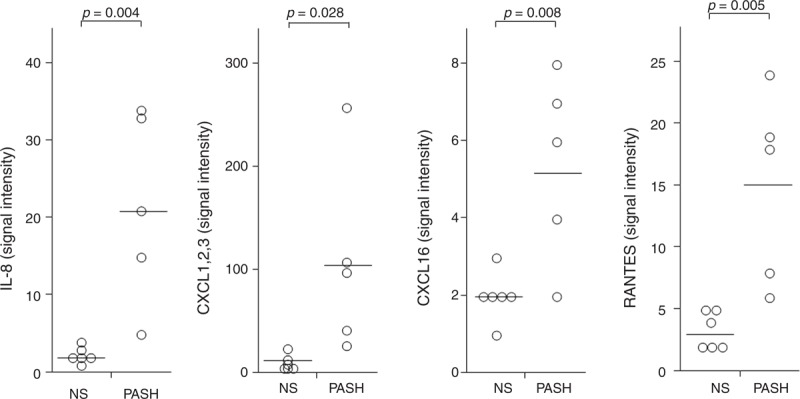
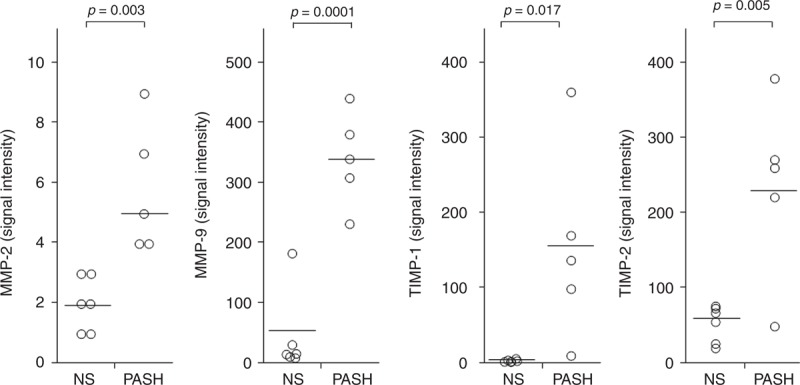
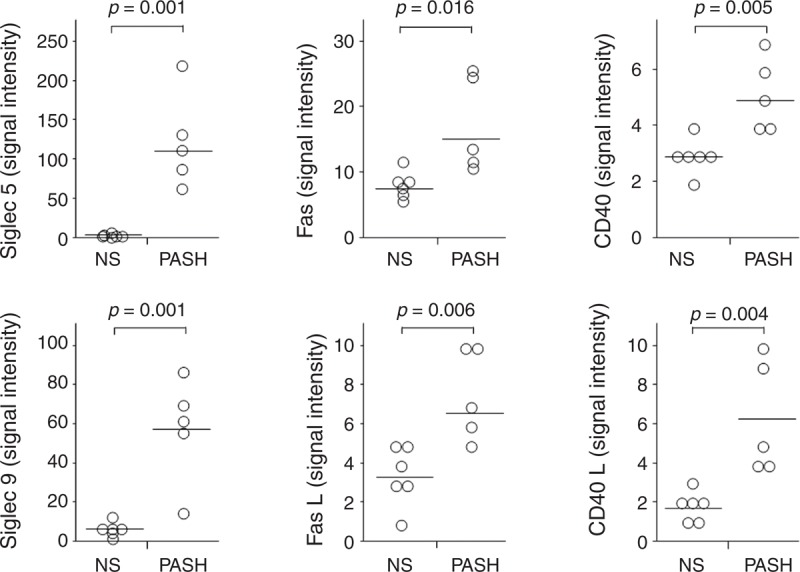
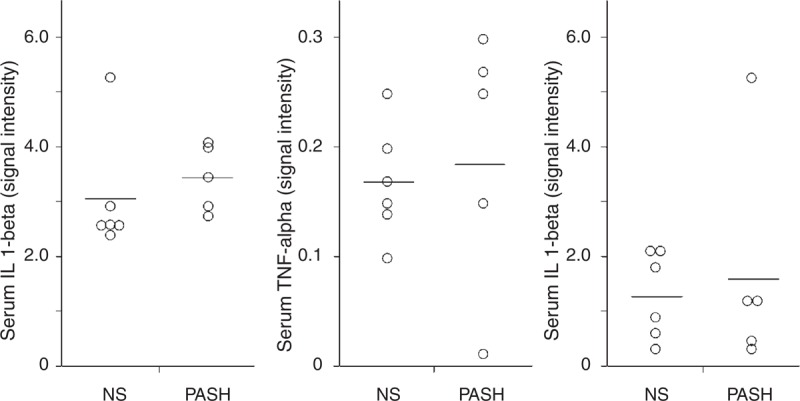
The association of pyoderma gangrenosum, acne, and suppurative hidradenitis (PASH) has recently been described and suggested to be a new entity within the spectrum of autoinflammatory syndromes, which are characterized by recurrent episodes of sterile inflammation, without circulating autoantibodies and autoreactive T-cells. We conducted an observational study on 5 patients with PASH syndrome, analyzing their clinical features, genetic profile of 10 genes already known to be involved in autoinflammatory diseases (AIDs), and cytokine expression pattern both in lesional skin and serum. In tissue skin samples, the expressions of interleukin (IL)-1β and its receptors I and II were significantly higher in PASH (P = 0.028, 0.047, and 0.050, respectively) than in controls. In PASH patients, chemokines such as IL-8 (P = 0.004), C-X-C motif ligand (CXCL) 1/2/3 (P = 0.028), CXCL 16 (P = 0.008), and regulated on activation, normal T cell expressed and secreted (RANTES) (P = 0.005) were overexpressed. Fas/Fas ligand and cluster of differentiation (CD)40/CD40 ligand systems were also overexpressed (P = 0.016 for Fas, P = 0.006 for Fas ligand, P = 0.005 for CD40, and P = 0.004 for CD40 ligand), contributing to tissue damage and inflammation. In peripheral blood, serum levels of the main proinflammatory cytokines, that is, IL-1β, tumor necrosis factor-α, and IL-17, were within the normal range, suggesting that in PASH syndrome, the inflammatory process is mainly localized into the skin. Four out of our 5 PASH patients presented genetic alterations typical of well-known AIDs, including inflammatory bowel diseases, and the only patient lacking genetic changes had clinically evident Crohn disease. In conclusion, overexpression of cytokines/chemokines and molecules amplifying the inflammatory network, along with the genetic changes, supports the view that PASH syndrome is autoinflammatory in origin.
Conflict of interest statement
The authors have no conflicts of interest to disclose.
Figures
References
-
- Braun-Falco M, Kovnerystyy O, Lohse P, et al. Pyoderma gangrenosum, acne, and suppurative hidradenitis (PASH)-a new autoinflammatory syndrome distinct from PAPA syndrome. J Am Acad Dermatol 2012; 66:409–415. - PubMed
-
- Marzano AV, Ishak RS, Colombo A, et al. Pyoderma gangrenosum, acne and suppurative hidradenitis syndrome following bowel bypass surgery. Dermatology 2012; 225:215–219. - PubMed
-
- Aksentijevich I, Kastner DL. Genetics of monogenic autoinflammatory diseases: past successes, future challenges. Nat Rev Rheumatol 2011; 7:469–478. - PubMed
-
- Doria A, Zen M, Bettio S, et al. Autoinflammation and autoimmunity: bridging the divide. Autoimmun Rev 2012; 12:22–30. - PubMed
Publication types
MeSH terms
Substances
LinkOut - more resources
Full Text Sources
Other Literature Sources
Medical
Research Materials
Miscellaneous
