


Lymphopenia predicts poor prognosis in patients with esophageal squamous cell carcinoma
- PMID: 25501097
- PMCID: PMC4602783
- DOI: 10.1097/MD.0000000000000257
Lymphopenia predicts poor prognosis in patients with esophageal squamous cell carcinoma
Abstract
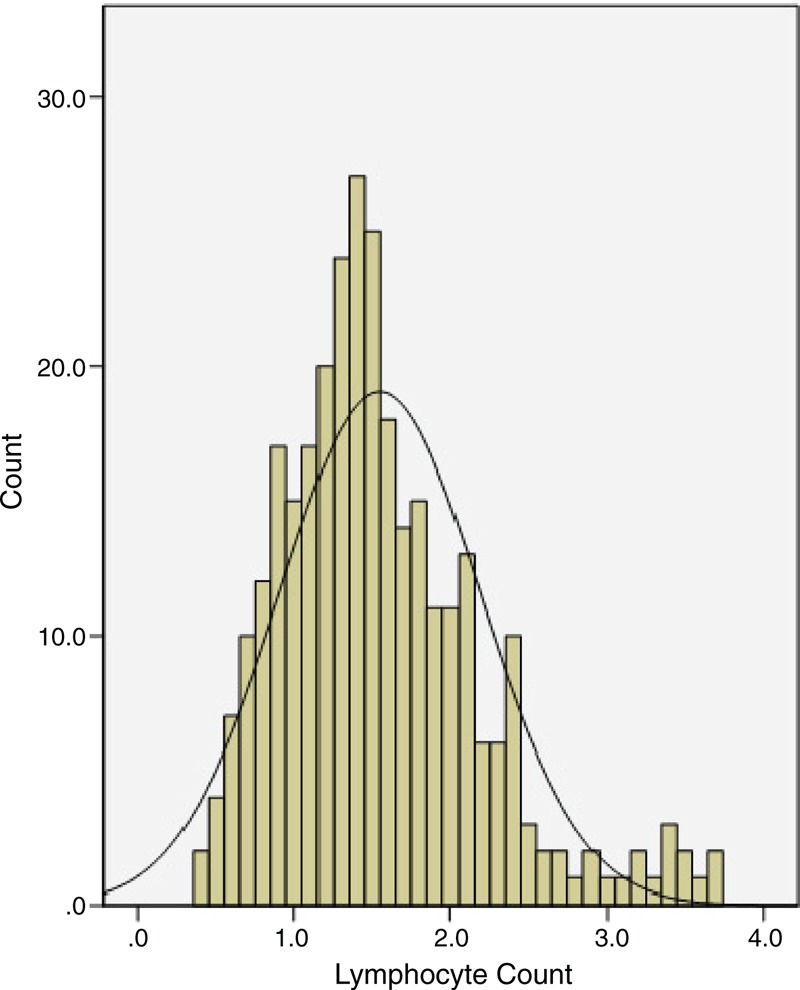
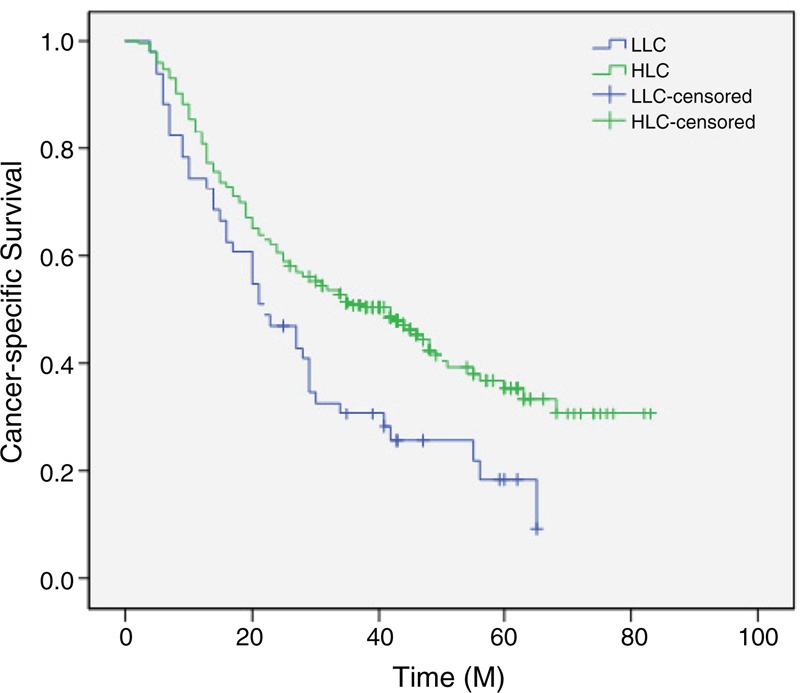
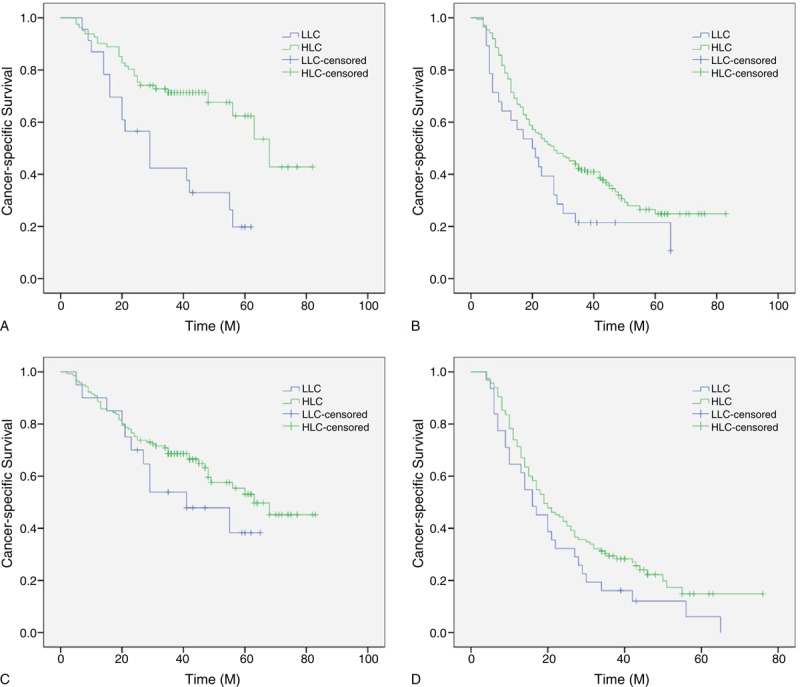
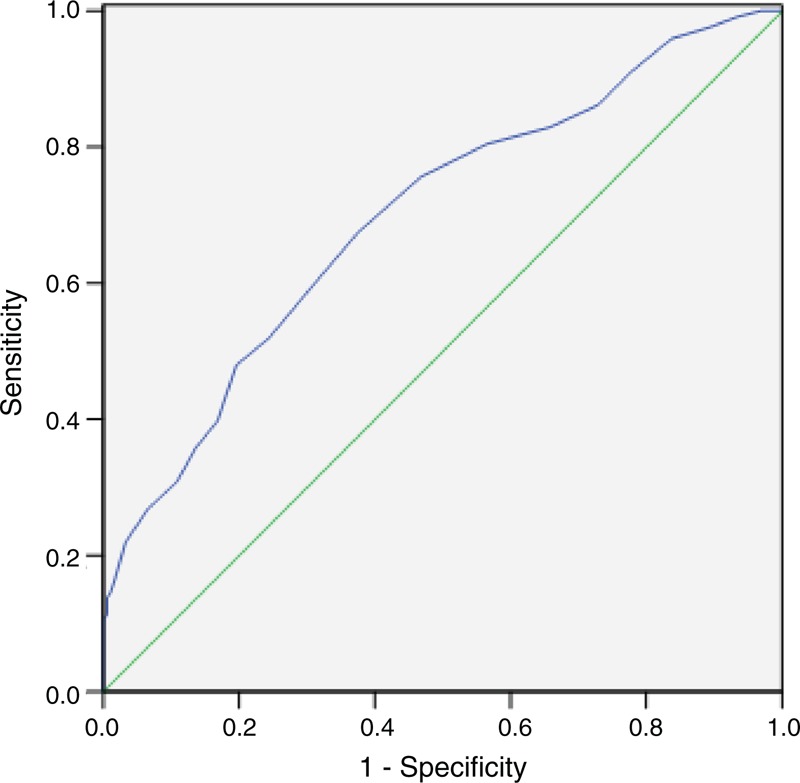
Lymphopenia is a useful predictive factor in several cancers. The aim of this study was to determine the prognostic value of lymphopenia in patients with esophageal squamous cell carcinoma (ESCC).A retrospective analysis of 307 consecutive patients who had undergone esophagectomy for ESCC was conducted. In our study, a lymphocyte count (LC) of fewer than 1.0 Giga/L was defined as lymphopenia. Kaplan-Meier method was used to calculate the cancer-specific survival (CSS). Cox regression analyses were performed to evaluate the prognostic factors. Receiver operating characteristic (ROC) curve was also plotted to verify the accuracy of LC for CSS prediction.The mean LC was 1.55 ± 0.64 Giga/L (range 0.4-3.7 Giga/L). The incidence of lymphopenia (LC < 1.0 Giga/L) was 16.6% (51/307). Patients with lymphopenia (LC < 1.0 Giga/L) had a significantly shorter 5-year CSS (21.6% vs 43.8%, P = 0.004). On multivariate analysis, lymphopenia (LC < 1.0 Giga/L) was an independent prognostic factor in patients with ESCC (P = 0.013). Lymphopenia had a hazard ratio (HR) of 1.579 [95% confidence interval (CI): 1.100-2.265] for CSS. ROC curve demonstrated that lymphopenia (LC < 1.0 Giga/L) predicts survival with a sensitivity of 86.2% and a specificity of 27.2%. Lymphopenia (LC < 1.0 Giga/L) is still an independent predictive factor for long-term survival in patients with ESCC.
Conflict of interest statement
The authors have no funding information to disclose.
The authors have no conflicts of interest to disclose.
Figures
References
Publication types
MeSH terms
LinkOut - more resources
Full Text Sources
Other Literature Sources
Medical
